KUCHING: The Sarawak Basic Necessities Contribution (SKAS) programme is expected to generate a multiplier effect of at least 2.5 in the local economy, helping to boost domestic demand and support retail businesses across the state.
Premier Datuk Patinggi Tan Sri Abang Johari Tun Openg said the initiative, which allows recipients to purchase essential goods through participating retailers, would stimulate spending and increase the circulation of funds within the local economy.
“From an economic perspective, retail businesses will experience a multiplier effect of at least 2.5. In other words, this programme enhances our domestic economy and increases the circulation of funds among those involved in economic activities.
“This is one way we strengthen what economists call domestic demand. When domestic demand increases, retail businesses benefit because people are buying goods. Business activity increases, which benefits the people and our overall economic system.
“In economic terms, this programme represents an injection of government funds into the economic system. Based on a rule-of-thumb calculation, RM640 million multiplied by 2.5 represents the amount of circulation generated in the market,” he said.
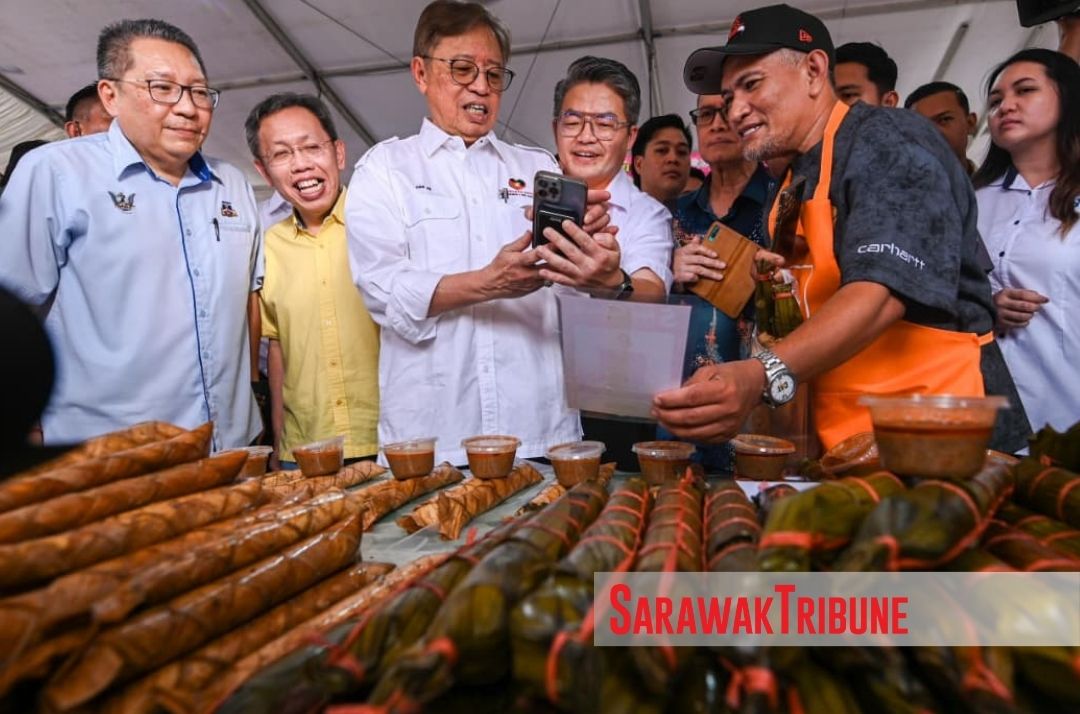
He said this in his speech during the launching of SKAS 2026 at Ramadan Bazaar Stutong here today.
He added that SKAS also helps households reduce their daily expenses, as the assistance covers basic food necessities.
“For families, there are significant savings because basic necessities are covered. The money they would normally spend can be used for other household needs,” he said.
Abang Johari also praised the growing adoption of digital payments among Sarawakians, noting that even small traders at local bazaars now widely accept QR code payments.
“Do not underestimate Sarawakians. When I visit bazaars, even small retail traders accept QR code payments. Even young children pay using QR codes. Cash is rarely used anymore.
“When I visited a bazaar recently, I forgot to bring my phone, so I paid with cash. A small child asked me, “Why didn’t you pay using QR?” Now almost everyone pays using QR codes.
“This shows that our way of life has changed. With change comes innovation. This also means our family management must be strong,” he said.