KUCHING: The Sarawak Oil Palm Plantation Owners Association (SOPPOA) has called for five key policy measures to strengthen the competitiveness and long-term sustainability of Sarawak’s palm oil industry.
The requests include long-term approval for Empty Fruit Bunch (EFB) combustion, permanent representation for Sarawak on national palm oil bodies, a review of the Windfall Profit Levy (WPL), expanded SST exemptions for palm oil by-products, and a more practical framework for methane gas capture requirements.
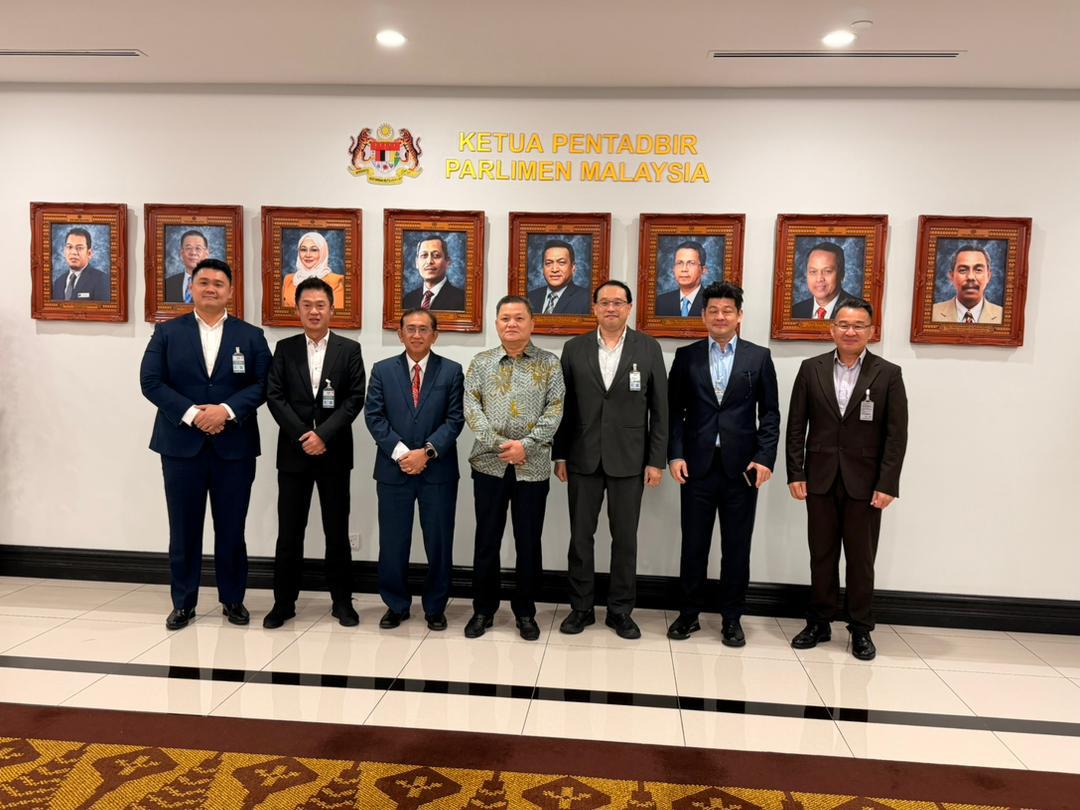
SOPPOA said the proposals were raised during its courtesy call on Deputy Minister of Plantation and Commodities Datuk Seri Huang Tiong Sri at Parliament House recently.
“SOPPOA appreciates the constructive discussion with the deputy minister and welcomes his directive for ministry officials to follow up on the issues raised,” the association said in a statement.
Led by its chairman Datuk Joseph Blandoi, the delegation briefed Huang on the association’s role in representing Sarawak’s oil palm plantation owners, as well as its efforts in industry advocacy, capacity building, sustainability and engagement with the government.
SOPPOA said the five policy requests are aimed at addressing pressing challenges faced by plantation operators while ensuring Sarawak’s significant contribution to the national palm oil sector is reflected in future policy decisions.
“Given Sarawak’s important role in Malaysia’s palm oil industry, it is crucial that the state’s operating environment and challenges are appropriately recognised in national policies,” it said.
On EFB combustion, SOPPOA said a long-term approval mechanism is needed to provide greater certainty for the industry.
“Sarawak generates about eight million tonnes of EFB annually. A long-term approval mechanism for EFB combustion would allow the production of bunch ash as an organic fertiliser while providing greater operational stability for plantation operators,” it said.
The association also stressed the importance of Sarawak having permanent representation on key national palm oil bodies, including the Malaysian Palm Oil Board (MPOB), Malaysian Palm Oil Council (MPOC) and Malaysian Sustainable Palm Oil (MSPO) boards.
On taxation, SOPPOA called for a review of the WPL, citing Sarawak’s higher production and logistics costs as well as the impact of State Sales Tax on the industry.
“Considering Sarawak’s cost structure and operating environment, we proposed increasing the WPL threshold to RM4,000 per tonne of crude palm oil and restoring the levy rate to 1.5 per cent,” it said.
SOPPOA also sought SST exemptions for palm oil by-products such as Palm Kernel Fatty Acid Distillate (PKFAD), Palm Fatty Acid Distillate (PFAD), Palm Kernel Shell (PKS) and EFB.
The association further called for a more practical approach towards methane gas capture requirements, particularly for mills seeking to utilise existing installed processing capacity.
“A more practical implementation framework would allow operators sufficient time to recover their environmental investments while continuing to support sustainability goals,” it said.
SOPPOA highlighted that its members collectively manage about 60 per cent of Sarawak’s 1.67 million hectares of planted oil palm and operate about 80 per cent of the state’s 86 palm oil mills.
The association said Sarawak’s palm oil sector continued to record strong performance, producing 4.49 million tonnes of crude palm oil in 2025, contributing 22.2 per cent of Malaysia’s total production.