OUT of sight deep within the limestone hills of Bau, about 40 kilometres southwest of Kuching, lies a place where silence seems to have a voice of its own.
The locals call it Gua Hantu — the Ghost Cave. Its name alone stirs curiosity, and for those who have walked through its shadowy tunnels, that curiosity often turns into awe tinged with unease.
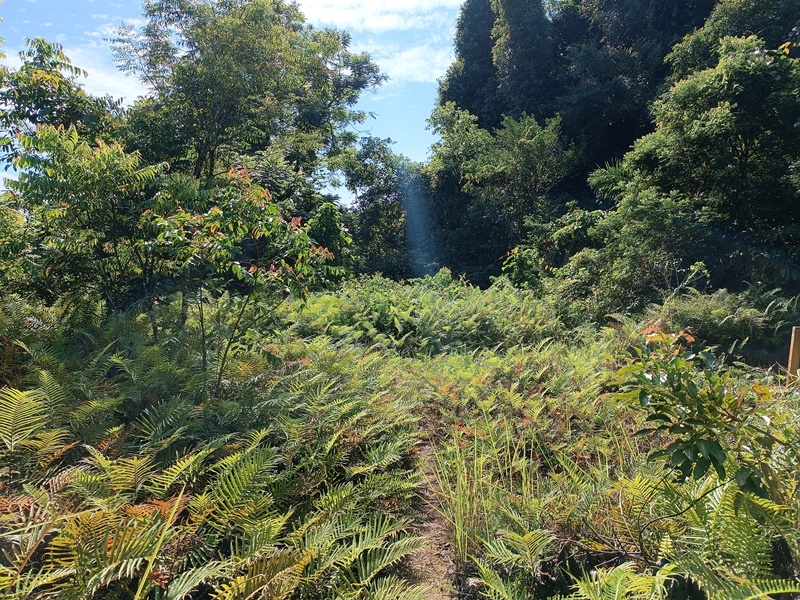
The Ghost Cave sits quietly off the beaten track, surrounded by thick vegetation and ancient rock faces that have witnessed centuries of change.
Unlike its more famous neighbours, Fairy Cave and Wind Cave, Gua Hantu remains largely untouched — a raw, mysterious world where history, geology and folklore converge.
To understand the Ghost Cave, one must first understand Bau itself. Long before it became a quiet countryside town, Bau was a bustling gold-mining settlement.
In the mid-1800s, Chinese miners flocked here in search of fortune, carving tunnels into the hills and building a thriving community in what was then Borneo’s first mining district.
But fortune turned to tragedy in 1857, when a rebellion erupted between Chinese miners and the Brooke administration.
The conflict, said to be one of the bloodiest in Sarawak’s history, left hundreds dead and entire settlements destroyed.
Local lore tells of rebels who sought refuge in the caves of Bau — some of whom never made it out.
According to old stories passed down through generations, one of those hiding places was what is now called Ghost Cave.
There were claims that the cries of the trapped miners still echo faintly within its chambers when the wind passes through at dusk.
While historians debate the accuracy of such claims, the story endures, giving the cave its haunting reputation.
Accompanied by Jake Oduin, a local from Bau, I went there for site seeing but did not explore inside it because I was told that entering the cave was risky due to its history and potentially unsafe conditions.
Approaching the entrance of Ghost Cave, however, is enough to make you feel like you are stepping into another realm.
The mouth of the cave is framed by towering limestone walls streaked with moss and roots.
Inside, I have no idea of how it looks like or how it feels. I was told that the air inside grows cool and heavy with the smell of earth and guano.
According to Jake, who had twice explored the cave, first with a master caver from London, UK, James Hadfields eight years ago, and the last attempt before Covid-19, the loudest sounds are the flutter of bats and the drip of unseen water.
“If you listen around closely inside the cave, you can hear the low hum of wind threading through the passageways,” he told Sarawak Tribune.
He added that the cave “breathes” a natural phenomenon caused by air moving through its deep chambers, sounding like “whispers of unseen spirits” that still dwell within.
“But no, we did not see or hear anything sinister. And I was not afraid either,” he said.
Jake said there are three chambers inside the cave, adding that the cave was probably between 50 and 100 metres long with no other way out.
He, however, cautioned that those who are not strong or brave enough, not to try going inside without being accompanied by local guides because it is risky.
He noted that risks associated with entering the Ghost Cave include a steep climb down at the entrance as well as slippery surfaces due to the thick layer of guano and darkness.
Beyond its eerie reputation, Ghost Cave is also a marvel of natural artistry.
Jake said its interior features magnificent stalactites and stalagmites, formed over thousands of years by the slow dance of water and limestone.
“I’m not so sure now. But when I last explored the inside about seven years ago, I saw the stalactites and the stalagmites were still very intact,” he said.
Scientists note that the cave is part of the Bau limestone formation, a geological landscape estimated to be over 250 million years old.
The surrounding area provides habitat for bats, swallows, and unique cave insects, making it an important ecological site.
The cave remains largely uncommercialised, attracting mostly historical sites adventure seekers and photography enthusiasts rather than crowds of tourists.
Jake believes that visitors who went inside it might describe the experience as raw and spiritual — less about sightseeing and more about sensing the quiet power of nature and history intertwined.
In recent years, Bau’s local authorities and community groups have expressed hopes of promoting Ghost Cave alongside the town’s other natural attractions, including Fairy Cave, Wind Cave, and the iconic Tasik Biru (Blue Lake).
Under the vision of Tasik Biru assemblyman and Deputy Minister for Transport Dato Henry Jinep, the Bau Tourism and Cultural Park has been proposed to make Bau become the next cornerstone of Sarawak’s tourism growth.
Aside from the legendary Ghost Cave, the proposed project will include the historic old District Officer Bungalow, the Tasik Bikajan area, the old Bau Water Reservoir and the Abandoned Gold Mining Facilities.
However, the local authorities are treading carefully with the Ghost Cave.
Jake, who is also a personal assistant to Henry said the Ghost Cave has potential, but its ecosystem and cultural sensitivity mean that any development must prioritise preservation.
“We all want visitors to appreciate its beauty and history without disturbing its natural balance,” he said.
Environmental awareness is growing among locals as well. The cave’s surroundings are in good condition.
Bau today is a peaceful town with an old-world charm, its streets lined with coffee shops and heritage buildings that hint of its golden past.
For those who visit Bau, a stop at Ghost Cave offers something different — not just scenery, but a story.
The cave stands as a silent monument to everything Bau has been: a centre of hope, struggle, tragedy and resilience.
Its name may conjure fear, but to locals, Gua Hantu is less about ghosts and more about remembrance — a reminder of lives lived and lost within the earth’s ancient chambers.
As dusk falls and the last light fades across the hills, the mouth of Ghost Cave seems to glow faintly in the twilight. The breeze stirs, carrying with it the soft rustle of leaves and the sound of unseen wings. For those who pause to listen, perhaps the cave does speak — not with words, but with echoes from a time long gone.