KUCHING: Sarawak’s strategy to raise household incomes and address poverty hinges on strengthening human capital, alongside modernising traditional sectors such as agriculture through mechanisation and digitalisation.
Premier Datuk Patinggi Tan Sri Abang Johari Tun Openg said productivity gains — particularly in rural areas — were critical to breaking the poverty cycle, noting that income growth must be driven by knowledge and technology rather than subsidies alone.
He said agricultural output could be significantly improved through precision farming and mechanisation, citing a pilot project in his constituency carried out with Universiti Putra Malaysia (UPM), where mechanised paddy planting reduced planting time per hectare from up to two months to just 50 minutes.
“Mechanisation is the answer, but farmers must first understand what mechanisation means. To change how farms are managed, basic knowledge — at least basic science — is needed to raise productivity.
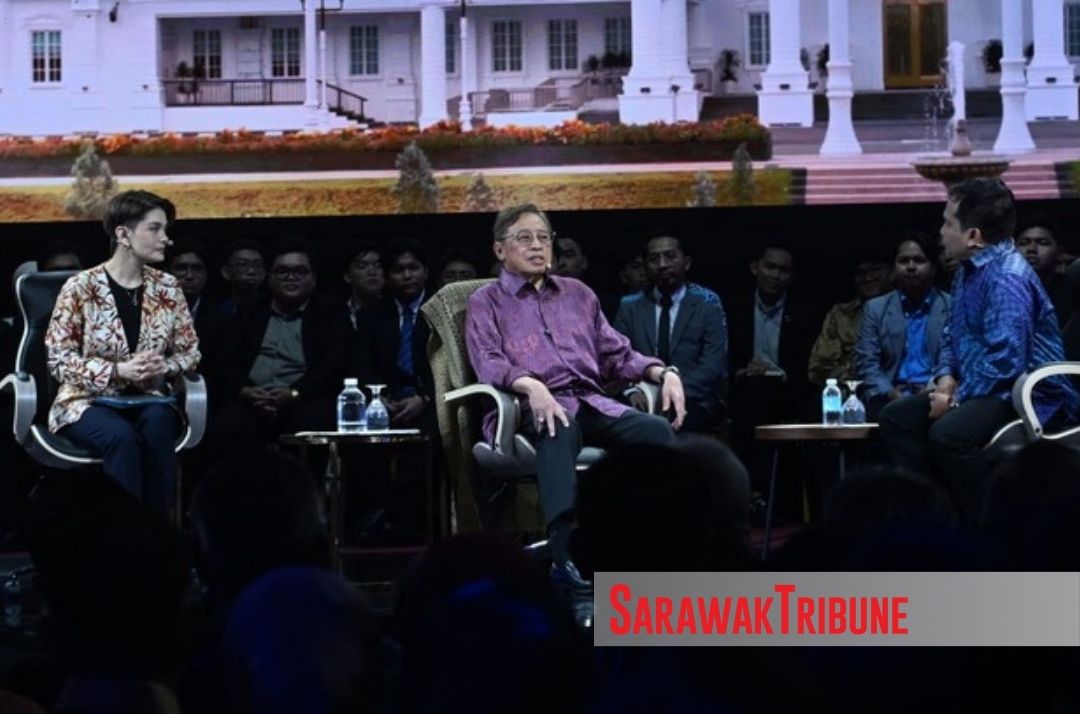
“In other words, poverty can only be reduced or eradicated through knowledge,” he said at the Townhall with the Premier held at the Hikmah Exchange Event Centre here on Tuesday.
The town hall was organised by TVS in conjunction with Abang Johari’s ninth anniversary in office.
On education, Abang Johari said the Sarawak government had allocated RM650 million under the 2025 State Budget, including RM250 million to fund free tertiary education for all eligible Sarawakians.
“To produce competitive human capital in a changing world, we must ensure our people are educated at top universities and exposed to new ideas,” he said.
He said the policy had prompted Sarawakians working in Peninsular Malaysia — including teachers and police personnel — to send their children back to Sarawak for higher education, leading to increased demand.
“Many Sarawakians working in Peninsular Malaysia are now sending their children back because tertiary education is free. That is why we increased the budget — to meet the demand and ensure families are not burdened by high fees.
“That is the answer — human capital,” he stressed.
Sharing earlier outcomes from a bursary programme at University of Technology Sarawak (UTS), Abang Johari said students from B40 families — including children of farmers and fishermen — had successfully completed studies in disciplines such as engineering, accounting and finance.
“During convocation, parents came to thank me, saying their children are now engineers and accountants and would not have made it to university without assistance,” he said.
“That experience, which started as a trial, convinced me that tertiary education should be free for all eligible Sarawakians.”