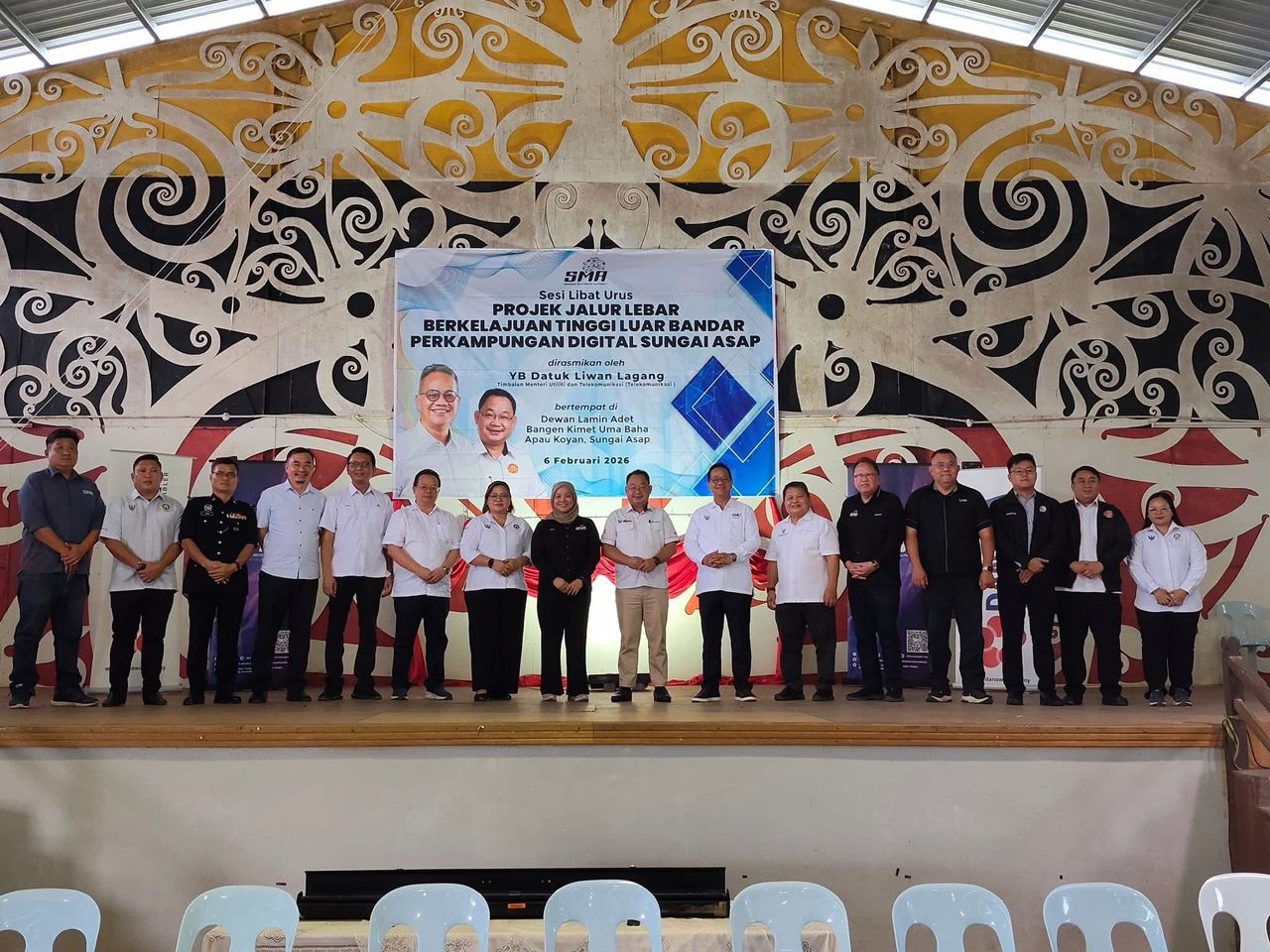
BELAGA: A RM37-million high-speed broadband project has brought improved digital connectivity to about 20,000 residents in Sungai Asap, marking a significant step towards narrowing the urban-rural digital divide.
Deputy Minister of Utility and Telecommunication (Telecommunication), Datuk Liwan Lagang, said the initiative complements the Sungai Asap Digital Village programme and involves the installation of 140 kilometres of optical fibre along with the construction of telecommunications towers across 28 sites.
He said the project serves 15 longhouses inhabited by the Kenyah, Kayan, Lahanan, Seping, Ukit and Penan communities, while also benefiting seven government agencies, three schools and two houses of worship.
The infrastructure leverages Sarawak Energy Bhd’s (SEB) Right of Way (ROW), enabling faster implementation and more affordable high-speed broadband services for residents.
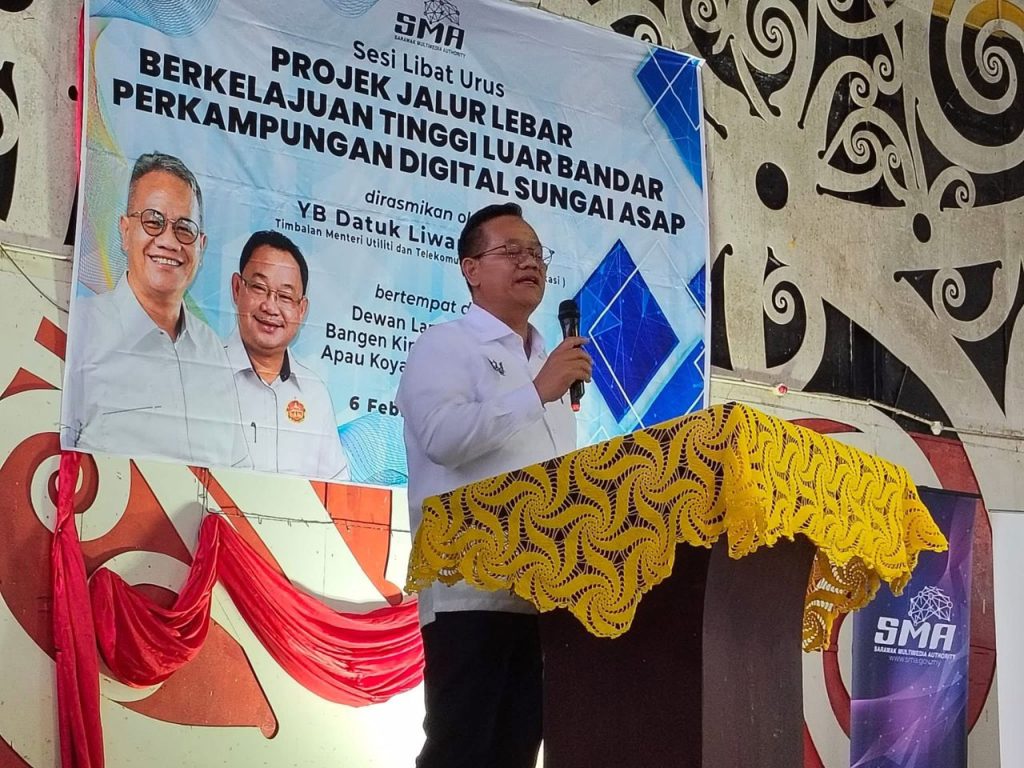
“Digital connectivity is crucial in strengthening sectors such as education, healthcare, governance and e-commerce, in line with the Sarawak Government’s Post COVID-19 Development Strategy (PCDS) 2030,” he said when officiating the closing of the High-Speed Broadband Project Engagement Session for the Sungai Asap Digital Village at the Sungai Asap Community Hall on Friday.
Murum state assemblyman, Kennedy Chukpai Ugon, described the project as a catalyst for rural socio-economic development, noting that it will support services such as e-government, digital education, smart agriculture and public safety systems.
He added that enhanced digital infrastructure could stimulate economic growth by supporting entrepreneurship, expanding access to online markets, and encouraging innovation-driven businesses.
Meanwhile, Sarawak Multimedia Authority (SMA) Deputy General Manager, Dr Suhaila Jaffar, said the expansion builds on the success of a similar high-speed broadband project implemented in Sebauh District, Bintulu, in 2022.
“The positive impact there has encouraged us to extend the initiative to Sungai Asap as part of ongoing efforts to transform rural communities through digitalisation,” she said.