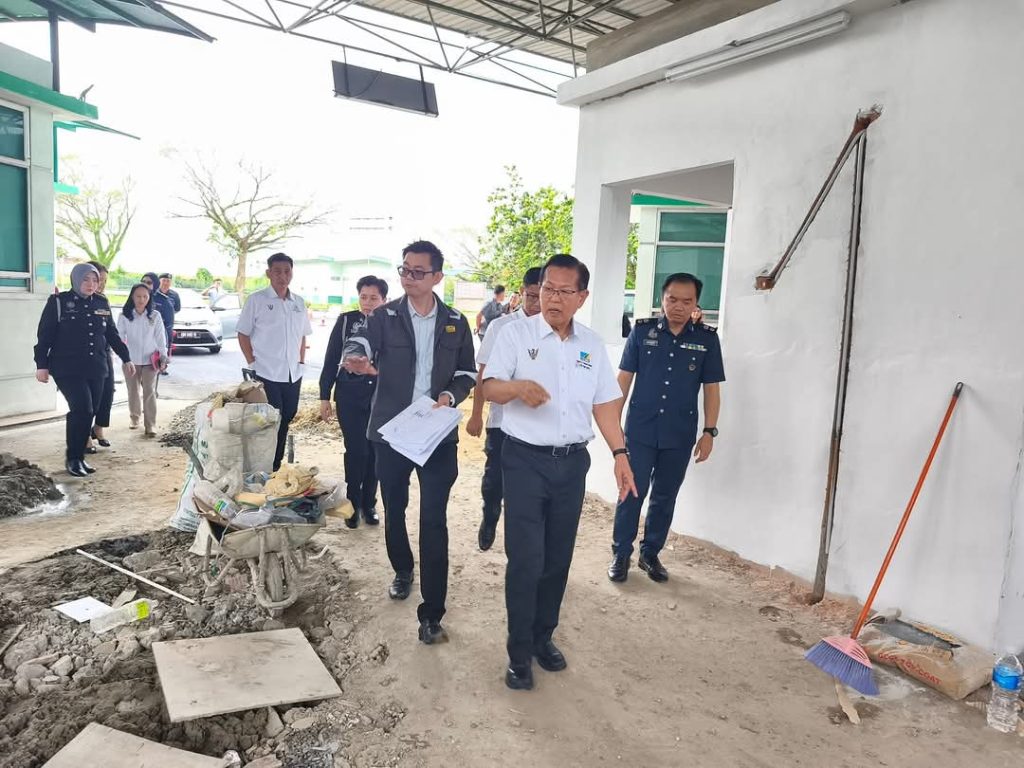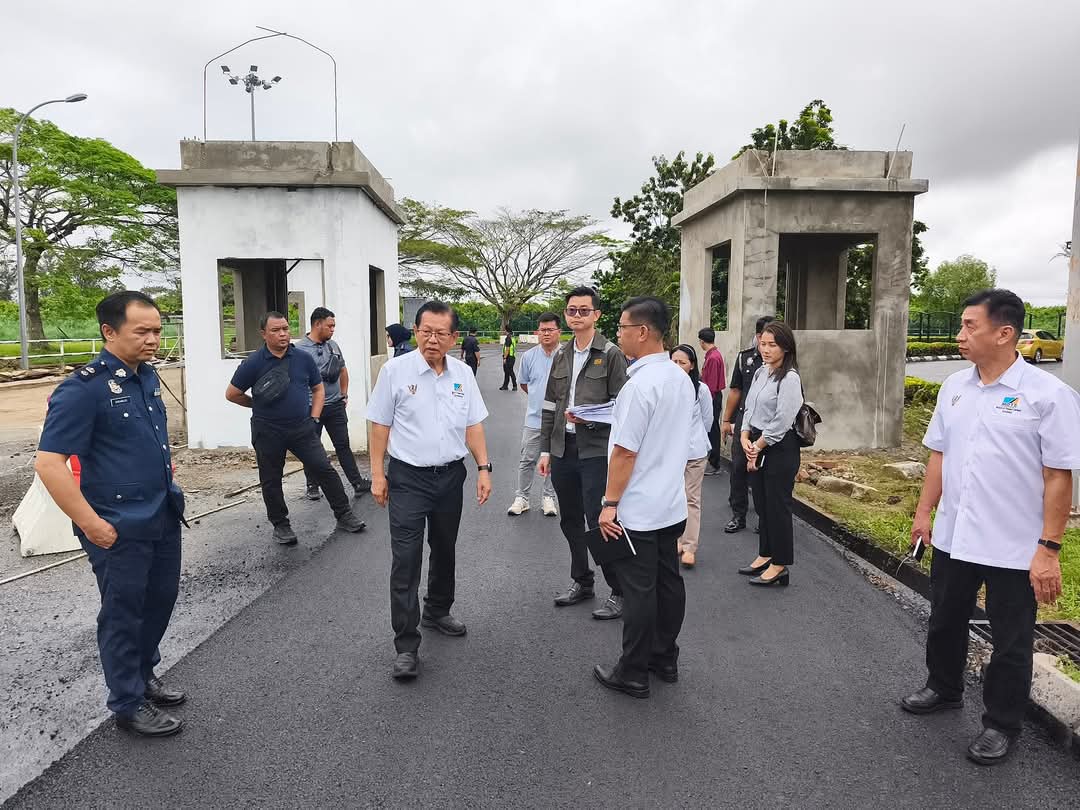
MIRI: Upgrading work on the Sungai Tujoh Immigration, Customs and Quarantine (ICQ) Complex has now reached 88 per cent completion.
The project is targeted to be fully completed and operational a week before the Chinese New Year celebration.
Minister of Transport, Datuk Seri Lee Kim Shin, said the RM4-million project, approved by the Sarawak Government, includes the construction of four additional lanes, increased immigration and customs counters, as well as the construction of 12 public toilets, including facilities for Persons with Disabilities (OKU).
According to him, traffic congestion at the border checkpoint has long been a major complaint among users, especially on weekends and festive seasons such as Chinese New Year and Hari Raya, with waiting times reaching between three and five hours.
“The congestion becomes more apparent when the number of vehicles increases, involving users from Brunei, Miri, Lawas, Limbang and even Sabah who pass through Brunei to get to Miri.
“Therefore, this project is crucial to ensure smooth cross-border movement,” he said during a working visit to monitor the project’s progress today.
In relation to this, Lee has requested the Public Works Department (PWD) to enhance monitoring and ensure the project is completed according to schedule.
The project was originally scheduled for completion in December last year but was granted an extension due to several minor design amendments.
Once completed, traffic flow will be separated according to vehicle type, where Malaysian and Bruneian-registered vehicles will use separate lanes and counters.
Four new counters will be dedicated to Malaysian vehicles to speed up the clearance process.
Lee also suggested the addition of immigration and customs personnel to ensure all the extra counters can operate fully, particularly during festive seasons.
At the same time, he emphasised that this upgrading project is a short-term solution, while a comprehensive upgrading proposal for the Sungai Tujoh ICQ will be submitted to the federal government for consideration under the 13th Malaysia Plan (RMK13).
For the long term, he also proposed the use of modern technology such as electronic clearance, facial or vehicle recognition to speed up entry and exit processes, in line with international border checkpoint practices.