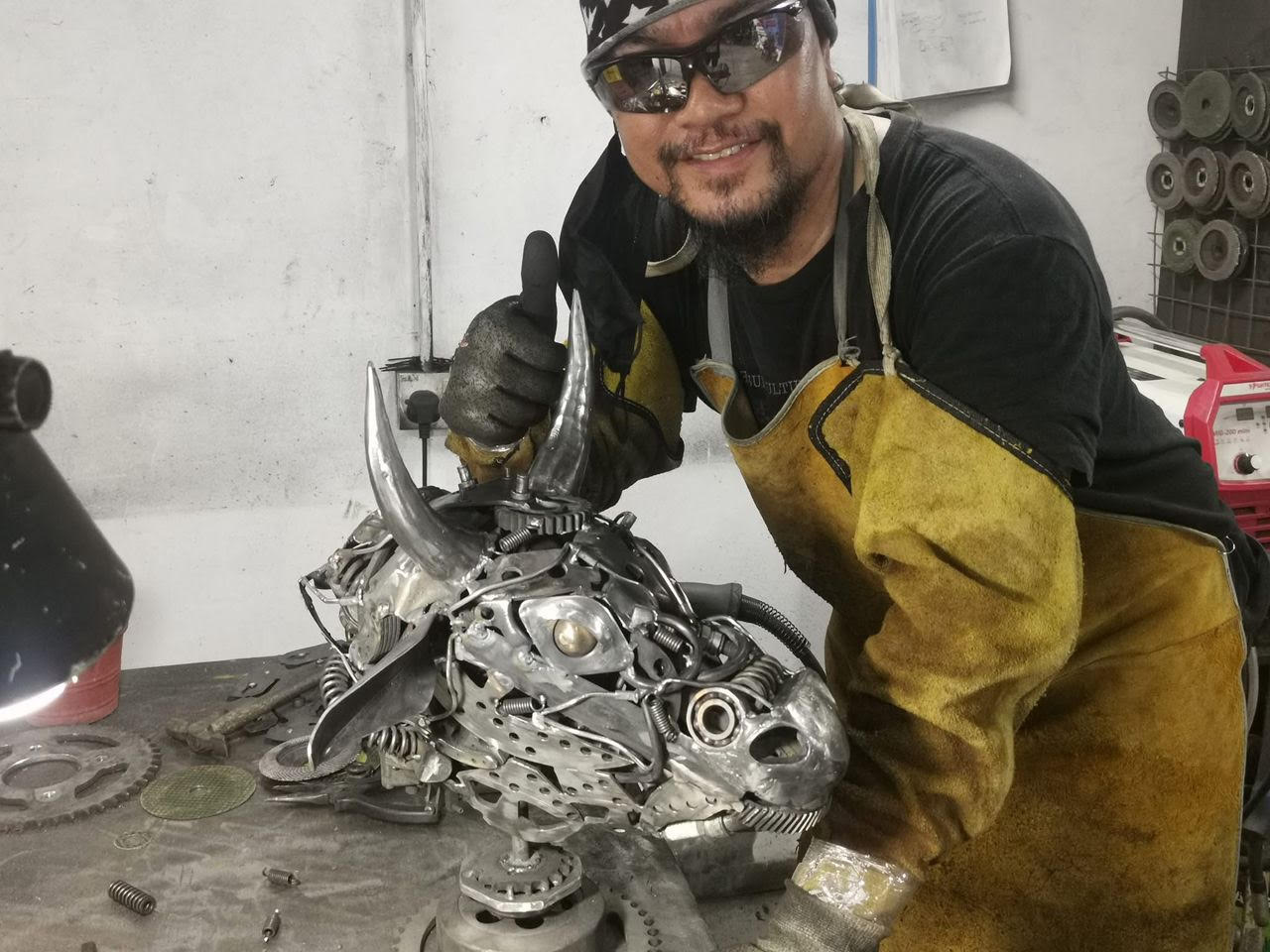
KUCHING: Sustainability, creativity and culture define the journey of Mohamad Kasat Bujang Narawi, the man behind Kasat Arca, whose passion for turning discarded metal into meaningful art has earned him national recognition and even a world record.
Born in Kampung Pendam, Sadong Jaya, and now residing in Jalan Sungai Bilis, Mohamad Kasat’s story is one of grit and innovation.
His foray into the world of metal sculpture began in 2016, when FELCRA Bhd invited him to join the Rural Business Challenge (RBC) organised by the Ministry of Rural Development (KKDW).
Armed with his proposal, ‘Metal Arc Welding’, he surprised even himself when his idea grew into what is now his company, Kasat Arca.
After braving multiple competition rounds, he clinched the Promising Entrepreneur Award, along with a RM200,000 grant that became the seed of his artistic empire.
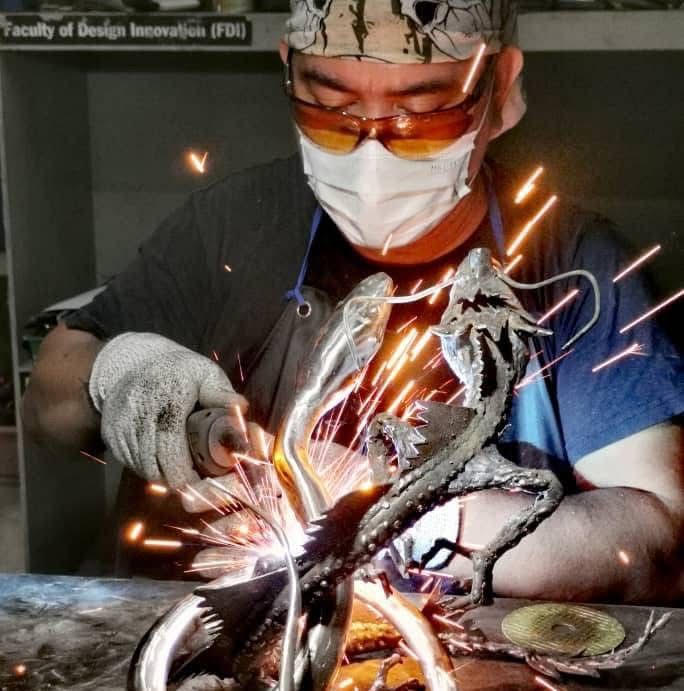
From Welding to Sculpture
Transitioning from welding, once just a pastime, to sculpture-making was a daunting yet rewarding shift.
“My interest lies in creating something extraordinary and finding uniqueness within myself by doing work that is different from what I had done before.
“Shifting from welding work to creating sculptures can be a challenging yet highly rewarding journey” he said, his voice carrying the conviction of someone who thrives on breaking boundaries.
He soon discovered that to become a sculptor, he had to immerse himself in entirely new disciplines such as skill transition, creativity, aesthetics, artistic understanding, art history, tool and material exploration, design philosophy, marketing, galleries and exhibitions, time management, long-term projects, patience, perseverance and even the psychology of audiences.
“Among the challenges I faced was creating sculptures according to clients’ requests.
“Previously, welding was just my hobby, so I never had to think too hard. But when I shifted into sculpture-making, I had to give 200 per cent effort in thought, creativity, and innovation,” Kasat said.
That same drive to be different also shaped his choice of materials as he works primarily with recycled metal, a decision that reflects both his creativity and his environmental values.
“I chose recycled metal as my main material for several reasons. Firstly, it is environmentally sustainable because it can be reused many times without losing its original properties,” he added.
“Secondly, it saves energy since the process consumes less compared to producing new metal, which also helps reduce carbon emissions and greenhouse gases.
“Thirdly, recycled metal has aesthetic value and creativity, offering textures and character that often carry their own history once reshaped. Finally, it reflects my commitment to living cleaner and more sustainably.”
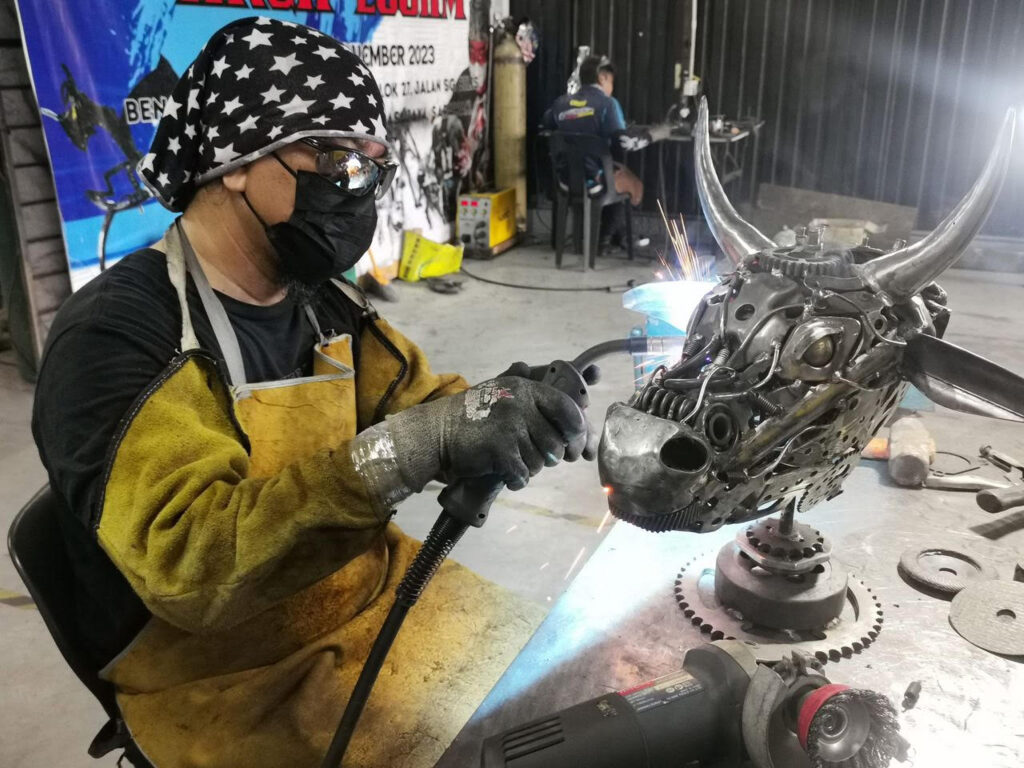
Kasat explained that transforming recycled metal into a sculpture begins with the collection of raw materials, followed by design planning, where rough sketches help visualise the outcome and draw inspiration from the shapes and textures of the metal.
“Sculpture-making is a very artistic process. I usually start with sketches on paper and then on the floor to give a clearer picture before proceeding with the actual construction, following the sketch and the chosen theme,” he said.
“Selecting the right metal parts, however, is no simple task.”
He considers factors such as strength, durability, corrosion resistance, and ease of processing.
“I also make sure the recycled metal is available in shapes that suit my design. It needs to be easy to cut, shape, and weld, while also offering unique textures or patina that add character and individuality to the sculpture.
“The cost must fit the project’s budget as material selection also depends on the sculpture’s theme, size, and creative ideas.
“Taking all these factors into account allows me to select the most suitable recycled parts for each design,” he said, noting that every decision must balance technical needs with artistic vision.
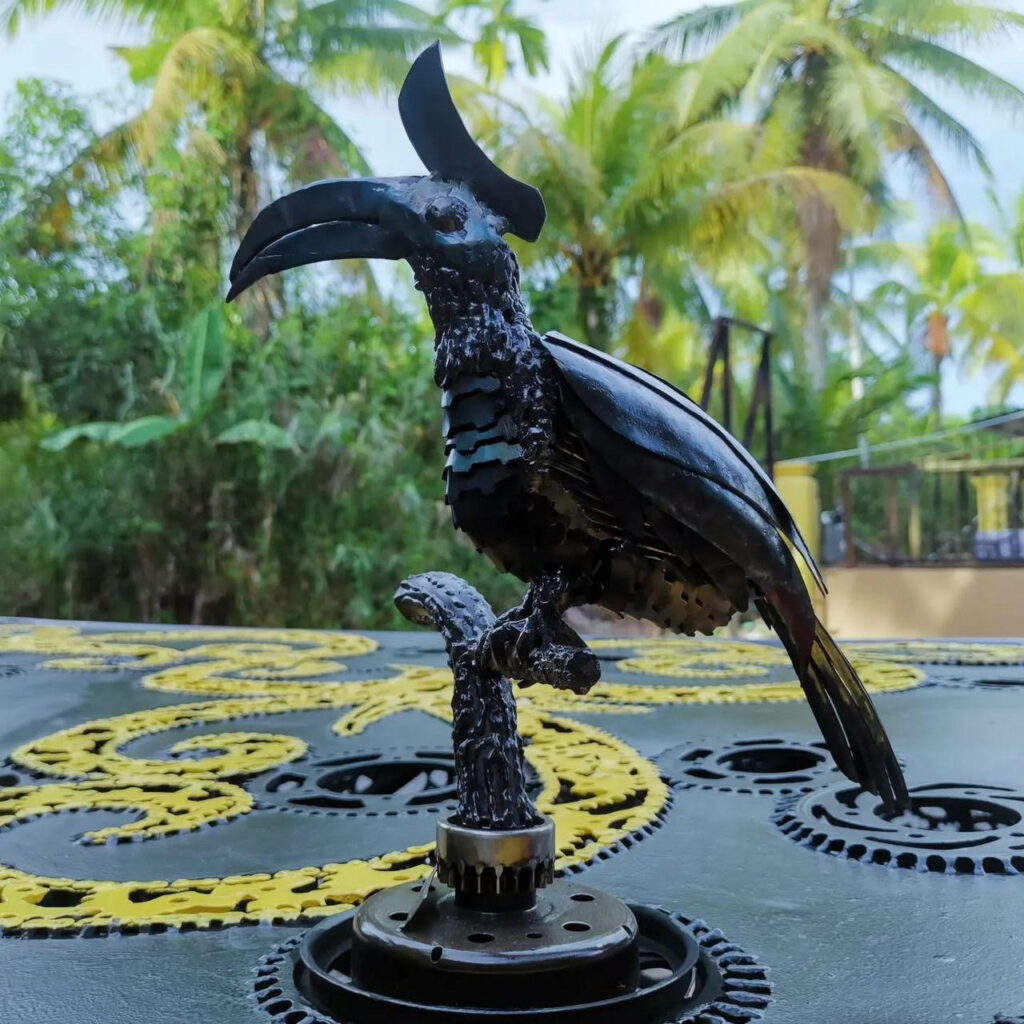
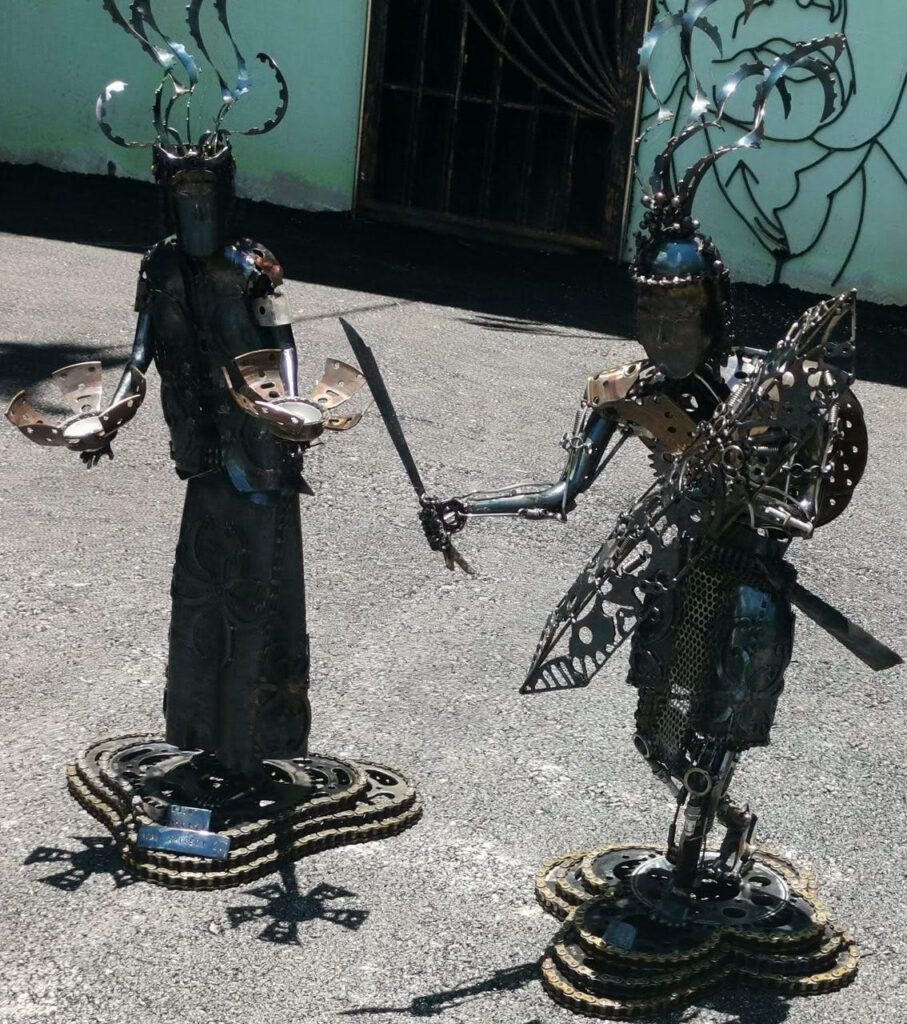
Breathing Life into Sustainability
At 47, Mohamad Kasat continues to push his creative limits, reimagining discarded metal into sustainable works inspired by the world around him.
“My inspiration comes from many sources. Nature is one of the strongest, organic forms like leaves, flowers, and animals often spark ideas for dynamic and lively sculptures.
“At the same time, everyday life, human emotions, and interactions influence my work, allowing me to tell stories or express feelings through form.
“Social and environmental issues, like climate change, environmental conservation, and social justice also inspire me to create sculptures that convey important messages and raise awareness.”
History and culture remain central to his practice, as blending traditional heritage with modern techniques allows him to honour the past while embracing innovation, often weaving cultural and personal elements into his work depending on the client’s request.
“Incorporating cultural and personal elements helps convey deeper meaning and resonance to sculpture art enthusiasts.
“Every carving and form tells its own story, connecting us to cultural heritage and ancestral traditions.
“At the same time, metal art demands precision and dedication, with a highly intricate creation process that requires expertise.”
This creative journey makes seeing his sculptures exhibited in galleries and public spaces especially rewarding.
“I feel proud and happy when I see my work being exhibited. I hoped that my sculptures can provide meaningful value and inspiration to everyone who experiences them.
“Sculpture-making also comes from strong spirit, self-confidence, and the desire to be the best.”
Underlying his creativity is a firm belief in sustainability.
“Sustainability shapes everything, from the materials I select to the techniques I use, the themes I explore, and the long-term impact I hope my work can have.
“By prioritising sustainability, sculptors not only help protect the environment but also create more meaningful and relevant works.
“Reusing these materials, artists help reduce waste, minimise pollution, and promote environmental cleanliness.”
He added that at the same time, this practice raises awareness about sustainability while encouraging creativity and innovation.
“Working with recycled materials pushes artists to explore new ideas and develop unique techniques and styles, ultimately enriching the art world while contributing positively to the environment.”
Future Plans and Advice
Kasat Arca has the potential to grow rapidly and remain relevant in both the art world and society in the next five to 10 years, he said.
“As an artist, I plan to embrace technological innovation by exploring new opportunities for experimentation and creativity.
“With the world becoming increasingly interconnected through globalisation, I foresee more chances to showcase my work on an international stage.
“This will open doors to greater cultural exchange and enrich the art scene with diverse perspectives and styles.”
He currently focuses on recycled metal but envisions future collaborations with other materials and artists through projects, exhibitions, installations, and workshops that align with his themes.
“Engaging with the art community provides valuable opportunities to exchange ideas and foster partnerships.
“I also plan to take part in art events such as exhibitions, workshops, and festivals, which not only help build professional relationships but also allow me to explore new forms of art.
“By collaborating with others and branching out into different artistic expressions, I can further enrich my artistic experience and create works that are more dynamic and meaningful.”
As part of this mission, he recently announced a Metal Welding Sculpture Art Course (Kursus Seni Arca Kimpalan Logam), which will take place on Oct 17 until 18 from 8am to 5pm at Kasat Arca Studio, Sadong Jaya.
He believes such initiatives not only nurture new talent but also create a strong foundation for the next generation of sculptors.
For young artists and entrepreneurs who wish to explore metal sculpture, his advice is simple yet powerful: never stop learning.
“Seek out experienced mentors, maintain consistent training, and work on developing your talent and skills.
“Do not be afraid to experiment, think outside the box, and try new approaches. With sincere intention, strong passion, patience, and self-confidence, along with faith that help will come your way, success is possible.”
Behind the Scenes: The Largest Sculpture
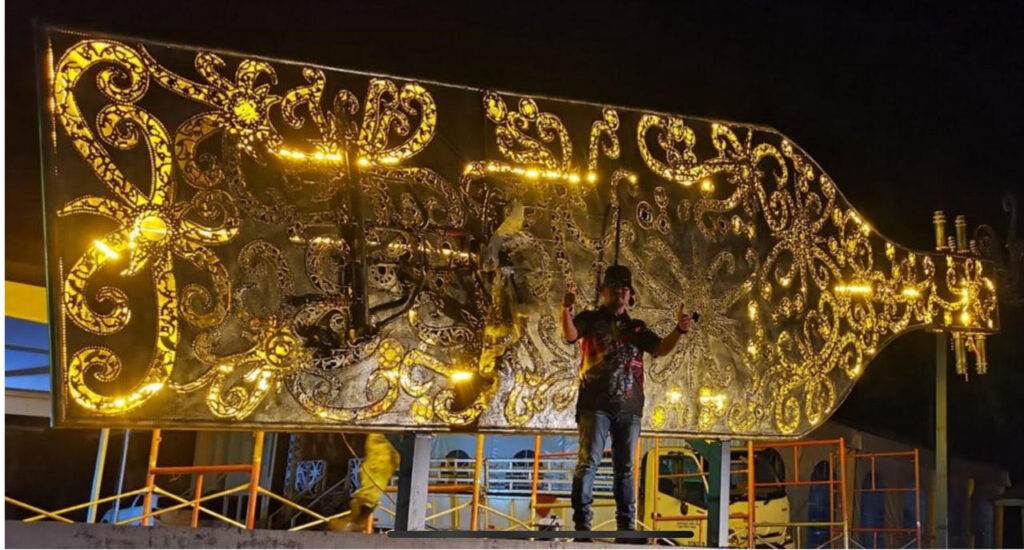
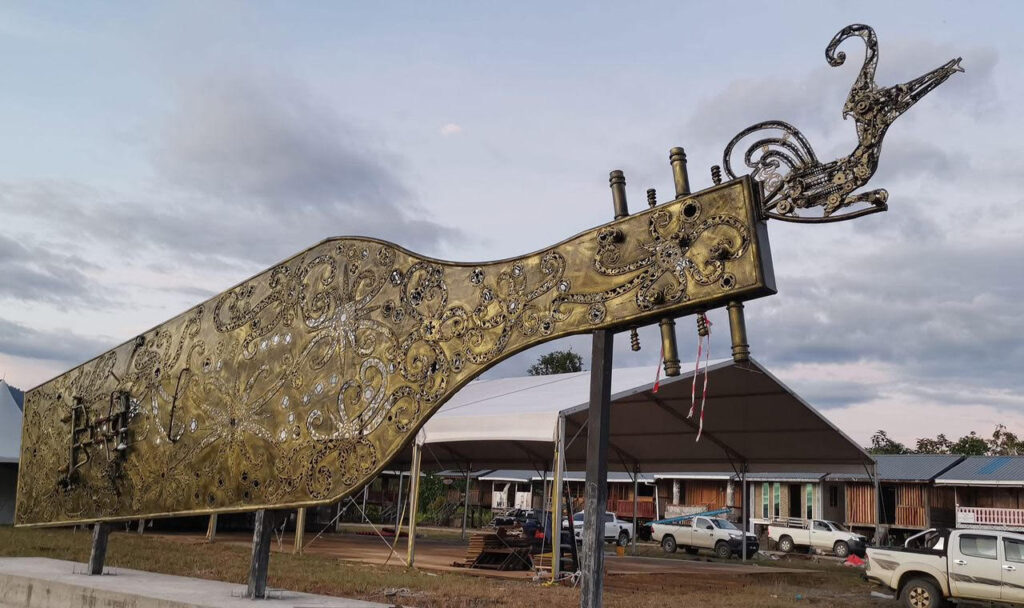
Among his many works, one stands out above all, which is the Sape Sculpture, officially recognised as the world’s largest recycled iron Sape and awarded the Elite World Record.
“The process was monumental. It began with sketches and planning, followed by the careful selection of sustainable, recycled materials, with an emphasis on sustainability through the use of recycled elements.
“The construction of the sculpture itself was a complex process that required several stages, including cutting, welding, and assembling the different parts.
“This demanded a high level of technical skill as well as a steady supply of raw materials, which had to be collected systematically.”
He said that due to the scale and challenges of the project, it took years to complete.
“Once the structure was built, it was finished with detailed polishing and artistic painting, carried out according to the request of Murum assemblyman Kennedy Chukpai Ugon, who originated the idea.
“The inspiration behind the Sape theme comes from its significance as a traditional musical instrument of the Orang Ulu community in Sarawak, Malaysia.
“Choosing the Sape as the subject was a way to honor and promote local cultural heritage. More than just a musical instrument, the Sape symbolises the beauty and refinement of traditional art.”
For Mohamad Kasat, every sculpture is a source of pride, each carrying its own strength, beauty, and artistic value.
“When I work, I often ‘converse’ with the sculpture as it takes shape, and that is the aura I pour into each of my creations.
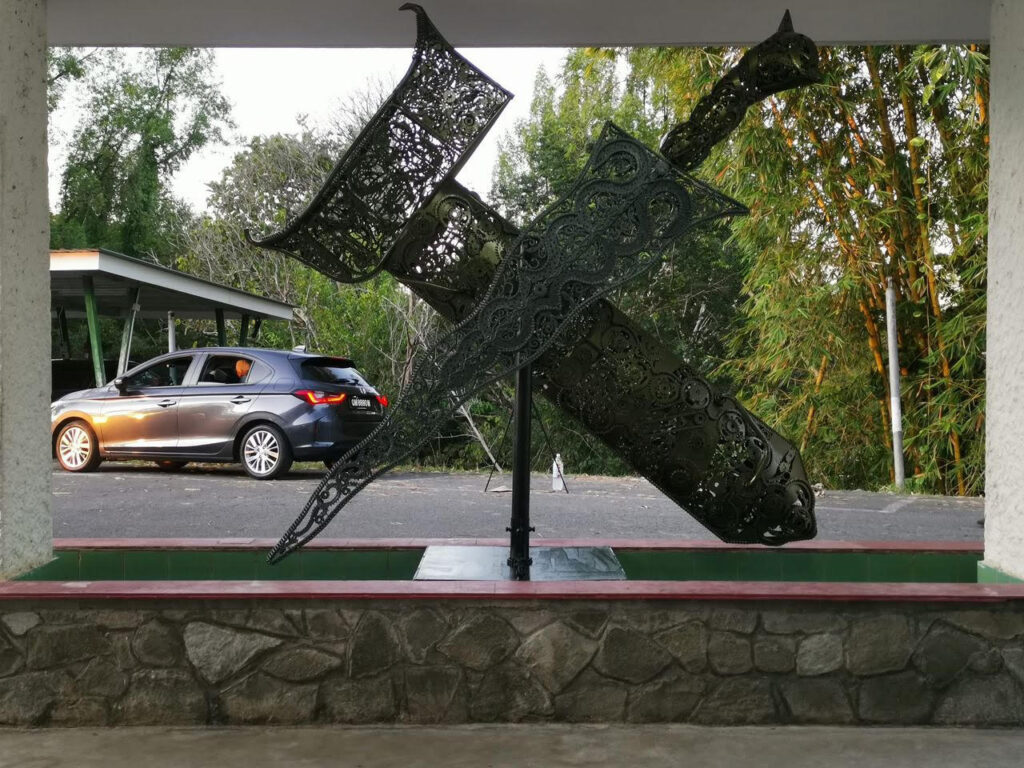
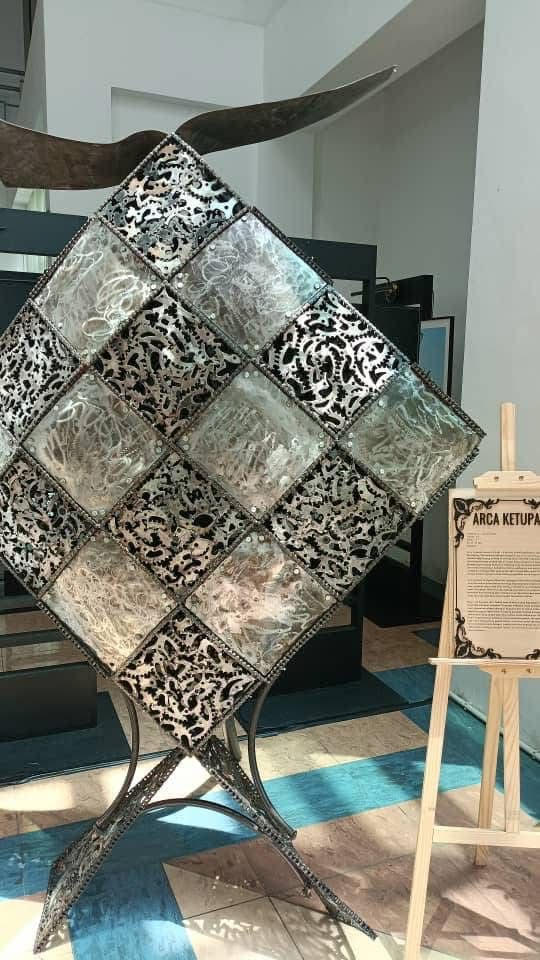
“This connection becomes even stronger in larger works such as the Keris Sculpture, the Kenyalang Sculpture, the Ketupat Sculpture, the Giant Prawn Sculpture, and many others.”
Yet the Sape Sculpture remains closest to his heart.
“The entire process of making it was filled with emotion, and to me, it feels as though it has a “soul” of its own.”
Those interested in exploring more of Mohamad Kasat’s work or connecting with him directly can scan the QR code provided (photo) or follow Facebook at Kasatarca Steampunk Artist/Metal Sculptor offering a gateway into his world of sustainable sculpture and cultural artistry.