KUCHING: Speculation is beginning to take shape in Tasik Biru as Sarawak inches closer to its next state election, though the ground remains relatively quiet.
Early observations suggest that incumbent Datuk Henry Harry Jinep of Gabungan Parti Sarawak (GPS) is not, for now, facing a formidable challenger in the Bidayuh-majority constituency.
The absence of visible mobilisation by opposition or local splinter parties has contributed to a low-key political atmosphere, even as the broader state election looms.
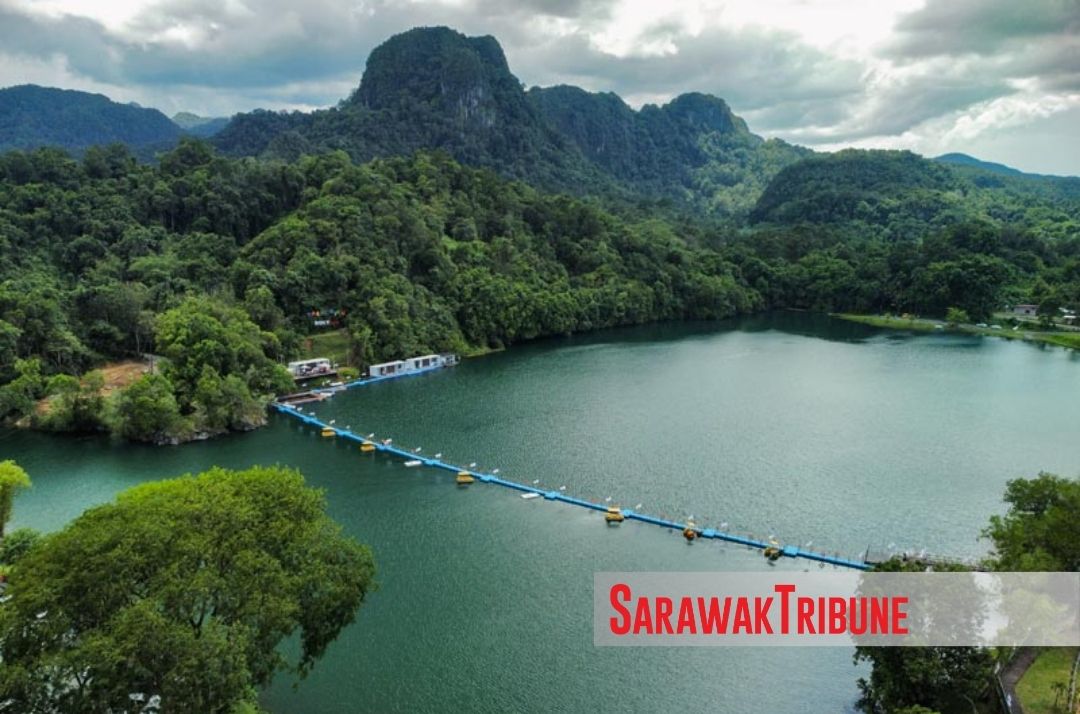
Tasik Biru, established in 1977 and located in the Bau District, has long reflected a distinct voting behaviour shaped by local sentiment.
Conversations on the ground point to a recurring pattern: voters tend to favour local Sarawak-based parties in state elections while leaning towards opposition parties, particularly Democratic Action Party (DAP), during parliamentary contests.
This dual preference could once again influence the electoral dynamics.
While DAP has demonstrated strength at the parliamentary level, its traction in state polls within Tasik Biru appears comparatively limited.
In the 2021 state election, Henry secured victory over DAP’s Mordi Bimol with a reduced majority of 1,288 votes, down from a commanding 4,212 majority in a multi-cornered contest during his 2016 debut.
Despite that narrower margin, the current lack of momentum from parties such as Parti Bumi Kenyalang (PBK) and uncertainty surrounding Parti Bansa Dayak Sarawak (PBDS) suggest the possibility of a straight fight.
A one-on-one contest between GPS and DAP is widely anticipated, barring any late entries.
Beyond party positioning, development narratives may play a decisive role.
Tasik Biru, historically known for its gold mining heritage, is undergoing a transition under the “Greater Bau 2030” initiative, aimed at transforming the area into a tourism destination and suburban extension of Kuching.
As infrastructure and economic plans take shape, voters may weigh continuity against calls for alternative representation.
For now, however, Tasik Biru remains a constituency where entrenched voting habits and the appeal of local leadership could once again favour the incumbent, unless the coming months introduce an unexpected shift in momentum.
There is, at present, no clear indication as to when the next state election will be called, with political observers and the public alike left to read between the lines of routine government activities and statements.
While speculation continues to surface in various quarters, no definitive signals have emerged from the leadership to suggest that the dissolution of the State Legislative Assembly is imminent.
The current political climate remains steady, with administrative functions and development agendas proceeding as usual.
In the absence of concrete clues, attention has instead shifted to ongoing groundwork by political parties, many of which are quietly strengthening their machinery and engagement with constituents.
This period of uncertainty, while fueling conjecture, also reflects a strategic pause that allows the ruling administration to consolidate its position and deliver on key initiatives.
Until an official announcement is made, any projection on the election timeline remains speculative at best.