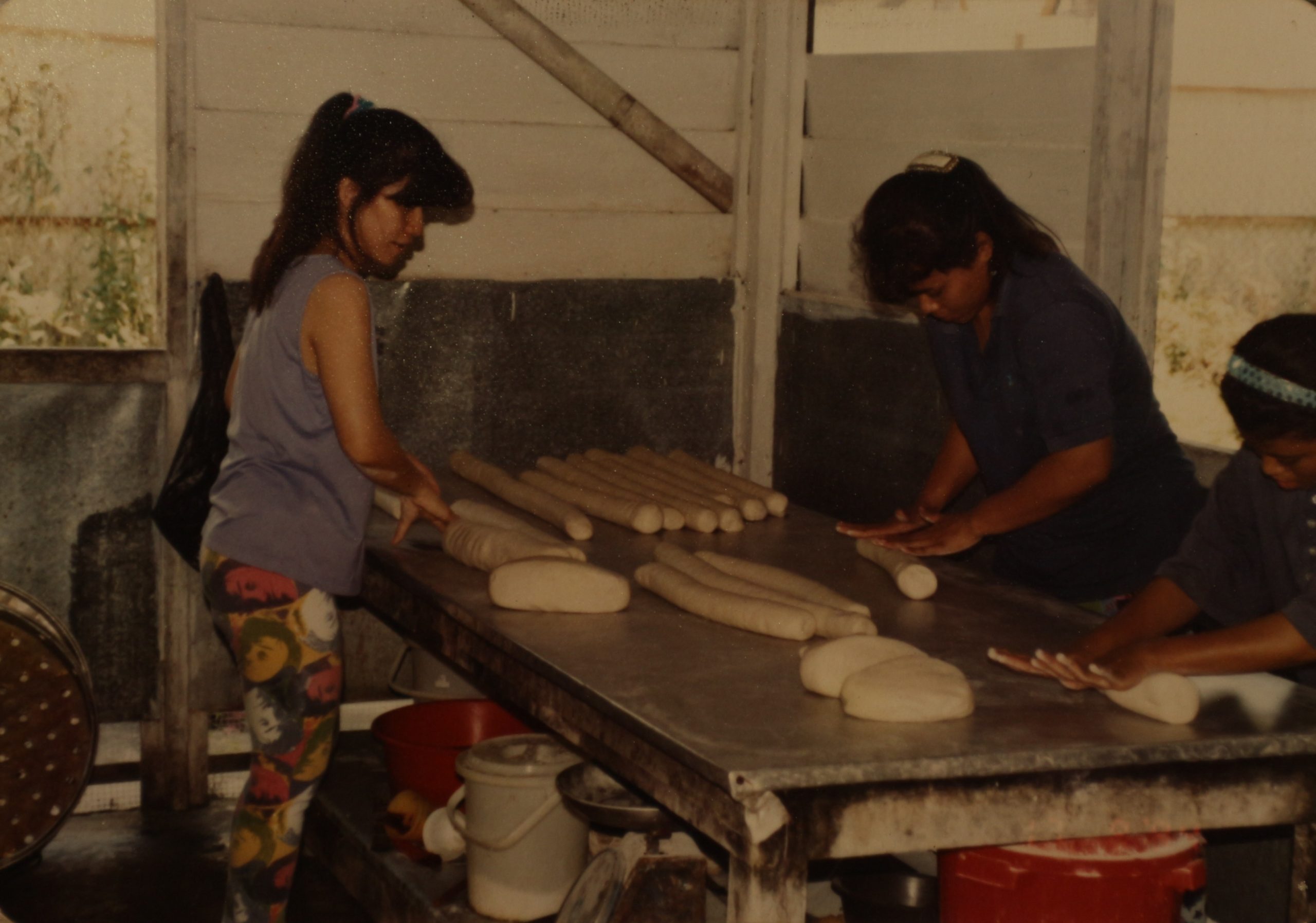
The Hua Hua brand snacks factory has become busier with each passing day as the Chinese New Year approaches. It’s the sound of the mincer, the slicer, and the workers hurrying to tick each to-do list. And behind all the hustle, Elayne Choo recalled that, as a young girl who grew up amidst the busy schedules of the factory, it was a familiar symphony — a nostalgia from the past.
“All the sounds are not unfamiliar to me. Since I stayed behind the factory, I would be woken up by the sound of the mincer as early as 7 am.”
Today, Elayne is the Managing Director of the brand company. Now a third-generation member running the business with her brother, Hua Hua Sales Director Gordon Choo, Elayne said the brand was born from her grandmother’s instinct to welcome and feed others.
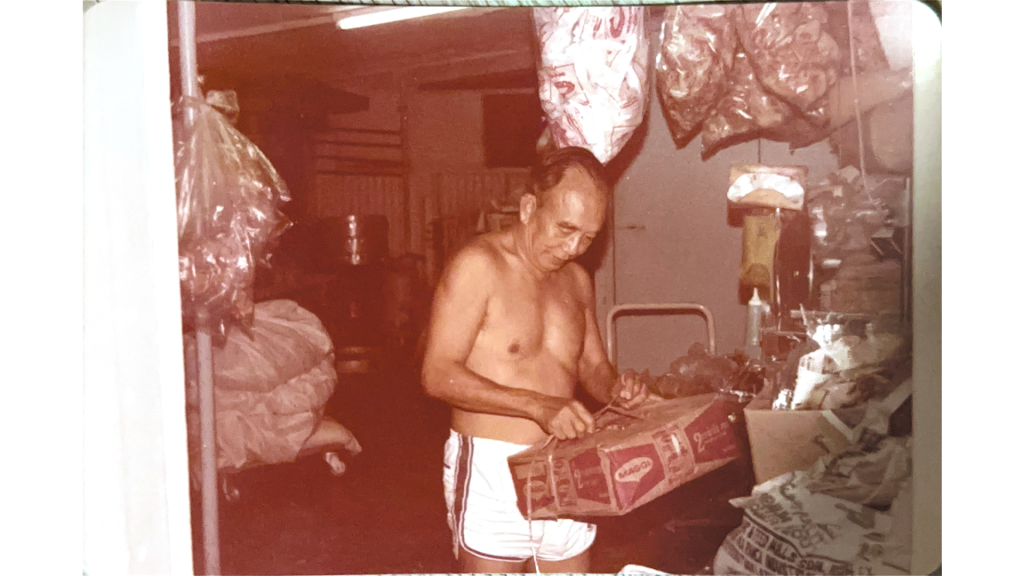
“She started making keropok (crackers) as a hobby to feed her friends and family in the 1960s. It was just a small scale, but then people began to ask to purchase her keropok. Soon after, grandpa bought a slicer from Singapore in the 1970s, and that’s when grandma started to commercialise the product,” said Elayne.
But grandma wasn’t just a cook and a homemaker; she was also a seamstress and could make curtains, Elayne added. Her hospitable trait was what kept her going through days of mincing the meat and slicing it into keropok.
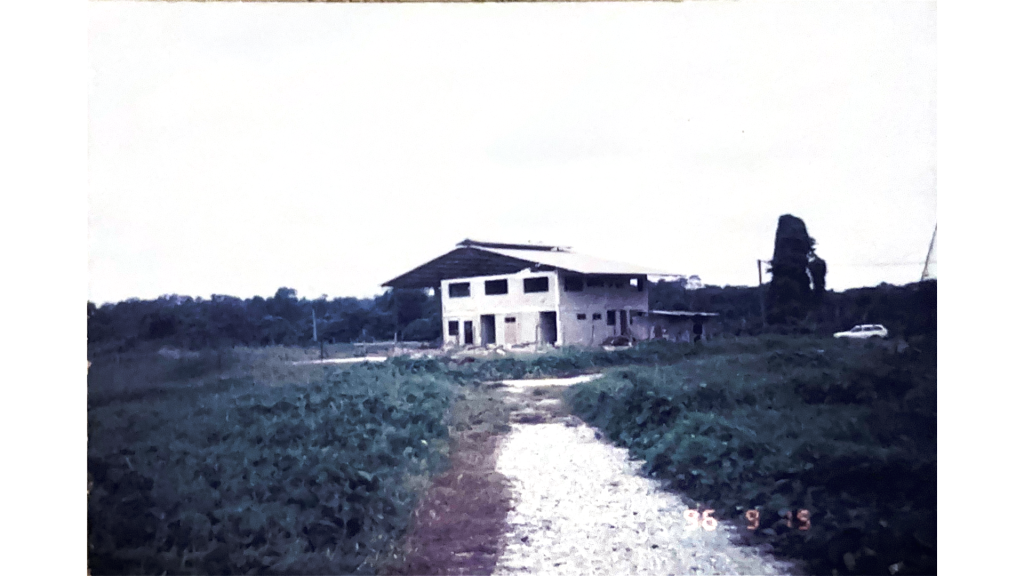
“Then people would come and visit her, and it’s usually a huge community of neighbours staying nearby that would gather.”
The recipe
Back then, the community came together a lot — and with that, they shared their experiences and knowledge among one another. Tight-knit and close, it was during one of these chatters that Grandma Choo got the recipe to make the keropok.
“It was from one of her Indonesian friends, the wife of a worker who worked in grandpa’s convenience store back then. They were friendly with each other, and so she shared the recipe with Grandma,” Gordon revealed.
However, much has changed from when Grandma Choo created it the first time. The first few batches were crinkled and thin, and over time, she learned to integrate Sarawak pepper into the keropok.
According to the Choo siblings, their grandmother had kneaded the dough by hand before.
“And before the slicer, she could slice the keropok into consistent pieces.”
Hence, production was only 10 kilogrammes per day compared to today’s average of 120 kilogrammes per day.
“She did so by herself because of the love she has for her community. She’s just like that, very kind and hospitable.”
But keropok is difficu
lt to make solo. Just like how the flavours and crunch bring the community together to enjoy it, making it also requires a community.
“It isn’t something that can be done by yourself. Because of the numerous ingredients and the steps needed to make it, you really need a lot of people to do it together.”
A legacy from the past
After Grandma Choo, Hua Hua was managed by Elayne and Gordon’s parents. This was the time when the brand expanded onto the shelves of supermarkets across Sarawak. Gordon recalled being driven in the car alongside his younger brother from Kuching, Miri, and even Brunei to deliver stocks of keropok. In between these pit stops were times when he would sleep while his parents drove.
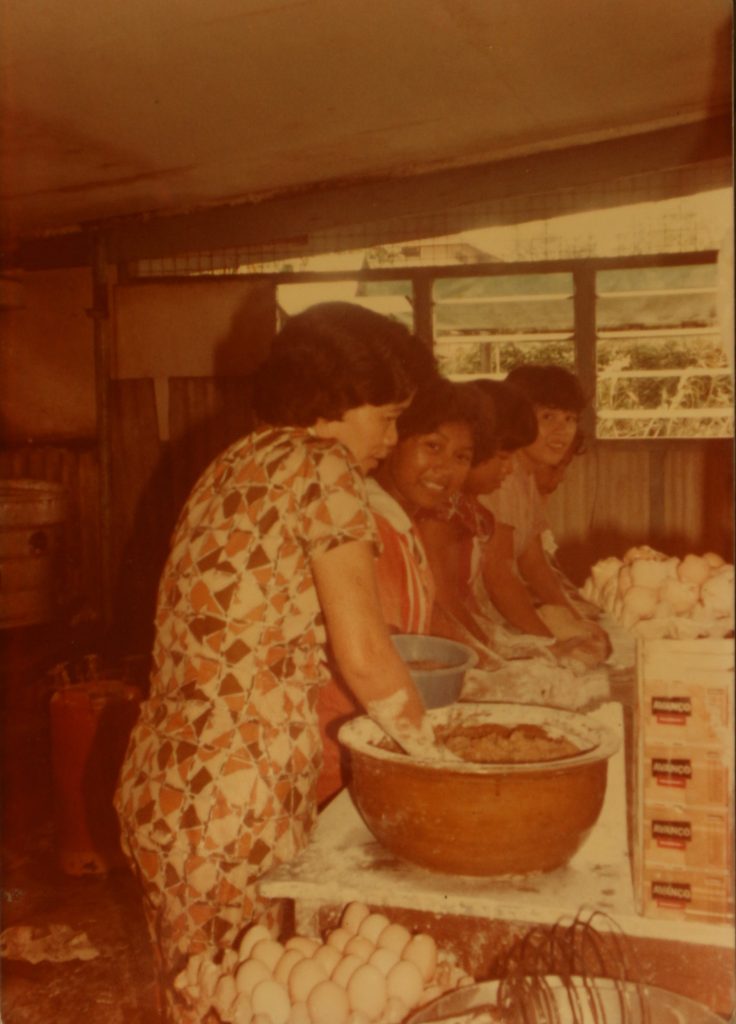
Elayne, though, remembers her childhood spent at the factory, making keropok alongside the workers who had been loyal since her grandmother’s time.
“Many of them were brought over when my mother took the helm. And then, when we took over, they followed us too, with the oldest staff being 50 years old.”
To her, the legacy isn’t just the stories that kept the brand alive, but also the responsibilities that the company has towards the staff who have followed through the history of the brand. From making keropok at the factories to selling them at the festival bazaars at Carpenter Street, Kuching, Elayne and Gordon’s love for the brand persevered.
As they took the helm in the present day, many things have changed.
“The manufacturing process is definitely different now, as with the machines. It is less labour-intensive and more consistent as well. Aside from the modernised inventions, we are proud of our automated banana peeler, which can produce consistent banana slices despite the shape of the fruit,” said Elayne.
With over 10 variations of products, Hua Hua continues to be a highly sought-after brand during the Chinese New Year. Between the raw keropok and the ready-fried ones, Elayne disclosed that the raw ones are those that sell the most. This is due to the effect of blooming bigger when fried, which symbolises a whole year-round of growth and prosperity.
Much like the keropok that expands when it meets hot oil, the story of Hua Hua has grown quietly over the decades — shaped by hands, sustained by community, and passed down with care. As families gather this Chinese New Year, the familiar crunch of keropok and acar (pickled vegetables) remains a small but meaningful reminder that prosperity, much like tradition, is something nurtured slowly, together.