THE river was never meant to invade the village at Kampung Haji Mahjid.
On most days it moves quietly past wooden jetties and anchored boats, reflecting the sky in soft ripples. But after days of relentless rain, the water rose without warning, swallowing its banks and creeping into narrow walkways between homes.
That was when Mohd Khalid, 27, found himself running for his life.
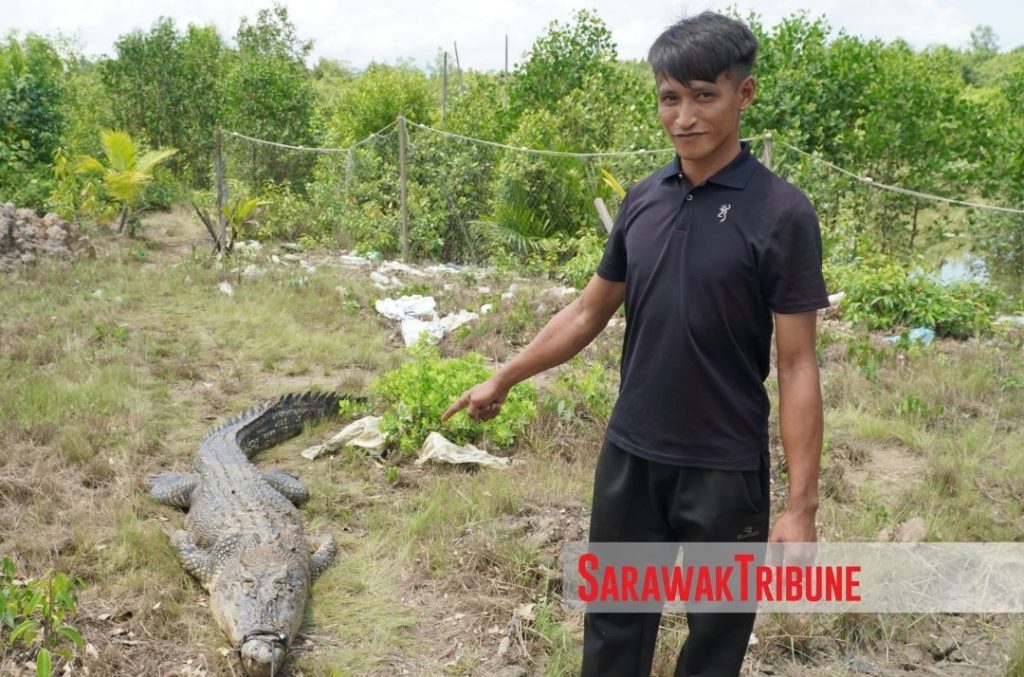
A crocodile emerged from the brown floodwater and gave chase.
“It was huge. Fast. Strong. They grow quickly here, and they breed even faster,” he says, his voice tightening as he recalls the moment.
“If they catch you… I don’t know.”
The powerful tail thrashed behind him. The water churned. He ran until his legs burned. He survived, but the fear did not leave.
“They should be killed.It’s a big problem here. They grow fast, and they multiply quickly. We cannot just leave them,” he said firmly.
For villagers living beside the river, the threat is not theoretical. It is immediate. It is personal.
When help arrived
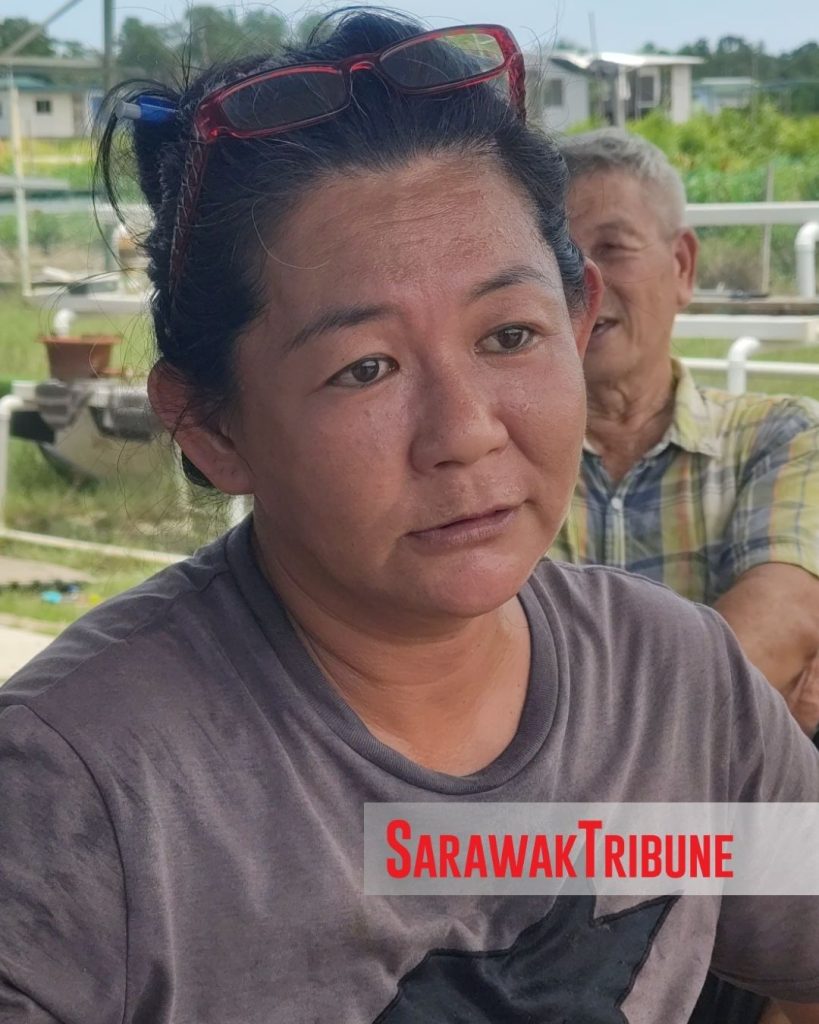
When concern grew louder, Lim Soon Gek stepped forward.
At 49, she is one of the few women in Sarawak involved in crocodile hunting.
She only began two years ago, far less experienced than her partner David Chai Joong Khee, 55, who has spent two decades in the field, yet she has quickly built her own reputation.
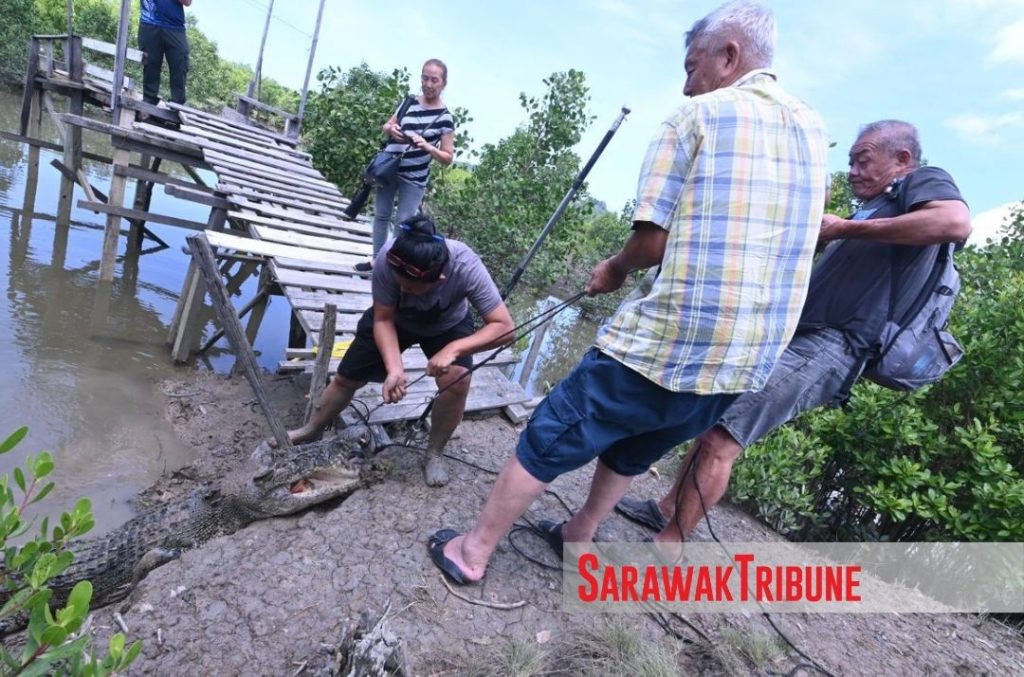
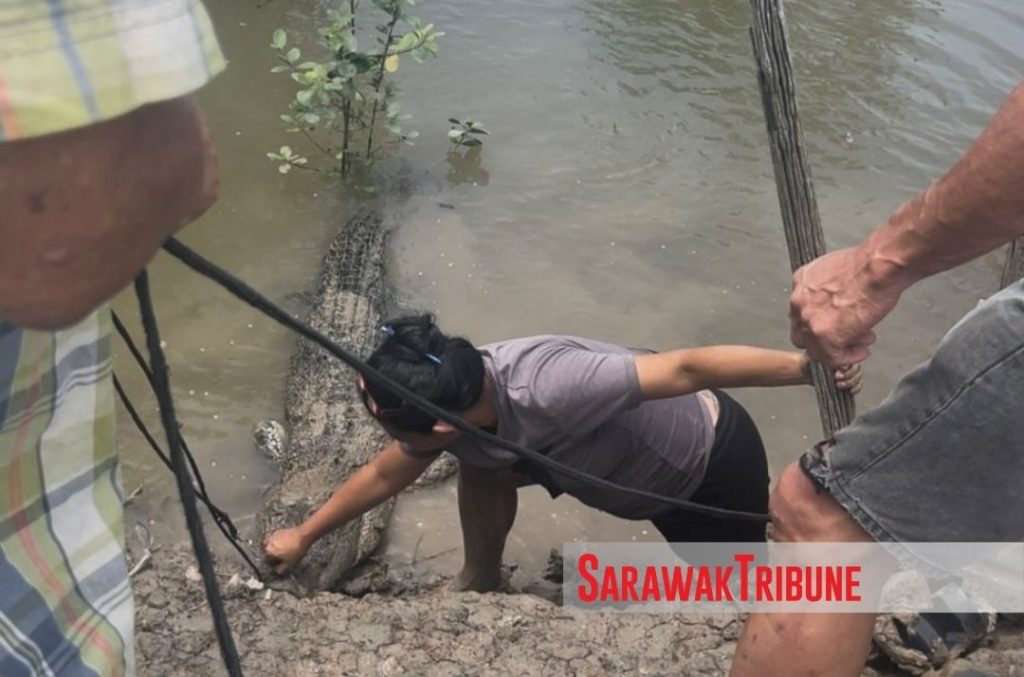
Her first catch in that village was a crocodile that had taken the bait near the jetty. When she stepped down carefully toward the water with a long spear to check for movement, the animal was already dead from drowning.
“At first, it was just for fun.
“But I wanted to help the people in the village. That’s why I decided to hunt the crocodiles,” Lim admits.
Curiosity turned into responsibility.
Fifteen crocodiles, two years
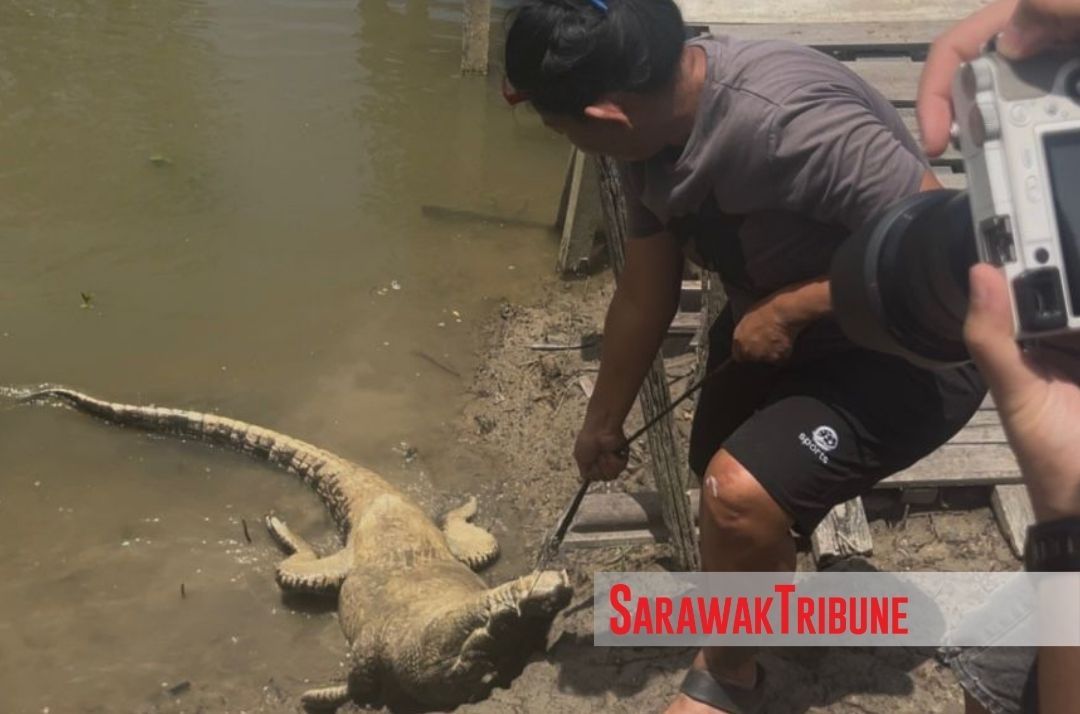
In just two years, Lim, David and their group have caught 15 crocodiles.
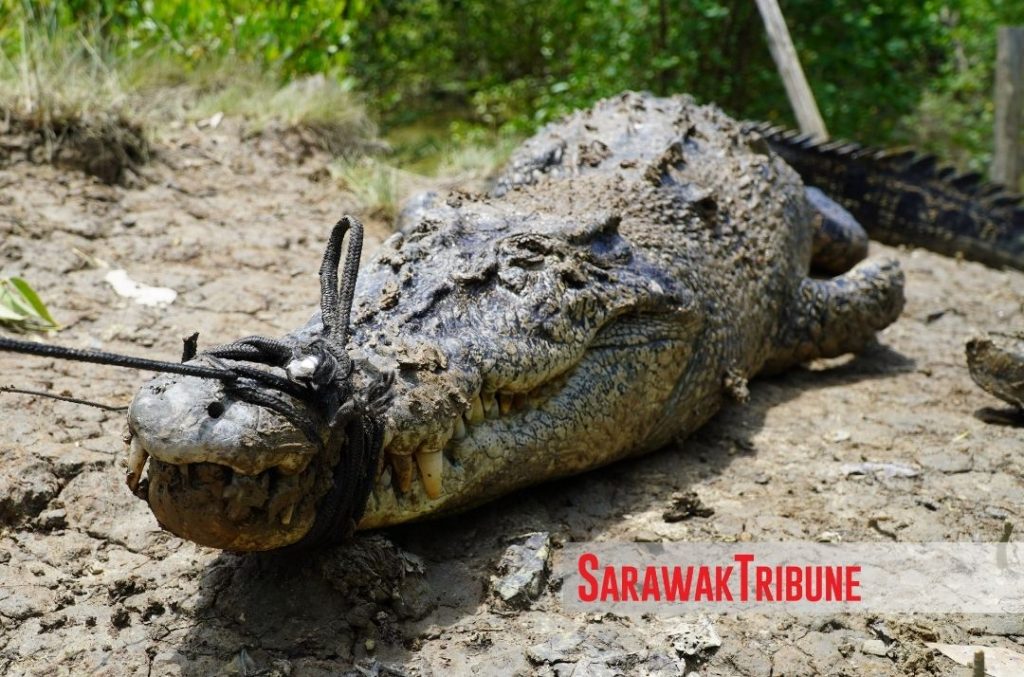
The largest, according to them, measured 15 feet long and weighed around 500 kilograms. Its size alone was a reminder of what lurks beneath the calm surface.
Each hunt demands patience. Chicken baits are placed strategically along the river, and the lines are checked repeatedly as hours slip by in silence.
Hunting is often easier at night.
“When you shine a torch in the river, you can see their eyes reflecting the light,” Lim says. In the darkness, twin red glows reveal what daylight hides.
Despite being relatively new, she works within strict legal limits.
Hunting within the law
Lim is licensed by the Sarawak Forestry Corporation (SFC). The permit costs RM100, is valid for one year, and allows her to kill a maximum of 10 crocodiles annually. Her permitted areas include the Salak River, parts of the Sarawak River and areas in Lundu.
This is not open hunting. It is controlled and regulated.
But legality does not mean universal approval.
Tradition and belief
Yet, not everyone in the village supports her work. Some Ketua Kampung — village heads — prefer to leave the crocodiles undisturbed.
“Some do not approve.They ask me to leave the crocodiles alone,” Lim says.
This hesitation is deeply rooted in tradition. Across Sarawak, age-old beliefs hold that crocodiles are powerful beings or connected to ancestral spirits. Disturbing them could bring misfortune, and harming them is considered taboo. For many elders, these predators are not merely animals; they are forces to be respected, feared, and left in peace.
Lim understands this tension. The river carries more than water; it carries history, belief and inherited caution.
But it also carries risk.
When humans draw them closer
According to Lim, people unknowingly contribute to the problem.
“People throw rubbish into the river. Plastic bags, leftover food… I’ve even found plastic inside a crocodile’s stomach,” she says.
Waste becomes bait. Food scraps attract smaller animals. Crocodiles follow.
Some villagers try to chase them away with firecrackers or by throwing stones. The disturbance is temporary. The crocodiles return.
The river remembers.
Nothing goes to waste
Although she hunts crocodiles, Lim does not see the work as senseless killing.
She believes that if crocodiles must be removed, they should not be wasted. She hopes that one day there could be a proper farm system to manage them more sustainably.
In the meantime, she makes use of what is taken.
Lim prepares smoked crocodile meat, carefully preserving it so it lasts longer. The smoking process transforms the flesh into something that can be stored and shared.
She also makes umai, a traditional Sarawak dish typically prepared with raw fish marinated in lime juice, onions and chillies, but adapted with crocodile meat.
However, she explains that umai must be made from smaller crocodiles. The meat of larger ones is much tougher and not suitable for the dish. Smaller crocodiles provide softer flesh that can be prepared properly.
In this way, the river’s danger becomes food on a table.
Lim has also done her own research online about crocodile by-products. Based on what she has read, she believes crocodile oil can help with cuts, while crocodile meat may be beneficial for asthma.
“I read about it online. The oil is good for the skin, and the meat is good for asthma,” she says.
For her, understanding these uses is part of respecting the animal, seeing it not only as a threat but as something with value.
Between fear and respect
The story unfolding along the river is not simply about hunting.
It is about balance.
For Khalid, the memory of being chased justifies action.
For village elders, belief demands caution.
For Lim, the path lies somewhere in between, operating within legal boundaries, acknowledging tradition, and responding to immediate danger when it arises.
As evening falls, the river once again looks peaceful. The surface glows gold before darkening into shadow.
But those who live beside it know better.
And when the water rises again, when eyes reflect torchlight from the darkness, Lim will return to the edge.
Not for thrill. Not for sport.
But because someone has to stand between the village and the river.