EVERY woven thread, every carved blade and every embroidered motif tell a story.
More than a competition, the Iban Women Charitable Trust (IWCT) Pekit Pengelandik Jari 2025/2026 therefore celebrates the artisans who are keeping Iban heritage alive, ensuring that traditional craftsmanship is passed on to future generations rather than fading into history.
IWCT Chairman Tan Sri Dato Sri Empiang Jabu stressed that preserving Iban craftsmanship requires action today to ensure the knowledge and skills are not lost to future generations’ and to keep the heritage alive.
“If we don’t do it, who else will? This is how we preserve our traditions and culture, by continuing to practise them, encouraging our young people to learn, and giving our craftsmen a platform to keep the heritage alive,” she said, acknowledging that initiatives such as Pekit Pengelandik Jari are important in recognising artisans, encouraging excellence and ensuring traditional Iban crafts remain relevant for generations to come.
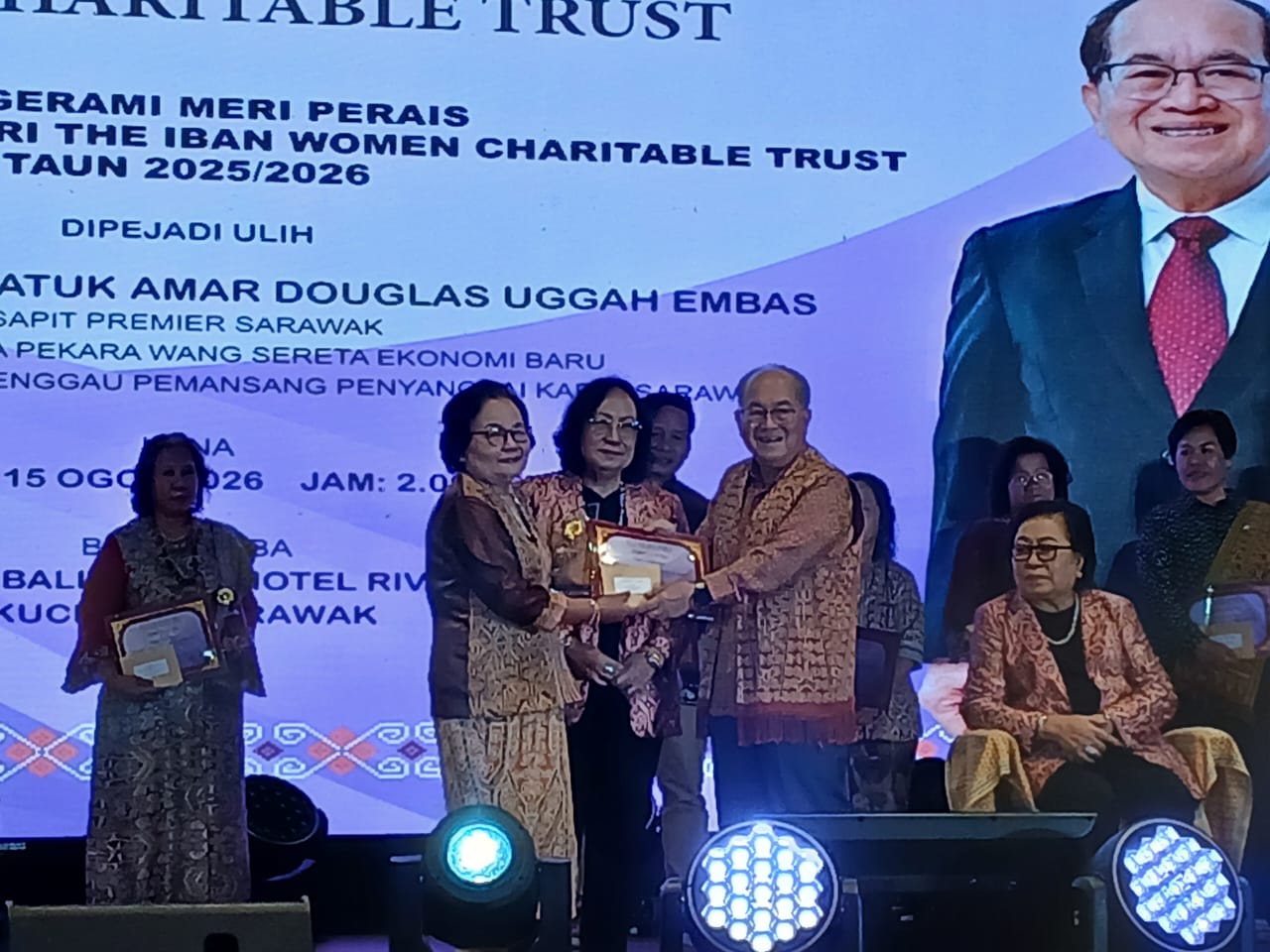
The IWCT Prize Giving Ceremony held on Aug 15 in Kuching honoured outstanding Iban craftsmen and craftswomen in categories including Pua Kumbu weaving, Baju Kuas, traditional Iban duku and other heritage crafts.
But behind every winning piece is a story of its own. For the artisans who took part in the competition, their creations represent more than skill and craftsmanship. They reflect years of learning, patience and a deep connection to Iban heritage.
For some, the recognition is a personal achievement. For others, an opportunity to ensure that traditional knowledge continues to be passed on.
Here are some of the stories behind the winning hands.
Single mother Nancy Ngali, 67, is weaving heritage into the future while continuing to rely on her craft as a source of livelihood. Her winning Bujang Malaya pua took four months to complete and was later purchased by IWCT for RM4,500.
“I was very happy and grateful when my name was announced as the first-prize winner. I never expected my work to receive such recognition. I would like to thank all the judges for recognising my weaving and selecting it as the winning piece,” she said.
Nancy said the Bujang Malaya pua features five colours and required considerable precision, patience and attention to detail to complete.
For Nancy, weaving is more than a source of income, it is a skill, a tradition and a piece of Iban heritage that she hopes to carry forward. Any interested parties that may want her to weave the ‘Put Kumbu’, can contact her at 011-25092072.
For 27-year-old Slyavester Malaka Anak Falex Mandau, from Rumah Panjai Tr.Anyie Matop Paku Saribas, Spaoh, said, his passion for making a ‘Duku’ (traditional Iban machete), represents a younger generation of Iban craftsmen keeping the traditional ‘duku’ alive. His winning Duku Nyabur Lelaki took almost five months to complete, with its design inspired by traditional Saribas craftsmanship.
“For me, the competition is not about deciding who is the best. It is an opportunity to learn from one another, improve our work and ensure that the original identity of Iban craftsmanship is preserved,” he said.
His story reflects an important part of IWCT’s mission, ensuring traditional craftsmanship is not only preserved, but continues in the hands of the next generation.
“I started making traditional Iban ‘duku’ in 2019, when I was 20. Apart from making duku, I also produce carved designs on wood and plywood, which are used as decorative pieces for homes.
“My interest in Iban carving and ‘duku’ making began when I frequently visited the late Niang Lemambang from Rumah Tangai, Nanga Jitu Anyut, Paku Saribas, Spaoh. He was a custodian of traditional knowledge and was highly skilled in making ‘duku’ and traditional carvings.
“I was fascinated by the intricate carvings on the handles and sheaths of ‘duku’, including ‘Ilang, Nyabur’ and other traditional forms. The craftsmanship of the elders inspired me to learn and continue the tradition.
“From him, I learned about the different types of Iban ‘duku’, the traditional taboos and practices involved in making them, as well as the motifs used for the handles and sheaths.
“I also learned from several respected Iban craftsmen, including Temenggong Richard Mulok anak Entring, Tr. Enteri anak Lengkoi, Richard anak Ngali, Robinson Chendan, Chua How Peng from Kampung Entingan, Samarahan, and Gasah anak Duat from Nanga Samu. They shared valuable knowledge about the techniques, history and identity of traditional Iban duku,” he said.
“When IWCT opened the Pekit Pengelandik Jari 2025/2026 in August 2025, I entered the ‘Duku Nyabur Lelaki’ and ‘Duku Langgai Tinggang’ categories. However, because I was working full-time, I only managed to complete the Duku Nyabur Lelaki, which took almost five months.”
Slyavester mainly worked on it at night and during weekends. Most of the carving was done using traditional tools such as wooden planes, chisels and carving tools.
“I only used modern equipment such as a grinder to smooth the sheath and a drill for certain parts.
“When I did not have a permanent job, I could complete one or two duku in a month. But the finer and more intricate the carving, the longer it takes to complete. My ‘duku’ are usually priced between RM750 and RM3,000, depending on the quality and intricacy of the carving, the material used for the handle, such as horn or wood, and the type of wood used for the sheath. The Duku Nyabur is the design I receive the most requests for.
“I always try to preserve the traditional identity of Iban duku, particularly the Saribas style. I do not want to make the designs overly modern because I am concerned that the original identity of our traditional duku could eventually be lost,” he said, adding that the handle, sheath and blade of his winning ‘Duku Nyabur Lelaki’ were inspired by traditional pieces which he encountered while visiting longhouses around Batang Paku, Saribas. The handle was made from deer horn, the sheath from tapang wood, and the blade from spring steel.
“I also incorporated traditional plant motifs through openwork carving on the handle and sheath, together with a ‘gela’, or traditional verse, symbolically tracing the journey of the ‘duku’ from Nanga Matop to Kuching before it was presented to the judges, and ultimately named the winning piece,” he said, and adding that any orders of ‘duku’ or other Dayak house design may contact him at 014-5948698.
Meanwhile, 41-year-old civil engineer Moureen Bali from Rumah Saloma, Gayau Pantu, Sri Aman, captured the judges’ attention with her intricately embroidered Baju Kuas ‘Pink Promise’, created over two and a half months to complete.
The piece, she said was inspired by the rose and embroidered with pink and copper-gold thread, and was later purchased by IWCT for RM1,800 per piece.
“I feel very proud and happy that my Baju Kuas was selected as the first-place winner,” said the civil engineer, based in Sri Aman.
The public can reach her at Reenai Collection at 019-8497937.
Meanwhile, 30-year-old Muhammad Adam Nikolas Abdullah, from Bintulu is proud to carry the Iban identity forward, and being among the top six in the competition was more than an achievement, he said.
“It was an opportunity to learn, grow and proudly showcase my cultural identity. I am very proud to be among the top six. More importantly, I am happy that we have the opportunity to learn and bring our identity forward. It is encouraging to see people who are interested in learning about our traditional craft and culture,” he said.
He said the experience also gave him the opportunity to learn from other participants and exchange knowledge throughout the competition.
“This was my first time taking part, and I learned a lot from the people around me. We had the opportunity to learn from one another, and I was very happy to be here and gain that experience.”
For Adam, the competition was not only about winning but also about keeping traditional craftsmanship alive and ensuring younger generations continue to appreciate and learn the skills behind Iban heritage.
“I believe the most important thing is that we continue to learn and preserve what we have. We have to be patient and keep learning, because this is how we can carry our culture forward,” said the champion of making a beaded necklace (Nusuk Marik Empang Tradisional or Tangu).
All winners brought home with them cash prizes, certificates and plaques. Consolation winners were also given cash prizes.