THE formation of Sarawak’s identity as a state rich in cultural heritage and unique history continues to be overshadowed by the dominance of Western narratives in historical writings.
The lack of a balanced local perspective, coupled with the absence of dedicated institutions to systematically document Sarawak’s history, has caused these efforts to be frequently overlooked.
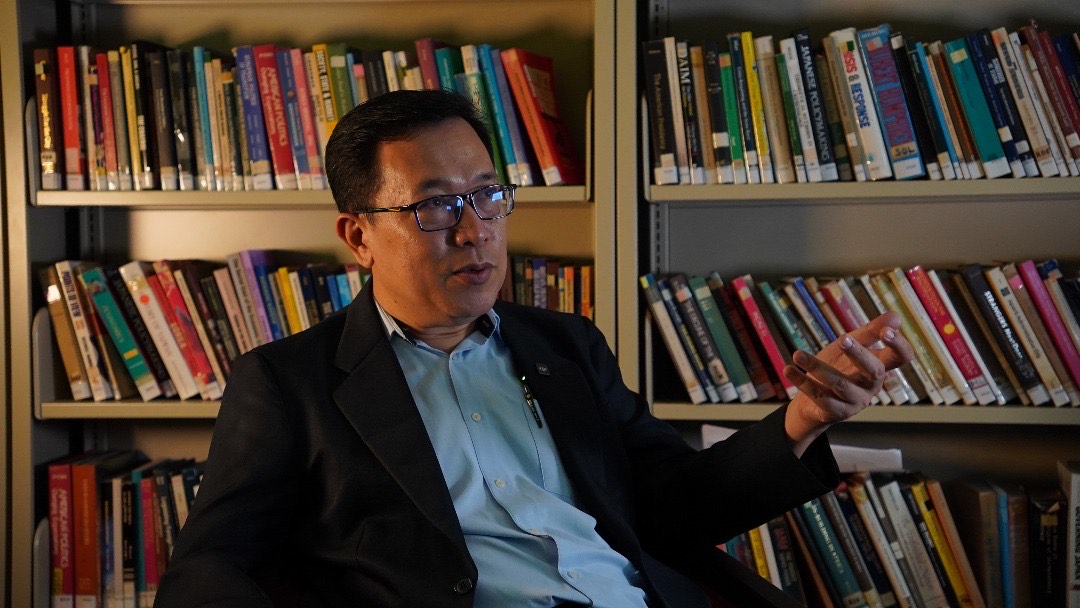
Suara Sarawak’s journalist Ekamiezza Kamil, and photographer, Haziq Anwar, spoke with Dr. Suffian Mansor, a lecturer in the History programme at the Centre for Historical, Political and Strategic Studies, Faculty of Social Sciences and Humanities, Universiti Kebangsaan Malaysia (UKM), to gather his thoughts on the urgent need to develop a historical narrative of Sarawak that reflects the voices and perspectives of its own people.
SUARA SARAWAK: As an expert in modern Chinese history and Malaysian history, particularly that of Sarawak, what inspired you to pursue this field?
DR. SUFFIAN MANSOR: My interest in history has been deeply rooted since childhood. To me, history is like searching for answers that have yet to be discovered. It’s not just about the past, but also about understanding the present and shaping the future.
When we explore and analyse historical sources, we often uncover fascinating insights that are not only educational but can also contribute meaningfully to societal development.
I was also inspired by how prestigious universities such as Cambridge, Oxford, and Harvard — as well as top institutions in Asia like those in Tokyo and Singapore — place great importance on history. In these countries, history remains a core academic discipline, not just a supplementary subject.
Unfortunately, historical writing about Sarawak is still underdeveloped and often leans heavily on Western perspectives. These narratives tend to portray our communities as uncivilised, even labelling us as pirates and the like. In reality, Sarawak has a rich, well-organised, and uniquely complex historical heritage that deserves greater recognition and representation.
Why is it important to write history from a local perspective?
Writing history from a local viewpoint is crucial because much of the historical record we rely on today is rooted in Western or, more specifically, Western-centric perspectives. This means that our history has often been written through a colonial lens — one that judges our culture and society based on limited understanding, resulting in biased narratives.
For instance, when it comes to the formation of Malaysia, we still largely depend on official documents that are not fully accessible to the public. Take the Cobbold Commission, for example. It gathered a wide range of feedback from the people of Sarawak, but only a small portion of that information has been made public. Much of it remains hidden — like the tip of the iceberg.
That’s why it’s essential for us to take the initiative to uncover and rewrite our history from our own perspective — to ensure a fairer, more accurate, and comprehensive understanding of our past.
Could you share an example of how Sarawak’s history is often misinterpreted or misunderstood?
One commonly debated issue today concerns Sarawak’s natural resources — particularly oil. Some people believe that Sarawak didn’t have natural resources like oil in the past. That’s simply not true.
In reality, Sarawak had already begun oil extraction activities as early as the 19th century, especially in Miri. At that time, oil wasn’t yet the major fuel source it is today, but the activity was already taking place. Therefore, the narrative that Sarawak only became “valuable” after the formation of Malaysia is inaccurate and disregards the state’s true historical background.
That’s why I believe the time has come for Sarawak to establish its own historical institution — perhaps under Universiti Malaysia Sarawak (UNIMAS) or through the state government. Take Brunei, for instance. Despite being geographically smaller, they have their own national history centre. We should have initiated something similar a long time ago.
Who are the figures or what events inspired you to pursue a career in history and academia?
One of the figures who greatly inspired me was Professor Emeritus Khoo Kay Kim. I first came across his name during my school days, and he has remained one of the most prominent historians consistently dedicated to bringing Malaysian history to the wider public.
What struck me most about him was his humility and openness — he was always willing to engage in conversation with anyone, regardless of their background. I had the privilege of meeting him several times, and each encounter strengthened my resolve and motivation to continue pursuing my path in the field of history.
You’ve studied abroad — could you share one of your fondest memories from that experience?
Honestly, I never imagined I would have the opportunity to study overseas. My first offer was actually from Kyoto, Japan, but I eventually chose the United Kingdom. I began my postgraduate studies through Universiti Malaya (UM), then continued to the University of Leeds, and finally pursued my PhD at the University of Bristol.
One of the most memorable aspects of my time abroad was learning to adapt to a completely different education system and unfamiliar culture. At first, I was quite anxious — especially about the cost of living. But I was very fortunate to receive a scholarship in foreign currency (Pound Sterling) rather than Malaysian Ringgit, which made a significant difference, even though the exchange rate at the time was quite high — about £1 to RM7.
That experience taught me independence and broadened my perspective, especially in how I approach historical writing and analysis.
What is one daily routine you never skip, no matter how busy you are?
Reading. I really love reading. Even when I’m swamped with administrative duties or teaching, I always find time to read. Even in traffic jams, I read using apps or physical books.
I try to make it a habit to finish at least one book a month. Reading is like opening a Pandora’s box—every time you finish a chapter, new questions or knowledge emerge that entice you to keep reading and to understand more deeply.
If you’re not teaching or writing, what is your favourite activity?
Apart from reading, I enjoy watching documentaries, especially those related to history and community life. I rarely watch commercial films because documentaries often give me fresh perspectives and are more connected to real societal issues.
Are there any history books or films that you often recommend to your students?
Yes, among the books I frequently recommend are works by Leonard Andaya, as well as writings by local figures such as Datuk Dr Jeniri Amir, the late James Ritchie, and Dr Sanib Said. They not only write with high quality, but also help build a more balanced narrative about the history of Sarawak and Malaysia in general.
If you were given the chance to return to any era in history, which era would you choose to experience?
I would like to go back to the 1970s—that was the decade I was born in. Even though I was just a child then and didn’t fully understand what was happening around me, that era really fascinates me.
It was a time full of change and important events, especially in the context of Sarawak. During that period, we saw the threat of communism and the government’s security operations in response.
But as children, we only knew how to play, climb trees, and run around with friends. We weren’t aware of the bigger realities surrounding us.
I feel the 70s was a period of major transformation for Sarawak. At that time, Tun Abdul Rahman Ya’kub led Sarawak as Chief Minister, and he played a vital role in laying the foundation for the state’s development.
This was later continued by Tun Abdul Taib Mahmud in the 1980s, who expanded that development even further.
However, I believe the groundwork for modern Sarawak started in the 70s. That’s why I would like to go back to that era to witness and understand for myself how those changes began from the perspectives of society, politics, and everyday life.
Although back then many parts of Sarawak still didn’t have television, and radio was the main medium of information, the atmosphere was full of community values, simple living, and slow but steady progress.
What is one piece of advice you often give to others, especially to the younger generation?
I think the most important advice is that we need to know our identity. We must know where we come from.
Awareness of our roots is crucial because it helps shape who we truly are.
This is something that many great nations practice—they know exactly where they came from. When we know our origins, we’re less likely to lose ourselves. Even when we reach high positions, we shouldn’t become arrogant.
Sometimes people offer us high-ranking roles like Chief Minister, minister, or other posts, but we must remain humble. Humility is key.
Even the Prophet Muhammad, despite being a great leader, was incredibly humble. That is a powerful example we should all follow.
Humility brings blessings. When we are sincere and not arrogant, people will accept us more easily, and our service will be felt by everyone—not just for personal gain.
So, stay humble no matter how high you rise, because humility is the foundation of blessings in both life and leadership.