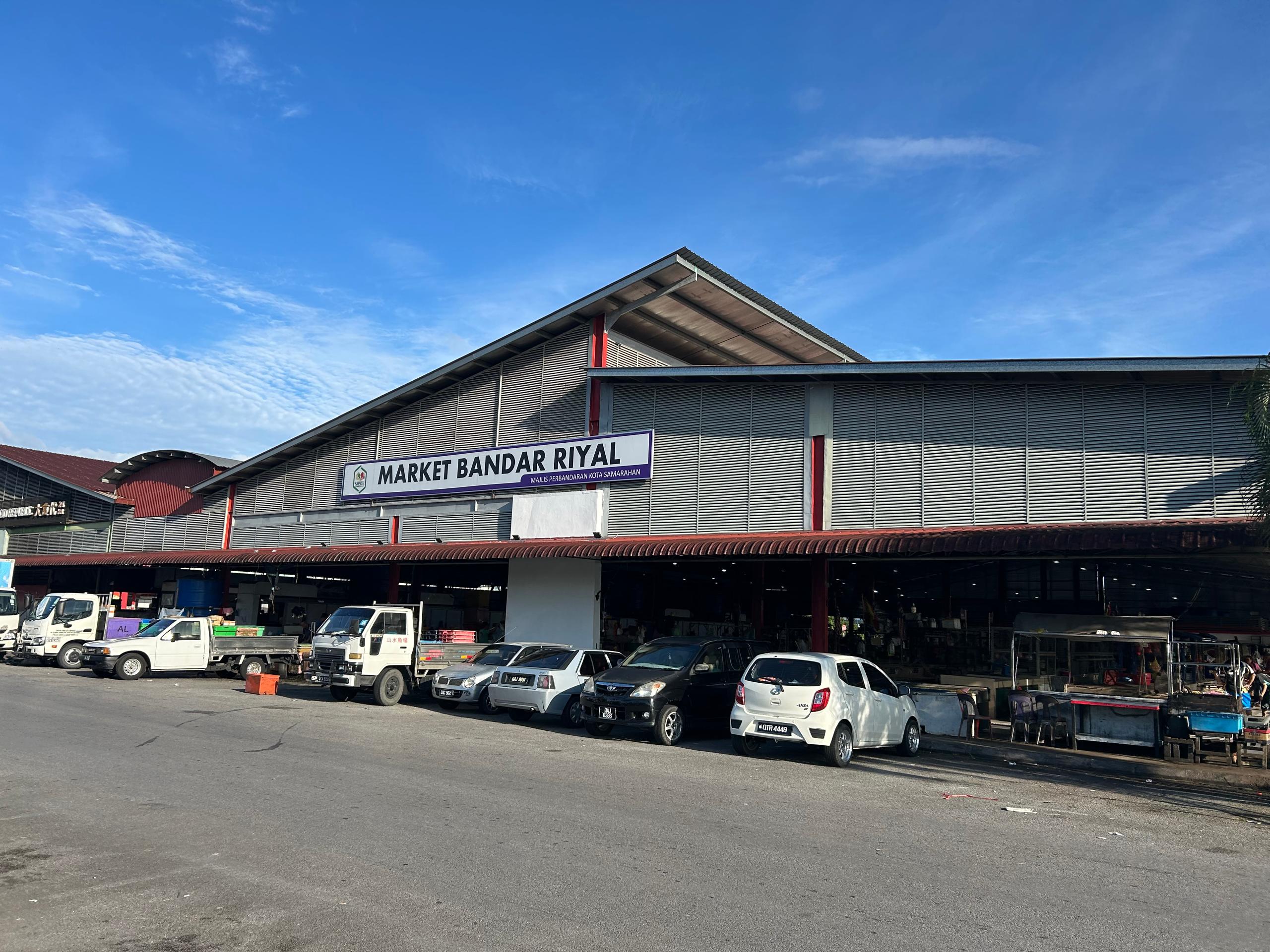
KOTA SAMARAHAN: As temperatures rise and unpredictable weather patterns become more frequent, small traders at the Bandar Riyal Market here are feeling the heat – both literally and figuratively.
From fishmongers battling with melting ice to farmers struggling with dried vegetables, their livelihoods are increasingly put to the test.
For Rasid Arias, 50, a seasoned fishmonger, the struggle begins before dawn.
Rasid, who has been trading at Bandar Riyal for over 10 years and has more than two decades of experience in the trade, finds that the changing weather has brought new challenges.
“I’ve been selling fish here for 10 years, but I’ve done this work for over 20 years already,” he said.


Not only that, Rasid shares his concerns about the current weather situation as well.
“Now, the weather is bad. We don’t have enough fish,” he added.
The availability of fish has dropped, and maintaining freshness has become more difficult due to rising temperatures and the increased cost of ice.


“Ice is expensive now. It used to be RM100. Now, it’s RM130,” Rasid explained.
As a result, the price of seafood has increased and become more expensive than usual due to the climate issues.
“That’s why fish is more expensive now; there’s a lot of ice needed to keep them fresh,” he shared.
Although some customers complain about price hikes, many are unaware of the behind-the-scenes costs traders must bear to maintain quality.
Rasid also said that he works the phone daily, contacting seafood suppliers and shops to get his supply.
“I contact suppliers every day. If one doesn’t work, I contact another by the end of the day. I have to plan A and B,” he shared.
Rasid mentioned that some fish are harder to find due to this weather season.
“We usually can get the stingray, but nowadays it depends on the season,” he added.
Even with the careful planning done by Rasid, losses are sometimes unavoidable.
“If I find a supplier, I’ll buy a lot of fish. If I don’t, I still have to sell to the customer. Sometimes I manage, sometimes I don’t,” he said.

Rasid also said that he lost his seafood supplier stock several times within a two-month time frame.
“Before and after Hari Raya Aidilfitri, I lost stock four times,” he shared.
A few stalls away, Ahmad Nin Mot, 63, known as Pakcik Ahmad, who has traded at Bandar Riyal Market for several years, faces different challenges due to the hot weather.
As a self-sustained vegetable grower and seller, he neither relies on external suppliers nor uses chemical pesticides.
“I just plant it myself and sell it myself, and my stock is also limited. Because of the current situation, I don’t dare to take a lot,” he said.
He shared that the extreme heat affects the vegetable quality he sells, complicating his daily routine as a vegetable grower.
“We water it in the morning and again in the evening after coming back from the market.
“If not, it will be damaged. It won’t look good, and I can’t sell it as well,” he said.
Not only that, Ahmad fertilises his crops naturally and avoids pesticides, using purified water instead.
However, this method demands closer attention.
“If you don’t take care of it, insects will come. Sometimes at night, the insects come, especially the ones that like to eat vegetables. If it’s not good, I throw it away or soak it and make compost,” he said.
Turning setbacks into solutions, Ahmad has started turning unsold or damaged vegetables into compost fertiliser for his crops.
“I don’t throw it away. I process it. I make it compost,” he said.
However, due to the weather, the composting process has become more frequent for Ahmad.
“I’ve started composting a lot. This is more than what I sell,” he added.
The rising temperature has also made his time at the market uncomfortable.
“If we sit here, it’s hot. We can handle it, but we don’t know about the products we sell,” he said.
Ahmad wishes that the authorities would consider upgrading the facilities at Bandar Riyal Market to better accommodate traders and customers alike during extreme weather conditions.
“If possible, we want more fans or better ventilation, just something to make the place more comfortable, especially during hot weather,” he said.
Ahmad also mentioned that upgrading the Bandar Riyal Market would benefit the other vendors as well.
“It would help us and protect our goods too,” he said.
Another vendor at the market, David Melos, 46, also shared a similar story.
Having sold vegetables for the past three years, David has had to pivot his stock due to the effects of the heatwave.
“The weather is hot, and it is difficult to find vegetables like cabbage and leafy greens,” David shared.
“Now we only sell fruits, lime, chilli, coconut and lemongrass,” he added.
This shift was not a business strategy but a necessary adaptation to survive in a climate that no longer supports the crops he once sold.
“It’s difficult to grow vegetables now. We adapt by selling fruits that are more resistant to the heat,” he explained.
As climate patterns grow increasingly erratic, small traders like Rasid, Ahmad and David serve as reminders of the broader challenges faced by local entrepreneurs.
Their stories highlight not only the struggles with weather and rising costs but also the resilience they show in the face of adversity.