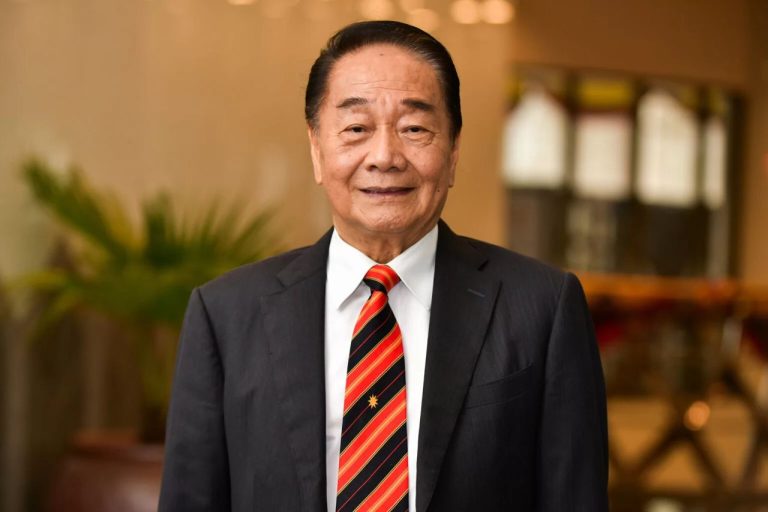
SIBU: The late Tun Dr Ling Liong Sik stands as one of the most significant figures in Malaysia’s modern political history, particularly through his role as Malaysian Chinese Association (MCA) president and as a leading voice of the Malaysian Chinese community.
According to Bawang Assan assemblyman, Datuk Seri Wong Soon Koh, Ling’s leadership style was defined not by populist rhetoric, but by restraint, pragmatism, and a deep commitment to nation-building in a complex, plural society.
“Ling consistently emphasised that leadership must be “meaningful and constructive,” and continuously responsive to the needs of the community. This reflects a philosophy of leadership grounded in responsibility rather than political theatrics.
“He saw himself not merely as a communal representative, but as a bridge-builder within Malaysia’s multi-ethnic framework,” Wong said in a statement on Sunday.
Ling, who is also a former Transport Minister passed away on Saturday at the age of 82.
Wong, who is also Progressive Democratic Party (PDP) senior vice president, pointed out that a key pillar of his leadership was the call for fair representation of non-Malays in public administration.
This, he added, was not framed as confrontation, but as a principled and reasoned argument rooted in justice and inclusivity – essential elements of any functioning democracy.
Recalling that Ling strongly defended mother-tongue education, arguing that it neither hampers nor contradicts national integration and unity, Wong stressed that the former articulated a nuanced understanding that culture cannot be legislated or artificially engineered.
This position, he pointed out, demonstrated both cultural sensitivity and a pragmatic grasp of Malaysia’s social realities.
“He was committed to building a Malaysian identity that transcends race, religion, and culture. While acknowledging his responsibility to articulate the legitimate concerns of the Chinese community, he firmly rejected racism and chauvinism. His approach balanced communal advocacy with national unity.
“One of his most defining traits was his rejection of emotional and confrontational politics. He cautioned against “shouting from the rooftops” and engaging in dramatic but unproductive displays. Instead, he advocated for reasoned engagement – armed with facts and data – across local, state, and federal levels to achieve meaningful policy change.
“Ling also demonstrated a refined maturity in his emphasis on respecting the sensitivities of other communities. Even when successes were achieved, he discouraged public triumphalism, recognising the importance of mutual respect in a multi-ethnic society.
“He consistently called for problems to be resolved through cooperation, goodwill, and rational dialogue. He rejected communalism, racial superiority, and divisive ideologies, advocating instead for a progressive society built on equality, justice, mutual respect, and tolerance,” Wong stated.
Stressing that Ling’s contributions lie not only in policy influence but in preserving political stability and inter-communal harmony, he said his steady, negotiation-based approach helped maintain balance within Malaysia’s delicate socio-political landscape.
In today’s environment – where political discourse is often marked by polarisation, emotional appeals,
and identity politics – Ling’s model of calm, rational, and respectful leadership offers a compelling alternative.
According to Wong, Ling had demonstrated that leadership need not be loud to be effective; one can advocate for community interests without being communalistic; national unity requires patience, tact, and mutual respect; and lasting change is achieved through negotiation, not confrontation.
“That said, contemporary leaders operate in a different context. Today’s political climate demands greater transparency, faster communication, and sometimes more visible assertiveness. Therefore, while Ling’s principles remain highly relevant, they must be adapted rather than replicated wholesale.
“In a diverse nation like Malaysia, Ling exemplified a form of leadership that was measured, principled, and deeply committed to national cohesion. He was not merely a leader of the Chinese community, but a Malaysian statesman.
“In an era increasingly defined by noise and division, his legacy reminds us that the most effective leadership is often quiet, rational, and constructive,” Wong added.