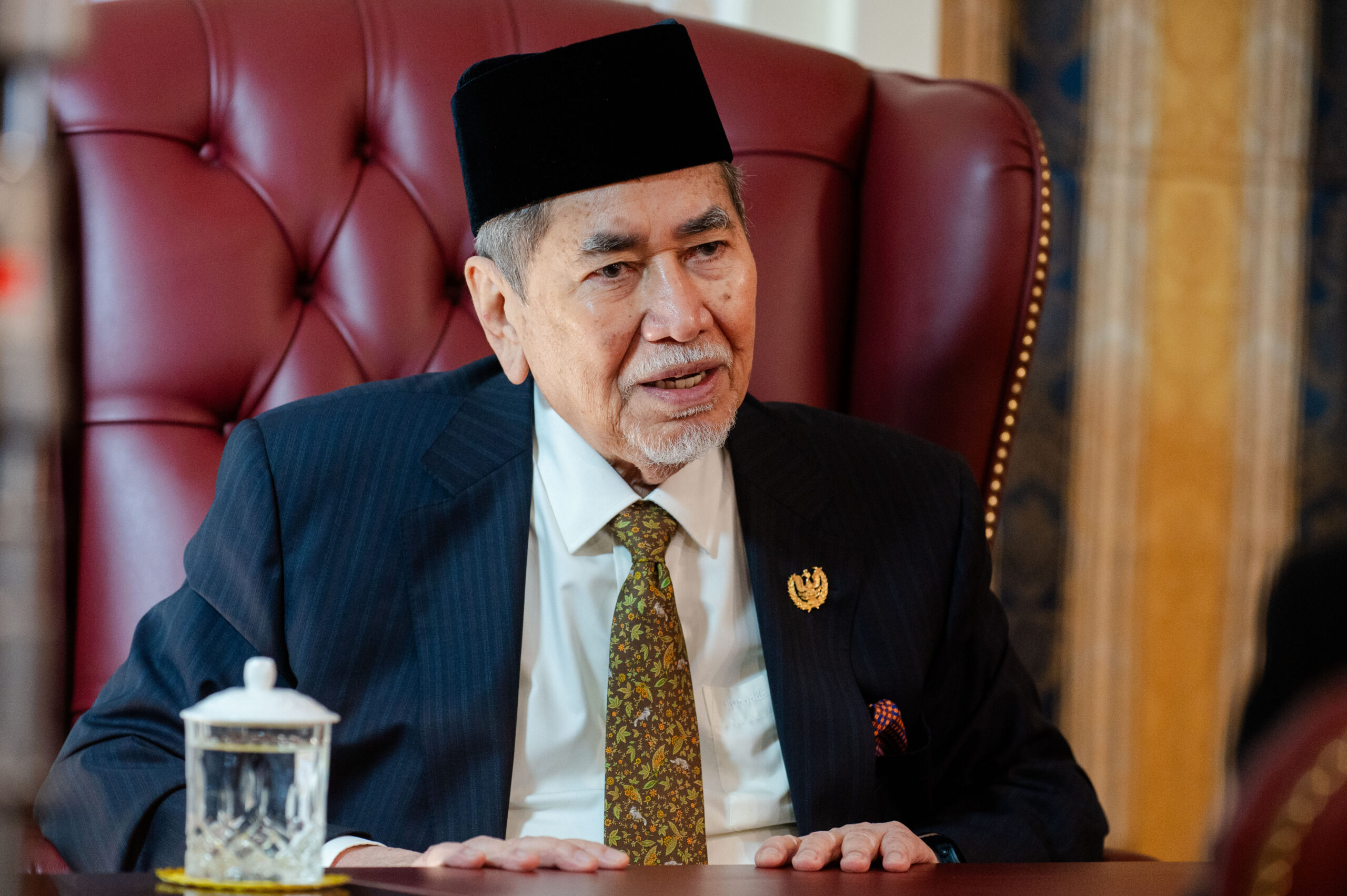
KUCHING: Head of State Tun Pehin Sri Dr Wan Junaidi Tuanku Jaafar said Sarawak’s growth journey is anchored on political stability, unity, and the active role of its people on improving education and skills.
In his Malaysia Day 2025 message, he said no matter how good the government’s plans and initiatives are, without a balanced skilled workforce, those plans and initiatives will be meaningless.
“Also, political stability and unity are equally important elements to ensure Sarawak continues to progress and prosper within Malaysia,” he said.
He stressed that these combined efforts will help make Sarawak a rapidly developing state in Malaysia and a global attraction.
“With its abundant natural resources, unique culture and natural beauty, racial harmony, and strong cooperation between the people, private sector, and the Sarawak government, this combination will drive Sarawak towards continuous progress and prosperity,” he added.
Wan Junaidi noted that Sarawak is steering its economy towards a more sustainable direction through the Post-Covid-19 Development Strategy (PCDS) 2030.
“This strategy aims to elevate Sarawak into a developed region with a competitive economy by 2030.
“Among the main focuses are the Green Economy and Renewable Energy such as Hydrogen, Hydroelectric, Carbon Capture, Utilization and Storage (CCUS), the Digital Economy, High-Value-Oriented Economic Sectors such as Agriculture and Food, Tourism, Industry, as well as Holistic Development, namely Social Inclusivity and Environmental Sustainability,” he said.
He also emphasised that education plays a vital role in ensuring Sarawak’s prosperity.
“The Sarawak government is committed to improving the quality of education through the construction of various educational institutions, especially in rural areas.
“In addition, initiatives such as the Sarawak Skills Development Centre (SSDC) and the Sarawak State Skills Training Centre (PLKNS) are provided to produce highly skilled and competitive workers.
“Thus, the people of Sarawak are prepared to face global economic challenges. This is further strengthened by the establishment of our own universities and institutions such as Swinburne University, Curtin University, Universiti Teknologi Sarawak, and Centre of Technical Excellence Sarawak (Centex).”
Wan Junaidi said modern infrastructure is another key driver of Sarawak’s progress.
Projects such as the Pan Borneo Highway, bridge construction, and improved public transportation — including the upcoming Borneo Air service and the Autonomous Rapid Transit (ART) system — are transforming connectivity across the state, he pointed out.
At the same time, he said expanded internet and broadband coverage in rural areas is bridging the digital divide and promoting the digital economy.
He said that Sarawak’s natural treasures, including Mulu National Park, Niah National Park, Bako National Park, and Semenggoh Nature Reserve, have made the state a popular tourism destination.
“The development of eco-tourism and cultural tourism not only generates revenue for the state, but also supports environmental conservation initiatives.
“Efforts to protect forests, wildlife, and aquatic ecosystems are continuously being intensified to ensure Sarawak’s natural beauty can be inherited by future generations.
“In this regard, I would like to see the young people of Sarawak involved in all these initiatives by pursuing studies that are relevant and aligned with these sectors, so that they become the workforce needed to ensure the success and sustainability of this new economy,” he said.
On Sarawak’s economic performance, he noted that the state’s Gross Domestic Product (GDP) is projected to reach RM282 billion by 2030, in line with the goals of PCDS 2030.
“Sarawak is on the right path as the state’s revenue has risen significantly from RM5.6 billion in 2017 to RM14.2 billion in 2024, and this figure is expected to continue increasing this year.
“Sarawak is also competitive on the international stage, recording a total trade value of RM193.4 billion last year, making it the fourth largest contributor to Malaysia’s total exports.
“Sarawak’s main exports are petroleum products and liquefied natural gas (LNG). Its abundant natural resources and economic strength have long attracted global interest up to the present day,” said Wan Junaidi.