AN investor-friendly framework should underpin the rollout of Sarawak’s carbon levy, including measures to prevent any form of double taxation on green energy investors.
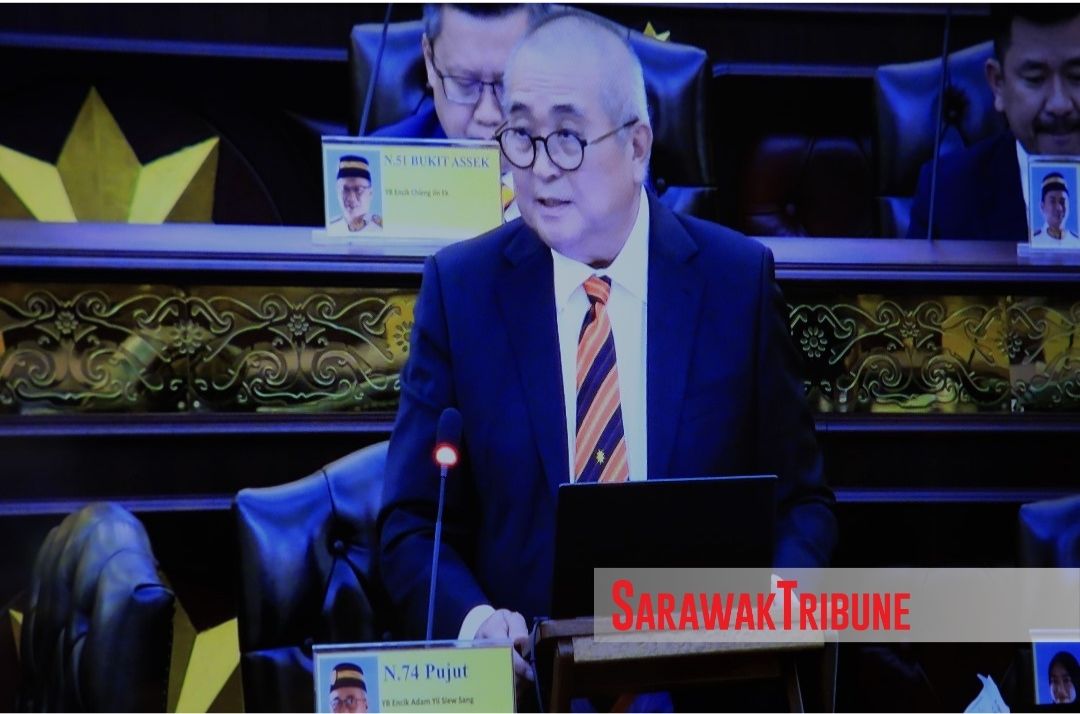
Pujut state assemblyman, Adam Yii Siew Sang, said coordination with the federal government would be important as Putrajaya was expected, based on media reports, to introduce a Climate Change Act that may include a federal carbon tax.
He said such alignment would support Sarawak’s broader decarbonisation strategy while ensuring the carbon levy remained conducive to investment in the state’s green energy projects.
“This is to ensure the carbon levy would not be seen as a financial burden to investors who want to participate in our green energy projects.
“We must maintain an investor-friendly approach in implementing our climate change strategies,” he said when debating in support of the Supply (2026) Bill, 2025 at the DUN sitting today.
Yii reiterated his support for the Premier’s announcement that the carbon levy would be introduced in 2026 as part of Sarawak’s commitment to achieving net-zero emissions by 2030 under the Post COVID-19 Development Strategy (PCDS) 2030.
He said Sarawak was well-positioned to implement the levy, noting that the Environment (Reduction of Greenhouse Gases) Ordinance 2023 provided the legal foundation for regulating emissions and developing a domestic carbon market.
However, he said the introduction of the carbon levy should not be viewed solely as a penalty on the oil and gas and energy sectors, stressing that its primary purpose was to reduce emissions.
Yii said the levy should operate mainly as a mechanism to encourage emission reduction, similar to approaches adopted in Singapore.
“In parallel with the levy, there must be opportunities for these sectors to reduce their emission levels. There should be facilities for oil and gas companies to store the carbon dioxide they are able to capture from petroleum produced within Sarawak.
“A more robust implementation of afforestation and forest restoration under the Forests (Forest Carbon Activities) Rules is also needed to generate more carbon credits, enabling investors to either participate in these projects or acquire Sarawak Carbon Credit Units to offset the levy,” he added.
Yii said the emission threshold, which must be determined by the State Cabinet under Section 8(1) of the Reduction of GHG Ordinance, should be set after a detailed study, as exceeding it would trigger payment of the carbon levy.
“This is to ensure that while the threshold level would enable Sarawak to achieve net-zero by 2050, it must also not be too burdensome for our oil and gas and energy sectors to comply with,” he said.