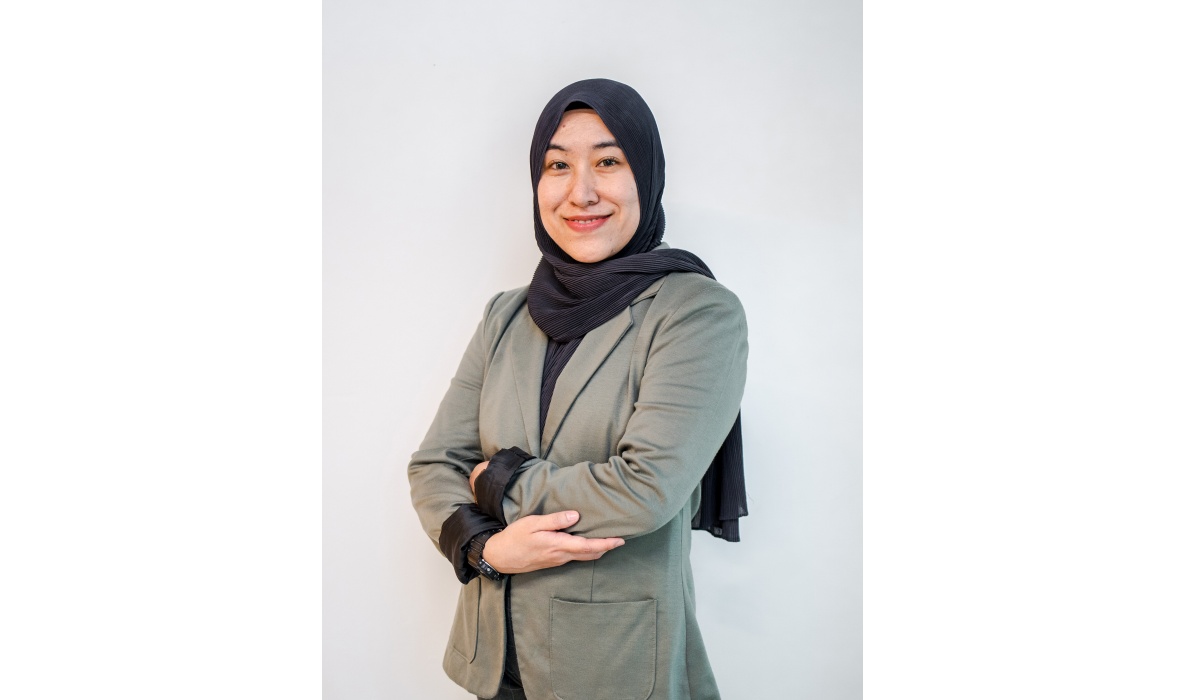
WHEN I was invited by my boss to accompany him to the Parti Pesaka Bumiputera Bersatu (PBB) 16th party convention over the weekend, I jumped at the opportunity. It had been a long time since I last attended one, my previous experience being at the Santubong Resort back in 1998.
My very first PBB convention was 27 years ago when I was a senior journalist at The Borneo Post, covering major political events.
Back in 1998, there were only 673 delegates from 67 branches. Fast forward to the recently concluded 16th Triennial General Meeting (TGM), the number of delegates had swelled to 4,522 from all 82 branches, reflecting the party’s growth and resilience.
What struck me most was how PBB, the dominant party in the Gabungan Parti Sarawak (GPS) coalition, had transformed itself into one of the most united and progressive political parties, not only in Sarawak but across Malaysia. The credit for this remarkable transformation goes to its past and present leaders who ensured smooth leadership transitions, a rare feat in Malaysian politics, where leadership changes often bring uncertainty.
PBB has not always had a smooth journey. The only major challenge it faced was in 1981 when the late Tun Abdul Rahman Ya’kub, the party’s third president, handed over the leadership to his nephew, the late Tun Abdul Taib Mahmud.
This transition led to a serious split in the party, culminating in the infamous 1987 Ming Court crisis, where PBB nearly lost its ruling majority in a snap state election. However, the party managed to weather the storm, emerging even stronger — a hallmark of its resilience and ability to close ranks after internal disputes.
Reflecting on the 1998 TGA on Aug 28, it was an important moment for the party. Contests for key positions, including the deputy presidency and vice-presidencies, dominated the assembly. Then chief minister Taib Mahmud, in his opening address at the Youth and Wanita wings, urged full support for his administration’s policies and state development programmes.
Despite intense campaigning, there were concerns that these contests could create rifts within the party. However, political observers, as well as Taib himself, believed that PBB would emerge stronger — just as it did after the 1987 crisis.
Indeed, after the election results were announced the next day on Aug 29, 1998, the party proved its resilience. Datuk Patinggi Tan Sri Abang Johari Tun Openg won the deputy presidency with 373 votes, defeating the late Tun Pehin Sri Adenan Satem, who garnered 268 votes, and incumbent Datuk Abang Abu Bakar, who managed only 27 votes.
The vice-presidency races were equally competitive, with Tan Sri Datuk Effendi Norwawi, the late Tan Sri Datuk Amar Dr Sulaiman Daud, Datuk Seri Dr Muhammad Leo Toyad, and Datuk Amar Awang Tengah Ali Hassan emerging victorious.
Despite the heated contests, both winners and losers accepted the results with grace, reinforcing the party’s unity and maturity.
Abang Johari in his victory speech said he regarded the contest as a “family affair” and Adenan as his “big brother”, stressing winning the deputy president’s post meant shouldering the heavy responsibility of uplifting the economic standards of Bumiputeras in Sarawak. Adenan, meanwhile in his speech, called on the delegates to strengthen unity for the sake of the party and the state.
Taib said the contest had shown the maturity of both delegates and the candidates who did not indulge in dirty politics. True enough, the party emerged even stronger.
Fast forward to the recently concluded 16th TGM, PBB has once again demonstrated its strength and democratic spirit. Party president and Premier Abang Johari, was returned unopposed, receiving unanimous support from all 82 branches.
However, the real contest this time was for the four Bumiputera vice-presidency positions, with six candidates vying for the slots. The four incumbents — Tourism, Creative Industry and Performing Arts Minister Datuk Seri Abdul Karim Rahman Hamzah, Minister of Utility and Telecommunication Datuk Seri Julaihi Narawi, Deputy Utility and Communication Minister Datuk Dr Abdul Rahman Junaidi, and Deputy Minister for Education, Innovation and Talent Development Datuk Dr Annuar Rapaee — were challenged by Deputy Natural Resources and Urban Development Minister Datuk Len Talif Salleh and Satok assemblyman Datuk Ibrahim Baki.
When the results were announced yesterday (Feb 16), Ibrahim Baki and Len Talif emerged as the new vice-presidents, while incumbents Julaihi and Dr Annuar retained their posts. Abdul Karim and Dr Abdul Rahman were unseated.
The vote breakdown was as follows: Ibrahim Baki led with 910 votes, Julaihi secured 900, Dr Annuar received 788, and Len garnered 687 votes. Abdul Karim obtained 669 votes, while Dr Abdul Rahman finished with 546 votes.
As for the Pesaka wing, all vice-presidency positions were earlier retained uncontested.
Contests for the Supreme Council seats in both wings were comparatively less intense. Twenty candidates in the Bumiputera wing contested for 16 available seats, while 19 candidates in the Pesaka wing vied for 14 positions. Despite the competitive nature of the elections, the party’s hallmark of unity remained intact.
As expected, both winners and losers have pledged to close ranks and work together for the party’s future. This tradition of reconciliation and mutual respect has been a defining characteristic of PBB, setting it apart from many other political parties.
Abdul Karim, in particular, displayed great statesmanship, describing the election as a “friendly family contest”.
He expressed no resentment over the outcome and fully respected the democratic process, stating, “I will just need to do a little post-mortem on my own.” He also acknowledged the possibility of a Cabinet reshuffle and stated he was prepared to step down from his ministerial position if necessary, reinforcing that “no one is bigger than the party.”
His statement reflects the essence of PBB’s strength — its ability to put the party above individual ambitions. The maturity of its leaders and members ensures that internal competition does not translate into division, but rather strengthens the party’s resolve to serve Sarawak better.
This was evident in the way Abang Johari and his leadership team handled the convention, ensuring a seamless and constructive process that ultimately reinforced PBB’s unity.
PBB remains the anchor of Sarawak’s political stability and development. The 16th TGM has once again proven that the party is capable of handling democratic contests with maturity, ensuring that its leaders continue to work hand in hand for the betterment of Sarawak.
With Abang Johari at the helm, supported by a strong and cohesive leadership, PBB is well-positioned to steer the state towards greater progress and prosperity.
As the dust settles on the 16th TGM, one thing is certain — PBB remains rock-solid, with a leadership that prioritises unity over personal ambition.
The party has once again demonstrated that, regardless of electoral outcomes, its members will rally behind the leadership for the greater good of Sarawak. And that, above all, is the true strength of PBB.
The views expressed here are those of the columnist and do not necessarily represent the views of Sarawak Tribune.