
KUCHING: In his advice to the media to adapt to and use new technologies to survive and stay relevant, Chief Minister Datuk Patinggi Abang Johari Tun Openg spoke about artificial intelligence that is expected to greatly change the media landscape.
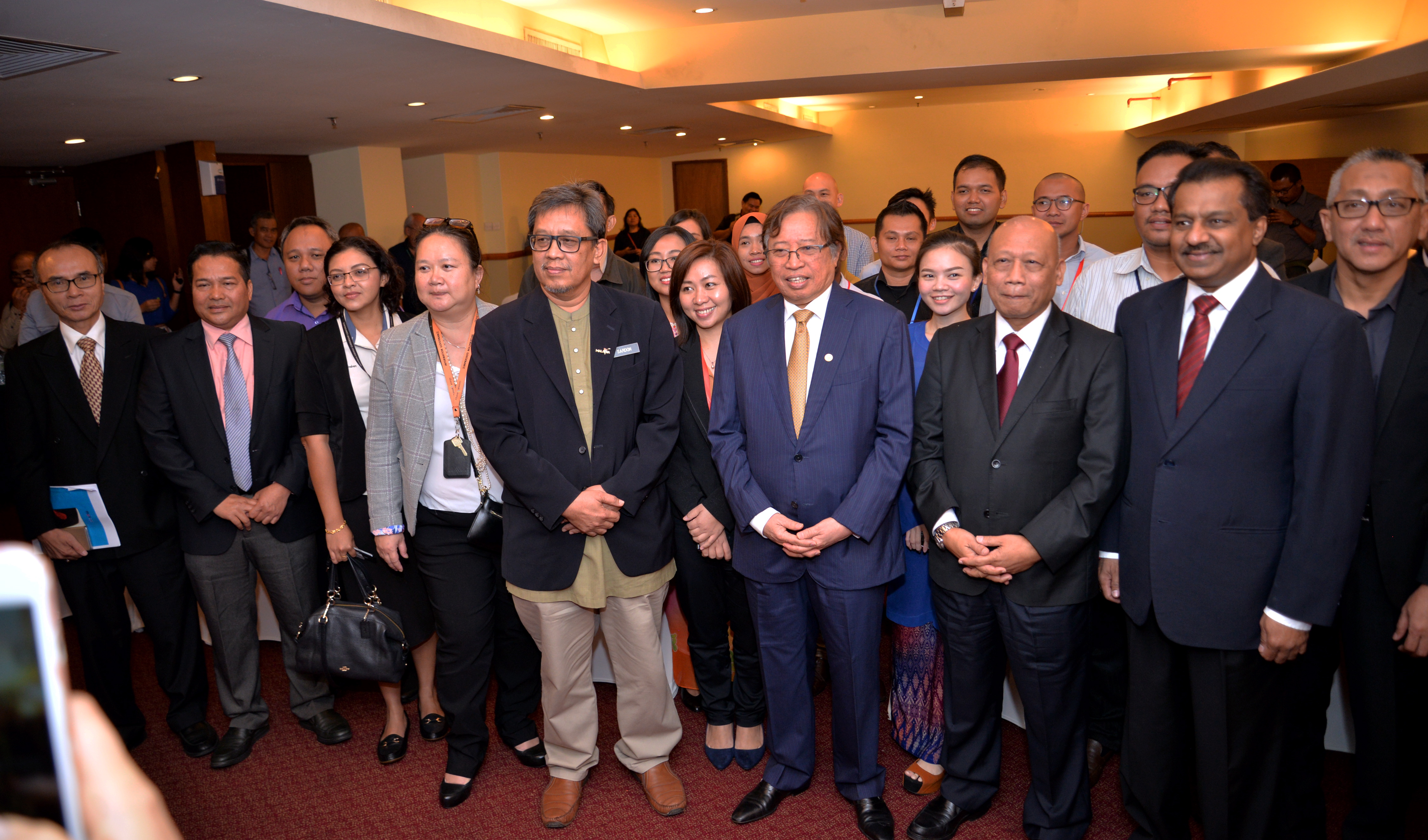
“If cars can be driverless, one day stories could be written by machines with artificial intellingence,” he said while officiating at Zamalah Wartawan Malaysia 2018 organised by the Malaysian Press Institute (MPI) at Merdeka Palace Hotel & Suites yesterday.
Arguing that if the media don’t change, they would be left behind, he said artificial intelligence (AI) had both negative and positive aspects depending on the software makers.
“AI will have social, political and economic dimensions, and what will be the roles of journalists?” he asked.
Abang Johari said whether they like it or not, journalists would have to interface with technology, which is a big challenge for them.
He pointed out that the media today dominated the mind of society and hence can shape public perception.
On big data that is often talked about nowadays, he said the information could be used to make decisions in the socio-economic and political fields, and in other fields.
“This will happen in the new media that will become a big influence like that which affected the Arab Spring in the Middle East.”
Having said that, he cautioned that as information or data could move very fast, a country could be destroyed because of certain perceptions created by irresponsible media network.
He explained that perception is invisible, intangible and very powerful, and added that in the economic field, for example, the perceptions created by the media could give rise to trade wars and change the direction of the world economy.
In politics, he said it was quite similar, and so when public perception of the government was extremely negative, the government could fall.
On social media, he noted that the technology involved was very effective and very fast, and so his speech could be transmitted and reported through and on the Internet within 30 minutes or so.
Johari said he believed in the Internet which was why when he became the chief minister he invested RM1 billion to upgrade the infrastructure.
“I believe data is very important for us to develop ourselves, the community and the economy,” he said.
Warning that the Internet and AI could also be abused he nevertheless thought it could be avoided by having proper values and ethics.
Regarding journalists, he said they had very challenging jobs because of the challenges to the media industry which will definitely change with the application of artificial intelligence which is the next thing that is also very important because it will determine media content.
“New journalists, therefore, are those who are highly intelligent and who can operate in the era of artificial intelligence,” he said.
In pointing out that reporters only write reports whereas journalism is based on expression of views which must be based on facts, he told journalists not to write anything that is incorrect or untrue.
Malaysian Press Institute (MPI)CEO Datuk Dr Chamil Wariya said this was the third time the event was held in Kuching. The first one was in 2011 and the second was in 2012.
He said the two-week programme saw the participation of 27 media practitioners from Sarawak, Sabah and West Malaysia.
He said some believed that the print media is a sunset industry that could last 10 more years but he was optimistic that the print media would be able to go on but they cannot expect high distribution of up to 300,000 to 400,000 copies anymore, and they need to go for the niche market like business and politics.