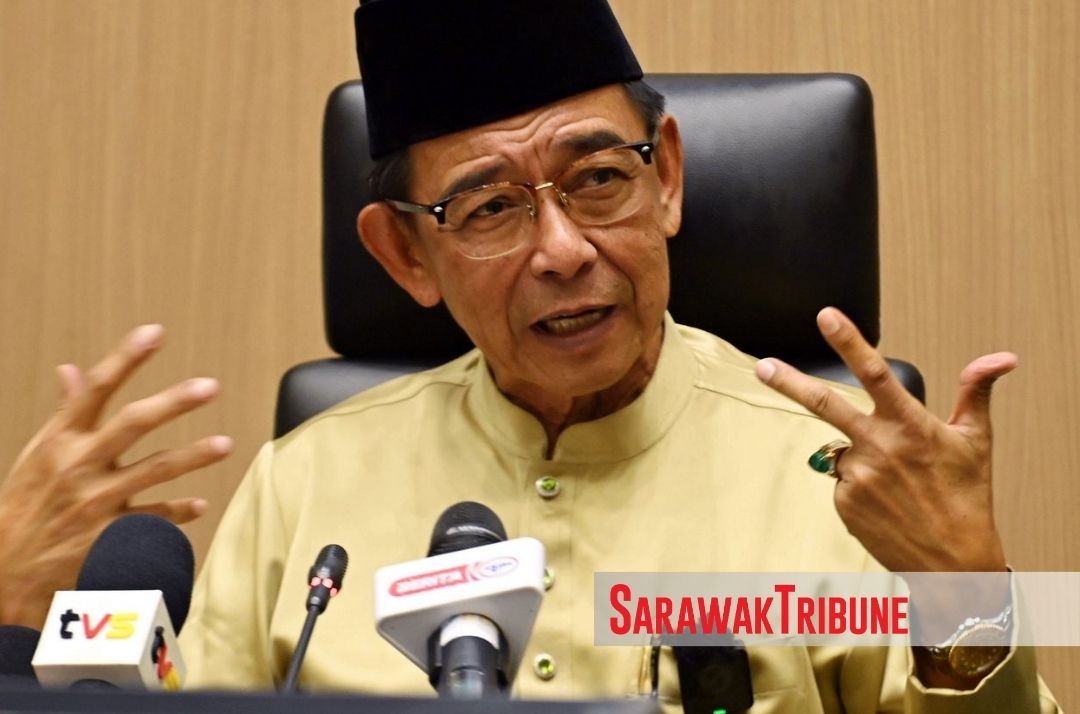
KUCHING: The next two years will be crucial for the Unity Government to rebuild public trust through more affirmative and visible actions.
Political analyst Professor Datuk Mohd Fadzil Abdul Rahman warned that rising corruption and governance leakages, including within the civil service, could further erode public confidence and weaken delivery systems.
He cautioned that credibility could only be restored through concrete delivery rather than rhetoric.
“Ultimately, the key to any country’s success lies in strong political stability. Only with political stability can other factors, including economic growth and national development, be effectively prioritised, especially in ensuring the livelihood and wellbeing of the people.
“The current government must act decisively within the remaining two years to secure firm buy-in from political parties across all fronts, uniting support for concrete measures that directly improve the quality of life and wellbeing of the rakyat through strategies so clear, impactful and results-oriented that no party, including the opposition, can reasonably reject them,” he said when contacted.
As Malaysia heads into 2026, he said the Unity Government is expected to face mounting pressure to address rising cost-of-living concerns that increasingly affect the daily realities of the rakyat.
He said growing public complaints and louder criticism directed at the government signalled widening gaps between macroeconomic performance and micro-level household wellbeing.
While acknowledging that the national economy is showing signs of recovery, Mohd Fadzil stressed that macroeconomic indicators should not be used as the sole benchmark of people’s lived stability.
“These are two perspectives that are generally related, but they do not have a direct or lateral correlation. Overall economic stability is closely linked to political stability.
“Based on recent developments, political confusion and turmoil have increasingly become the focus of political parties, to the extent that other matters related to national development sometimes appear to be neglected.
“This is not an accusation, but a reality that needs to be acknowledged, accepted and digested at this point in time,” he added.
As such, Mohd Fadzil said the government should prioritise education, healthcare and sustainable employment opportunities to convert macroeconomic gains into meaningful household impact.
The former Deputy Vice-Chancellor of Universiti Malaysia Sarawak (UNIMAS) also emphasised food security as a key area, calling for reduced reliance on imports to ease pressure on basic goods prices.
“In the current situation, eloquence in speeches and debates can no longer be used as political capital to win the hearts of the people.
“These must be accompanied by firm and effective action and implementation so that what is promised truly becomes reality, otherwise it will continue to be haunted by accusations of being nothing more than political rhetoric,” he said.
Referring to Sarawak as an example, Mohd Fadzil said sustained political stability had allowed the state to progress more consistently, highlighting how stable governance enables policies to move beyond planning stages into execution.
He asserted that policies and initiatives may look impressive in documentation, but the challenges in executing them remain significant.
“In other words, as long as the government, or any government in power, fails to stabilise the political environment, no matter how sound the plans or policies introduced may be, they will remain on paper, with their implementation continuing to be uncertain,” he added.
He noted that the rapid expansion of social media had further complicated governance, with narratives shaped by politicians, former ministers, bloggers and other actors contributing to fragmented public perceptions.
On wage policies, Mohd Fadzil said increases alone were insufficient if not accompanied by effective price controls and enforcement mechanisms.
“Wage increases without comprehensive controls on the prices of essential goods are like pouring salt into the sea. The impact is minimal,” he said, adding that similar challenges were observed during the previous implementation of the Goods and Services Tax (GST), where enforcement weaknesses diluted its intended outcomes.
Mohd Fadzil said public expectations, particularly among the B40 and M40 groups, had increasingly centred on tangible benefits rather than fiscal explanations, adding that this reality—however bitter—continued to shape public demands rooted in election manifestos.
He said concerns over national debt management were often secondary to what people personally stood to gain, with wellbeing largely measured through direct and visible benefits.
“The mindset of the people, which tends to focus on ‘what do I get’, has become increasingly difficult to set aside. This is an inherent phenomenon that the government must accept.
“As such, this represents one of the strongest sentiments, particularly among the B40 and M40 groups, which the government must focus on during the remaining two years before the next general election,” he added.