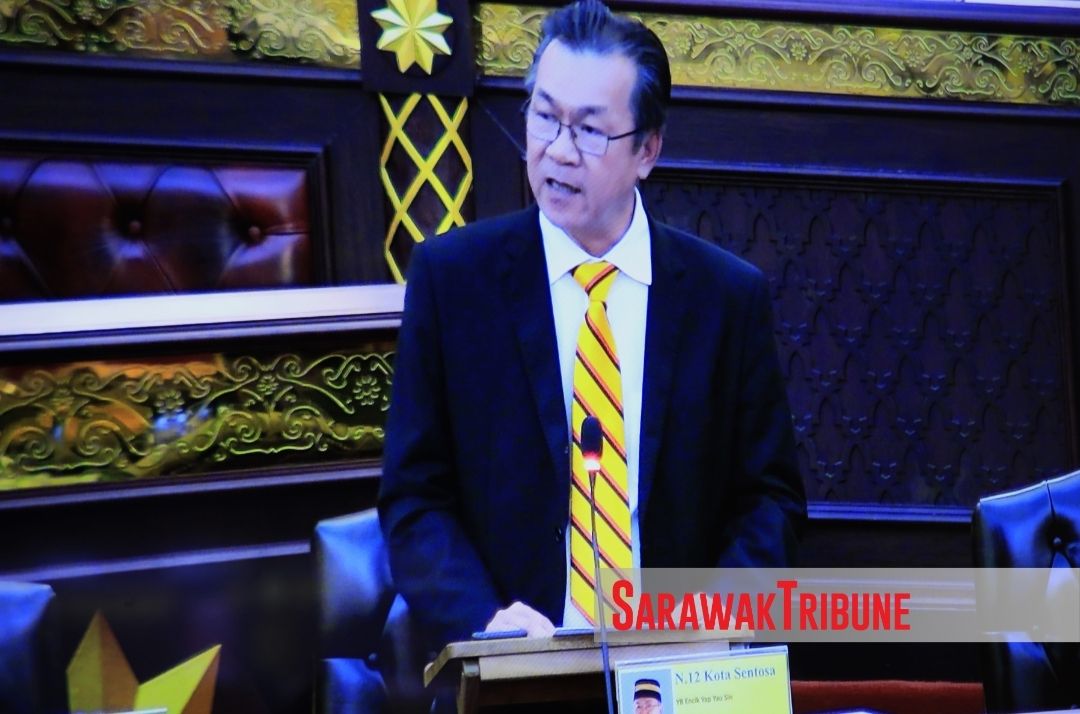
THE Sustainable Resources and Waste Management Bill 2025 will transform Sarawak’s waste sector into a renewable-energy and revenue-generating industry, potentially unlocking 1,330 megawatts (MW) of clean energy.
According to Stampin assemblyman Wilfred Yap, the Bill marks a fundamental shift from traditional waste disposal towards a circular, commercially viable green economy.
“This Bill is not merely administrative; it is transformational.
“It redefines how Sarawak manages waste, views resources and positions itself for a greener, more prosperous future,” he said in support of the Sustainable Resources and Waste Management Bill 2025 debate, today.
Yap said Sarawak’s biomass and waste streams contain untapped clean-energy reserves equivalent to another large-scale power plant, citing 550MW from agricultural biomass, 600MW from wood biomass, 40MW from municipal waste and 140MW from animal waste.
“With the right regulatory backbone, we can unlock these opportunities in an orderly and profitable manner.”
Yap praised the Bill for enabling voluntary participation by plantations, industries, timber operators and livestock farms, allowing them to channel excess waste into licensed processing facilities.
“Voluntary participation reduces enforcement burdens, builds goodwill and encourages green behaviour.
“Incentives, transparent pricing mechanisms and clear guidelines to support early adopters.”
Yap highlighted fragmentation as a long-standing weakness in the waste-to-resource sector.
“Small producers are unable to sustain large-scale facilities, but the Bill’s framework allows for the aggregation of supply across councils, industries and rural areas.
“By aggregating supply, we turn an inefficient, scattered system into a predictable, commercially viable green industry.”
Yap also said the Bill addresses public concerns over pollution, odour, illegal dumping and river contamination by regulating the entire waste value chain.
“Responsible waste management will mean cleaner air, cleaner rivers, reduced landfill pressure and lower greenhouse gas emissions.”
However, he warned of the loopholes in the current enforcement system.
“Illegal dumping, poor segregation and unlicensed transporters must be eliminated through stronger penalties, compulsory reporting, independent audits and digital monitoring.
“Enforcement cannot be symbolic. It must be effective, visible and uncompromising.”
Yap said the Bill, if effectively implemented, will generate new revenue streams for the state, lower municipal expenditure, create green jobs, strengthen the circular economy and boost investor confidence.
“Waste becomes wealth, and sustainability becomes economic opportunity.”