As screen time dominates children’s daily lives, experts warn of a growing developmental gap. Among them is speech therapist Charlene Samuel, who observes an increasing number of children struggling to meet key milestones.
HOW DIGITAL DISTRACTION SLOW CHILDREN’S
Children are spending increasing amounts of time on screens, which takes away from opportunities to develop communication, gross and fine motor skills through physical play. In Malaysia, the National Health and Morbidity Survey (NHMS) 2016 found that 52.2 percent of children under five exceeded the recommended two-hour screentime limit, including 74 percent of those below two years old and 32.6 percent aged two to five.

These statistics highlight a worrying trend: children face delays in reaching key developmental milestones. Charlene Samuel, founder of Autism Behavioural Center (ABC) Malaysia, Kuala Lumpur, stresses that speech delay is one of the most evident results of increased screen time and reduced play.
Elaborating further, she said that speech delay on its own is not a disorder, unless diagnosed. Charlene explained that it is a learning developmental delay caused by many factors.
“Speech delay can sometimes signal an underlying issue such as autism or ADHD, but increasingly, it results from a lack of stimulation and social engagement. The rise in speech delay is now closely linked to increased screen time, which limits opportunities for children to observe, learn new skills, and interact,” she said.
Giving an example, Charlene described the millennials’ childhood as being technology-free, preferring to be out and about, being creative and engaging with lots of social play. Whereas, children of today’s era are always in a comfort zone with little to no downtime, and plenty of screen distractions.
“Children these days are rarely bored. While screen time does correlate with speech delays, there is also a clear difference in how we parent our children as well.”
Beyond speech delays
A study published in the National Library of Medicine titled ‘Screen-based media and young children’ suggests that children below the age of two years of age should not have access to screen-based media. Meanwhile, for children between the ages of two and five, screen time should not exceed an hour per day.
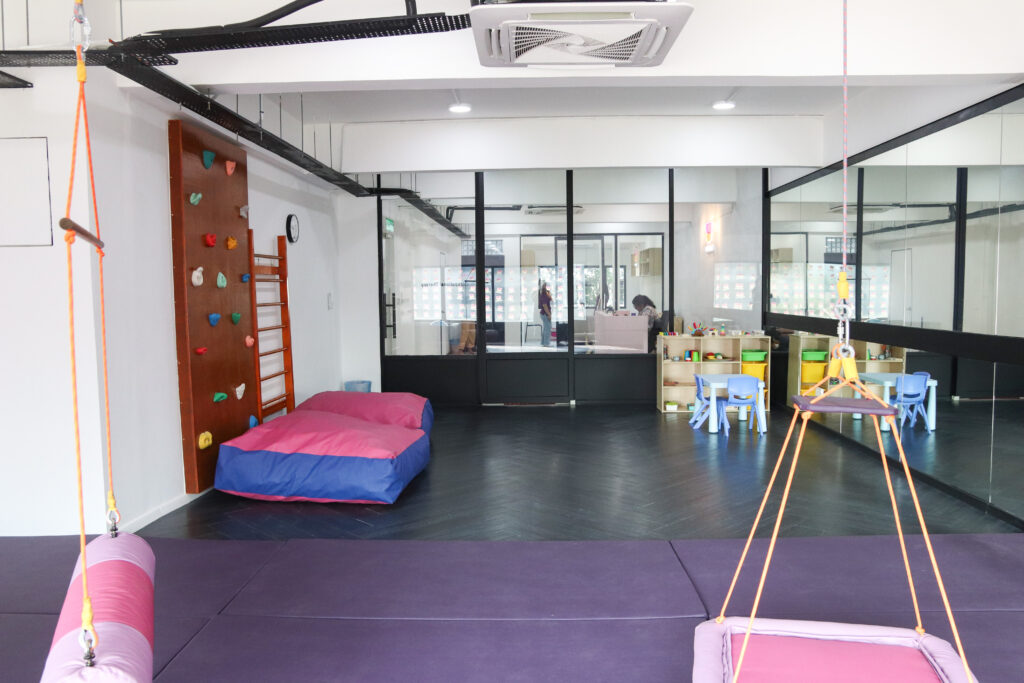
Under the ABC’s initiative, Speech Academy was recently launched in Kuala Lumpur with the goal to provide intervention for children with a delay in milestone developments. Beyond speech delays due to prolonged screen time, Charlene said that children are also coming in with other challenges, such as short attention spans.
“Growing up, we were easily amused by toys and activities. Children today often rely on technology to keep them occupied. How often do we see a child in a restaurant drawing or reading a book instead of being glued to a screen?”
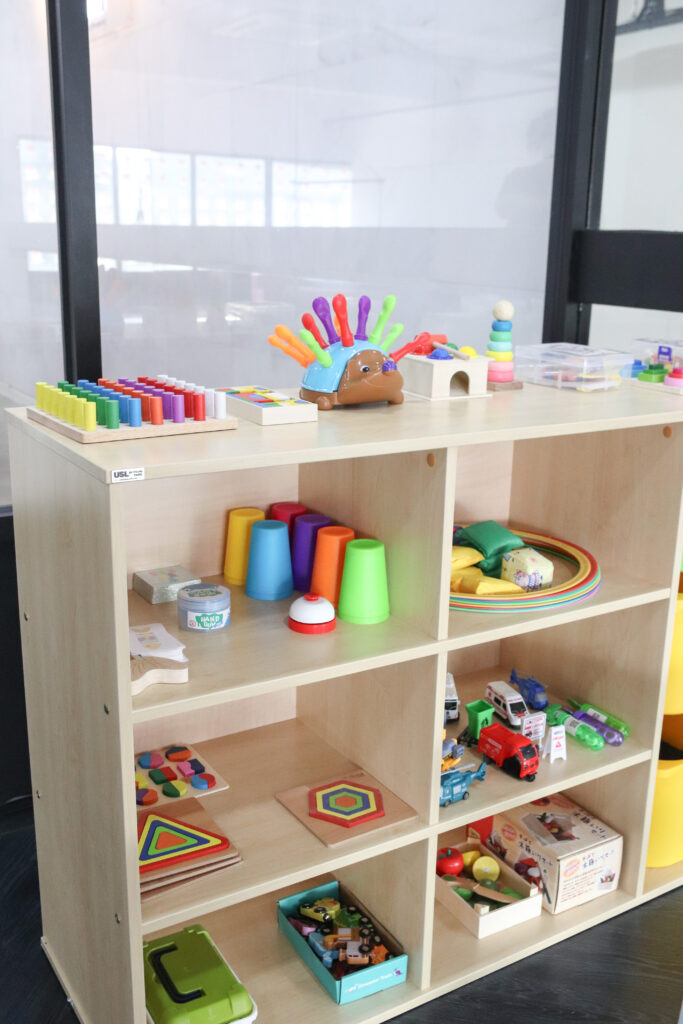
Where children once played in the water, got messy in the dirt, built towers with blocks, and flipped through storybooks, screens have now taken over. And with that shift, we’re seeing delays not only in speech, but in many other developmental areas too.
“We’re seeing more and more children coming in with speech delays and challenges with attention,” Charlene shared. “Many of them find it hard to sit still long enough to have a conversation, or even to play. Social skills are also affected; after all, you can’t really learn how to take turns or share when you’re spending most of your time with a screen.”
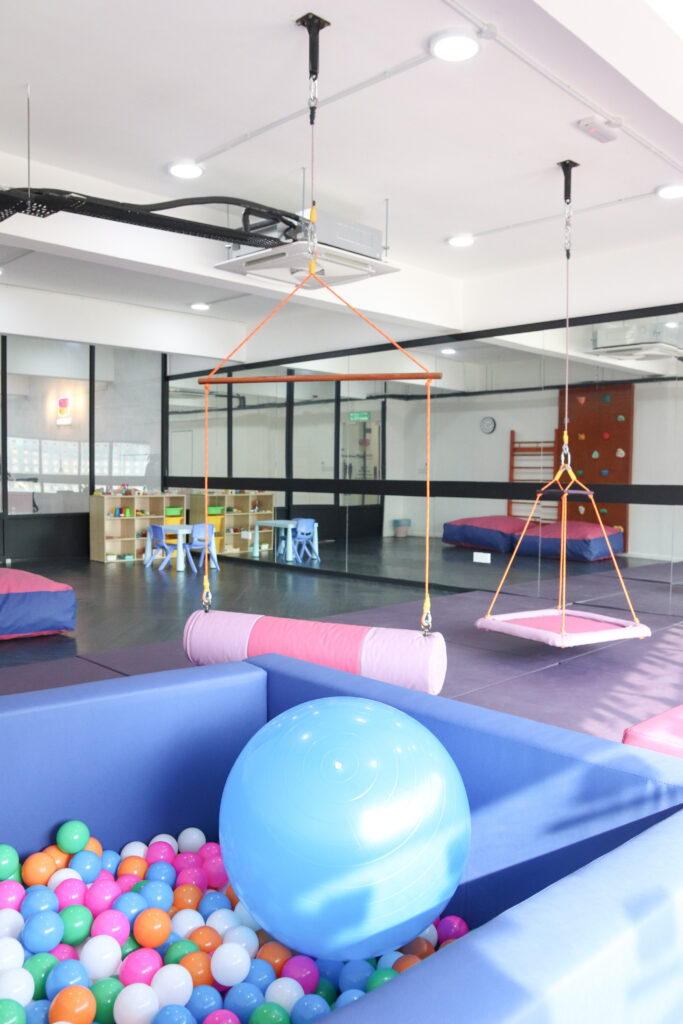
The concerns don’t stop there. Beyond difficulties with communication and social interaction, Charlene has also observed many children at Speech Academy and ABC struggling with fine and gross motor skills. Simple tasks like self-feeding, holding a pencil, balancing, or coordinating movements are becoming harder for them.
Addressing the concerns
Nevertheless, with today’s fast-forward and digital era, it is no surprise that children grow up differently from before. To Charlene, it is much more surprising to see children hitting all of the developmental milestones, “but it seems that the norm is actually that most children are not hitting developmental milestones.” And that became the biggest drive for ABC to initiate Speech Academy because it is prevalent in today’s society that children are not hitting their milestones, and access to quality care is hard.
At Speech Academy, Charlene is a strong advocate for early intervention. She emphasizes that seeking help early doesn’t mean there’s something “wrong” with a child; it simply means giving them the right support at the right time, so they can continue to grow and thrive without being left behind.
“Often, we see children managing fairly well in nursery or kindergarten, where the environment is less structured and the expectations are minimal,” Charlene explained. “However, the real challenges tend to surface once they enter primary school; that’s when teachers begin to notice difficulties in communication, lack of asocialising, participating in group work, or forming friendships. The concern is that these challenges, if not addressed early, can persist into adolescence and even adulthood.”
While some children may naturally outgrow certain delays, the outcome is never guaranteed. “Some children do catch up on their own,” she shared, “but many others who miss out on early intervention continue to face difficulties in multiple areas. It really depends on the individual.”
Recognising this, Charlene and her team at Speech Academy are working to normalise early intervention and make therapy more accessible to families. “With the right support and timely care,” she added, “children have a much better chance to reach their full potential and grow with confidence.”
Pivotal for parents’ support
As the saying goes, “the apple doesn’t fall far from the tree,” and Charlene believes this holds true when it comes to the relationship between parents and their children. She encourages parents to be positive role models, knowing that children learn most from what they see.
“Parents need to set the right example,” she shared. “Children absorb their behaviours from us. If parents spend most of their day on screens, we can’t expect our children to act differently to them, that becomes the norm.”
Charlene gently reminds parents to be present with their children- to go outdoors, take a walk or a run, put the phones aside, and simply spend time together. Over time, she says, children naturally learn what healthy habits look like.
In her practice, Charlene has met many families who enroll their children in numerous activities; dance, swimming, robotics, and more, believing that these will enrich their development. While such activities have value, she notes that what’s often missing is the quality time spent together.
“This is becoming the new norm,” she explained. “Parents want their children to have every opportunity, but in doing so, family playtime and communication are being replaced by a packed schedule of classes.”
Charlene emphasises that spending time together – playing, talking, and connecting, is what builds strong communication skills and emotional security. “That shared time,” she adds, “is the foundation for raising healthy, confident children.”
Recognising the growing gap in parent-child interaction, Charlene hopes that both ABC and Speech Academy can help bridge it, offering guidance to parents and essential support to children.
Currently based in Desa Sri Hartamas, Kuala Lumpur, Charlene envisions Speech Academy expanding across Malaysia. “I would love for us to have a presence in every state,” she said. “To make quality care easily accessible, both geographically and financially and to work hand in hand with the government in ensuring every child has the opportunity to grow and thrive.”