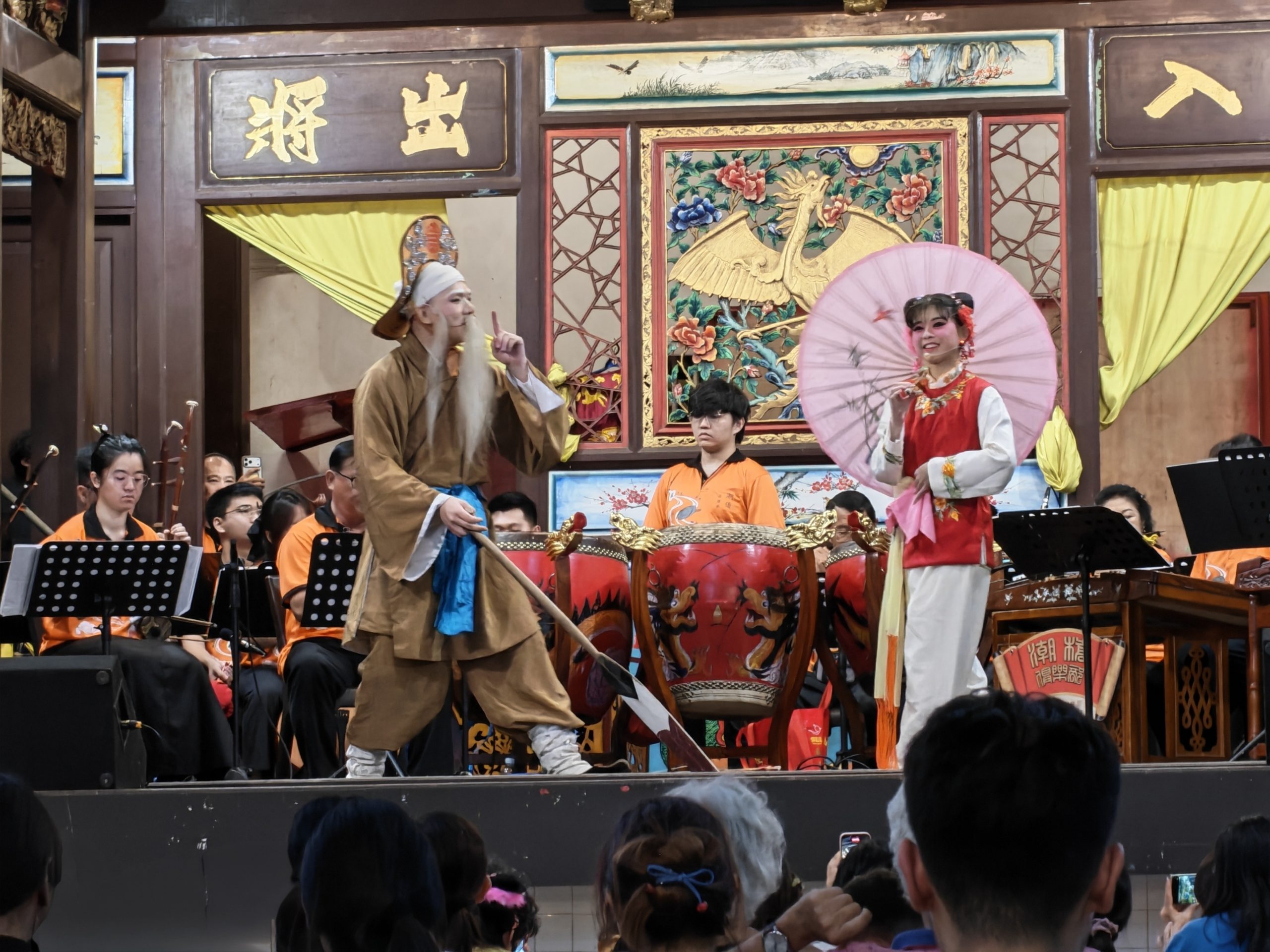
Once a familiar part of Kuching’s streets and cultural gatherings, Teochew opera faces the challenge of keeping its traditions alive amid changing times. In the second instalment of this three-part series, the Kuching Teochew Association continues its efforts to pass the centuries-old art form on to younger generations.
“Today’s classic is tomorrow’s tradition, tomorrow’s tradition is later’s classic.”
— Sim Han Tong
Preserving the sounds of Teochew heritage
Between the 17th and 18th centuries, Sarawak saw waves of Chinese migrants arriving from China, each bringing with them traditions passed down by their ancestors. Among them were the Teochew people from the various cities of Chaoshan, who came in search of better opportunities and a brighter future.
Upon settling here, they introduced their way of life and cultural practices. The first generation of Teochew migrants worked mainly in the timber industry, while others were involved in the gambier and sago industries, as well as bird’s nest harvesting. In the old bazaar, many also opened sundry shops selling daily necessities.
Meanwhile, the second generation received formal education and learned English.
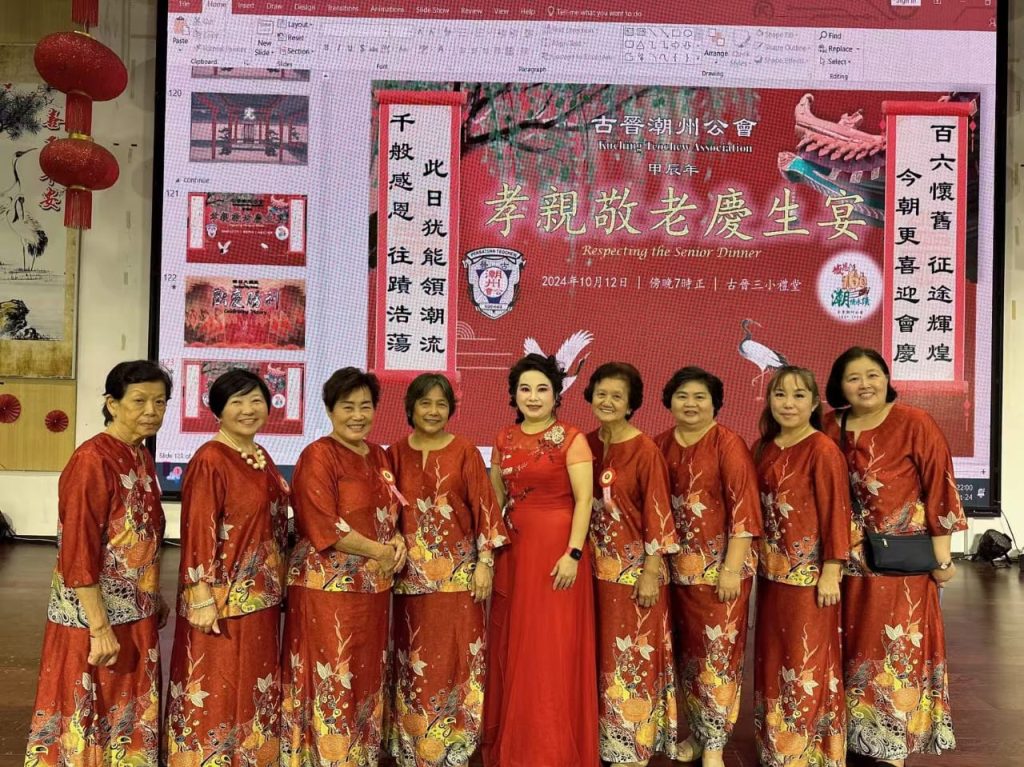
As they established their lives here, the early Teochew settlers formed an association that continues to exist today. First known as Soon Hong Kong Si in 1914, the Teo Khiaw Club was subsequently formed in 1921 to complement the society. In 1937, it was renamed and formally established as the Kuching Teochew (Teo Khiaw) Association.
The association became a gathering place for discussions about business, daily life and traditions. It served as a reminder of their origins and what it meant to be Teochew. The clattering of mahjong tiles and lively conversations were among the familiar sounds within its walls.
Beyond their rituals and daily routines, the Teochew community also brought with them the art of Teochew opera, along with its elaborate costumes, musical instruments and traditional knowledge.
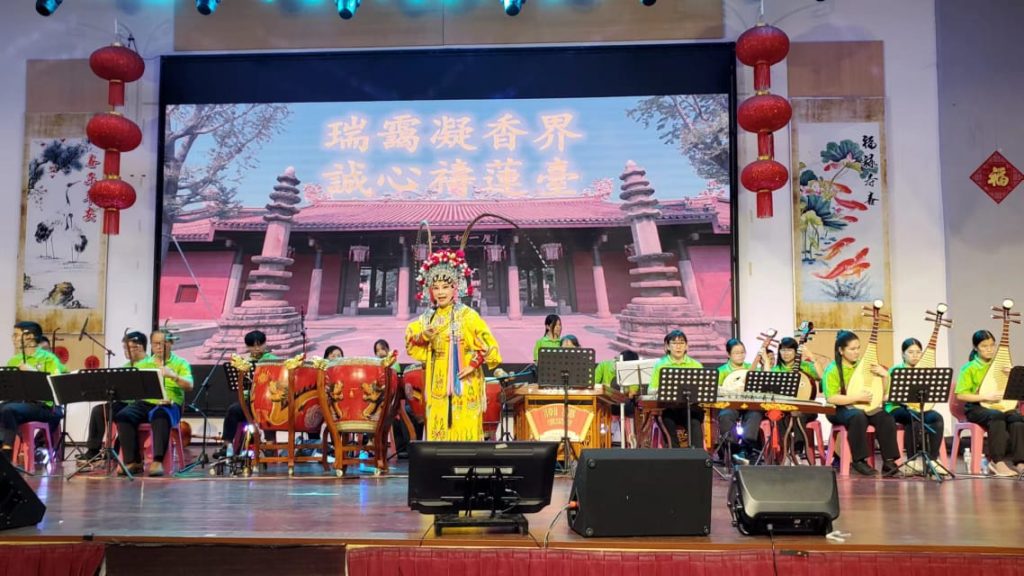
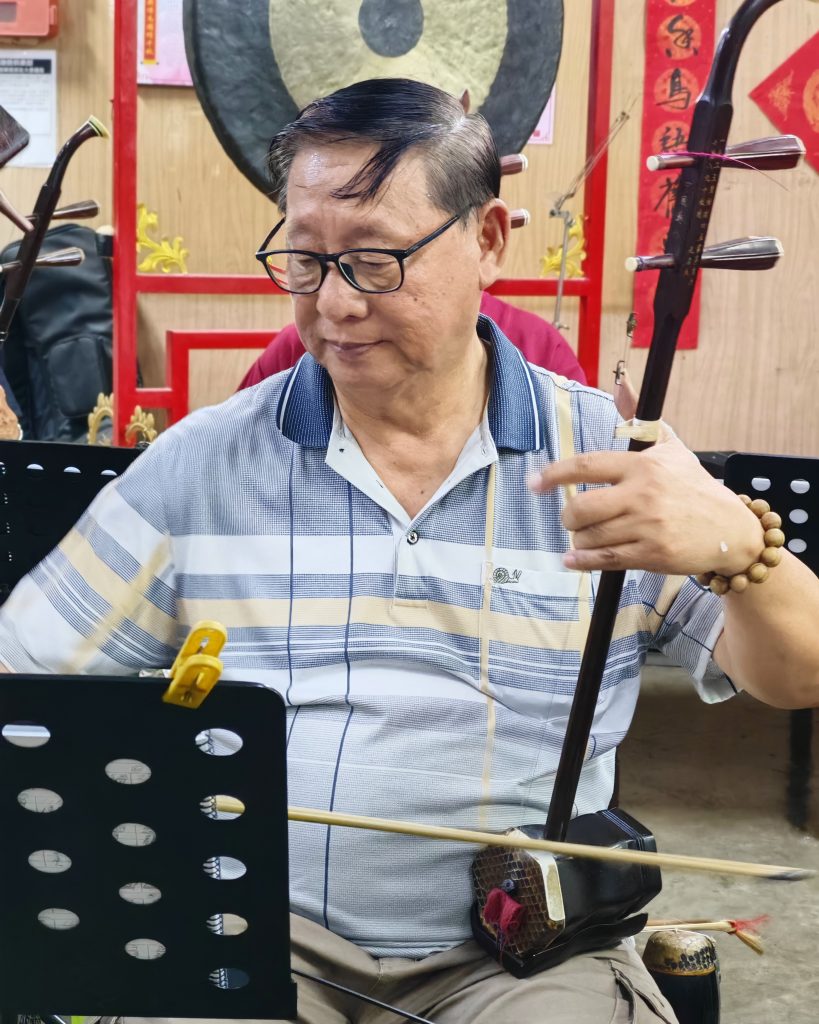
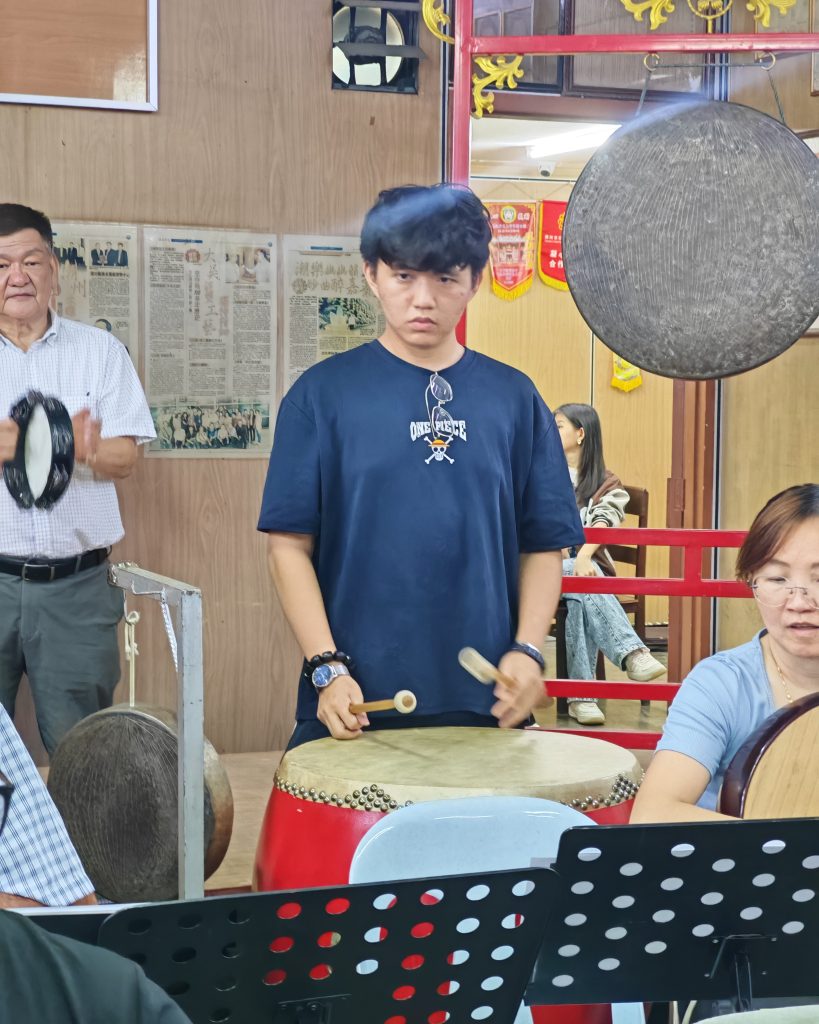
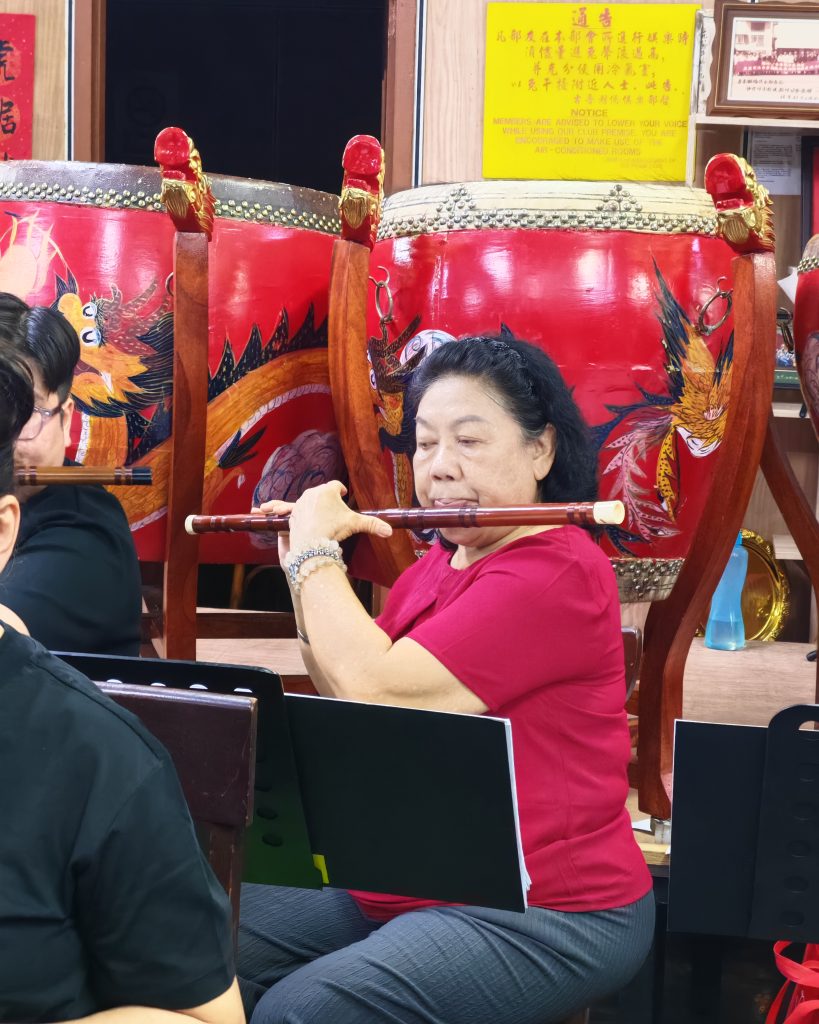
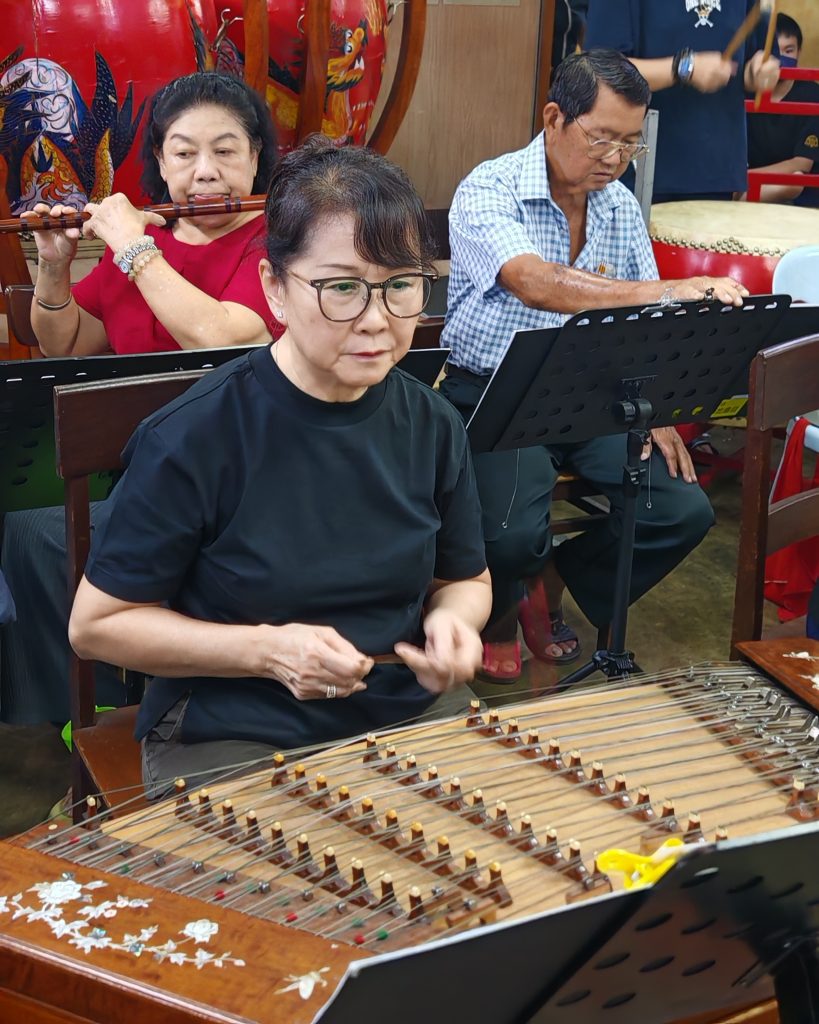
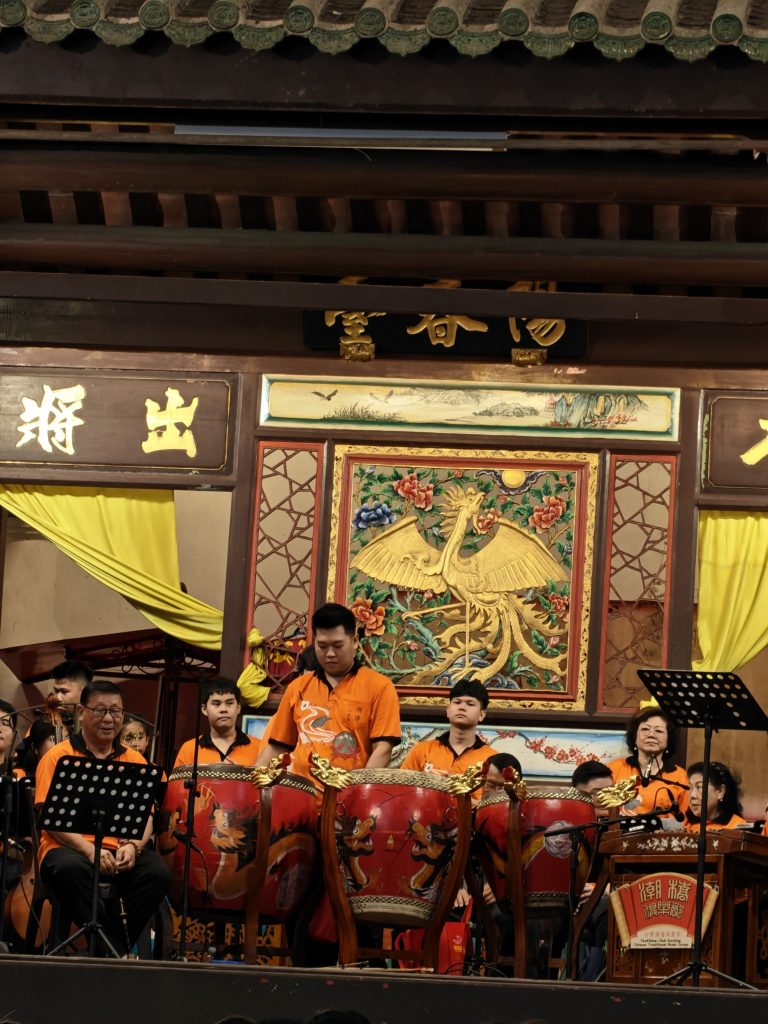
As such, the sounds of the Teochew association were not limited to conversations and mahjong games. They also included the beats of the Teochew dua luo go (large drums), the erxian and other traditional Chinese musical instruments.
The ensemble’s music would be accompanied by the high and low pitches of Teochew opera singers, their voices carrying melodies and traditions from generations past.
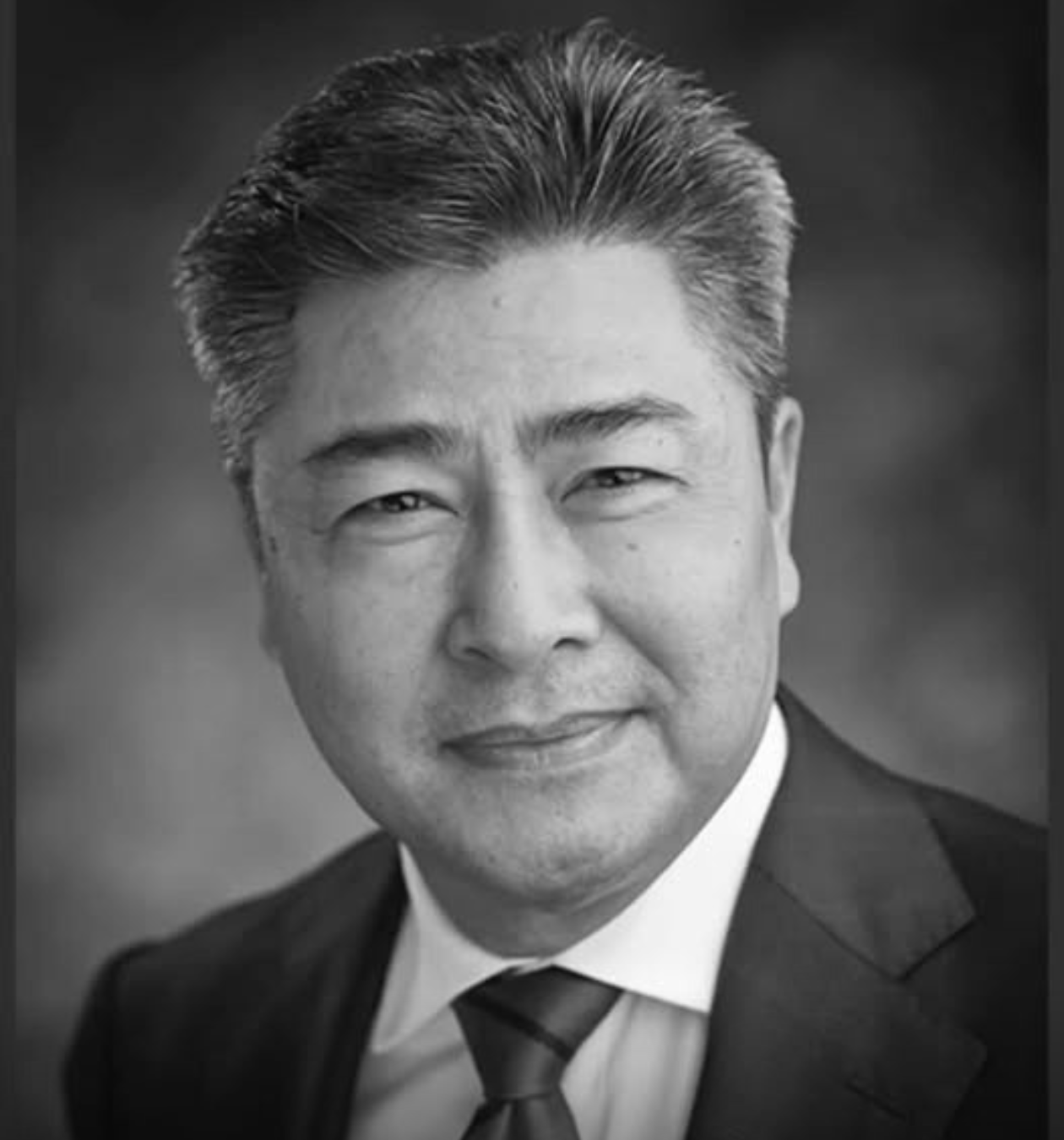
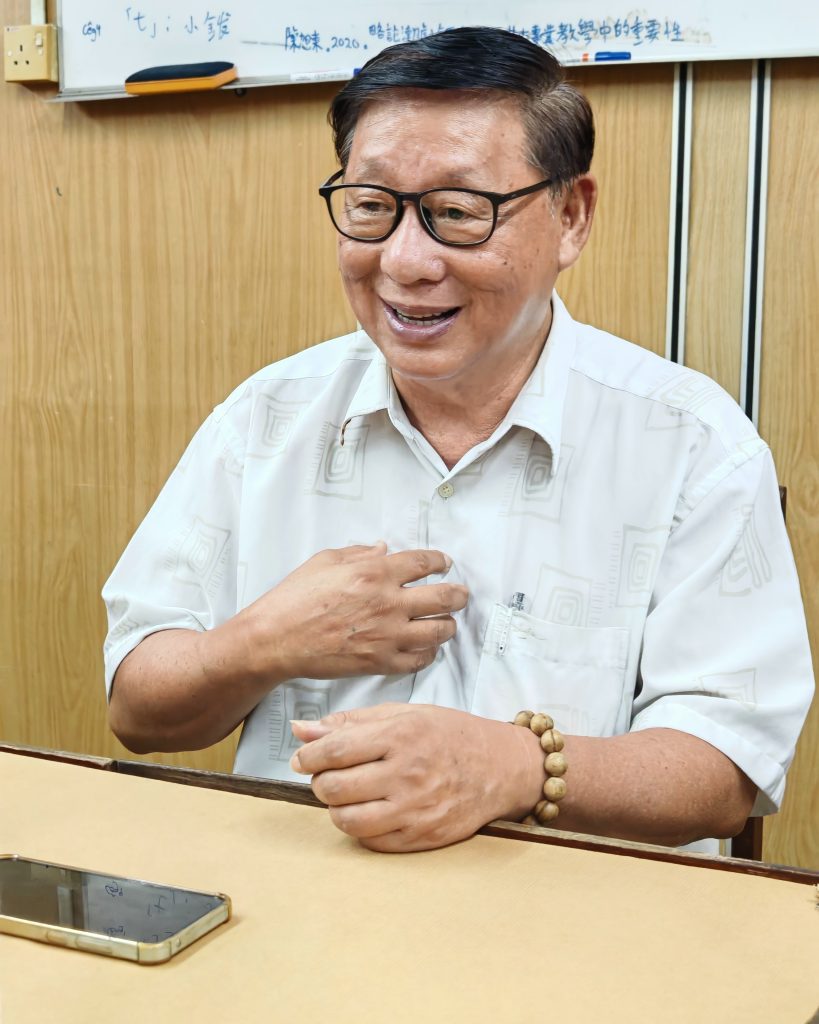
The association’s vice-chairman, Sim Han Tong, who also leads and choreographs its Teochew opera troupe, said its commitment went beyond maintaining a performing team, extending to preserving the art form in Kuching.
In recent years, the troupe has remained active through regular rehearsals and performances, while providing younger generations with opportunities to showcase their talents and immerse themselves in this centuries-old heritage.
An art form from the past
Growing up in Kuching, 71-year-old Sim fondly recalled a time when life was more carefree and laid-back.
“There wasn’t much entertainment back then. There were no phones, and human interaction was inevitable,” he said.
Even taxi drivers waiting for their next passengers would spend their time at designated parking spots playing harmonicas.
“Some would sing and show off their musical talents. This was quite common during the 1970s and 1980s when I was growing up.”
Nearby, along the five-foot ways, buskers would also perform to entertain passers-by. Some even put together small opera ensembles, despite having only a handful of members.
“I also remember my grandfather and mother turning up the radio at home just to listen to Teochew opera. I always wondered why they enjoyed listening to it, but over time, I found joy in it too.”
At Hiang Thian Siang Ti Temple, a temple established by the Teochew community in Kuching, the voices of opera singers could also be heard, particularly during the deities’ birthdays and other special occasions.
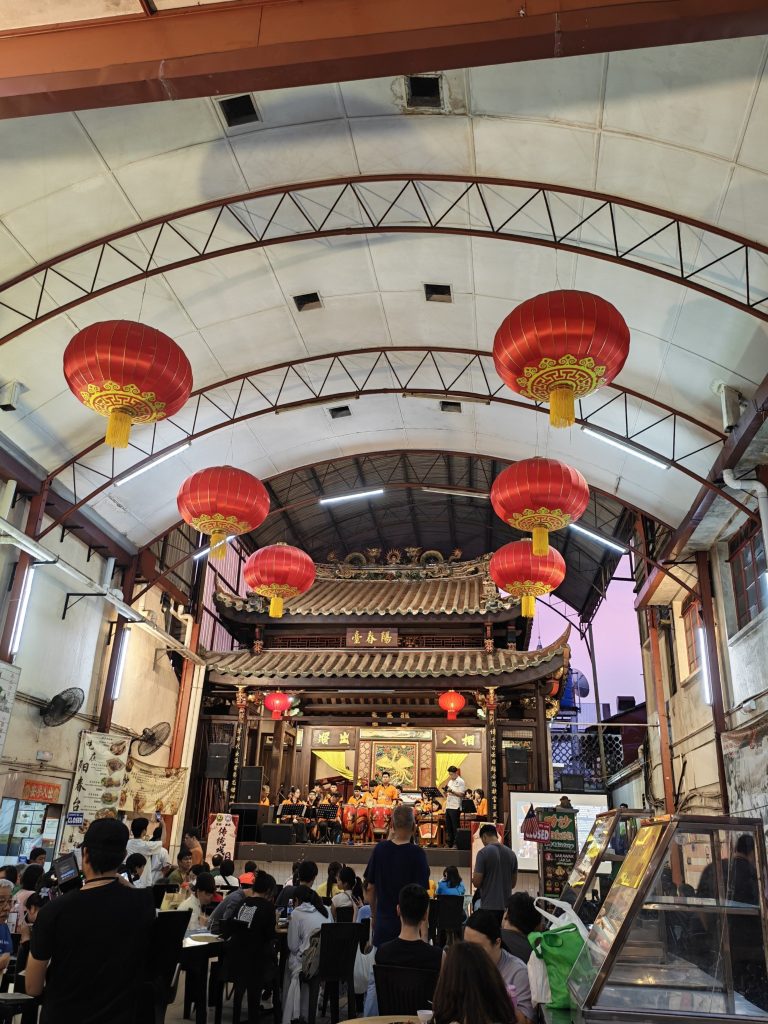
Across the street, at the Lau Ya Keng stage, different troupes would perform various opera stories, offering another familiar form of entertainment for the community.
Today, the once-bustling opera stage, which was filled with echoes of the past, bears the marks of time.
Having served as both a troupe leader and teacher, Sim recognised the gradual decline and devoted himself to keeping the art form alive. He believes that without continued efforts to preserve it, Teochew opera could eventually disappear.
“As Teochew people, we need to protect our culture, traditions and roots. Our musical traditions are also part of what we need to preserve. If we do not continue practising them, one day we may forget where we came from, who our ancestors were and what they contributed,” he said.
He further explained that many older practitioners who were well-versed in the art form had passed away, resulting in a gradual loss of traditional knowledge and skills.
He warned that without younger generations taking an interest in learning and carrying on the tradition, Teochew opera risked losing its roots and eventually fading from Kuching’s cultural landscape.
The decline in the use of the Teochew dialect has added to the challenge. Despite this, the association remains committed to making cultural heritage its core mission, while embracing contemporary developments as a driving force to explore new ways of balancing preservation and innovation.
A change in landscape
Once a familiar sight along the five-foot ways of Kuching’s shophouses, traditional Teochew music and opera have gradually found a different place in the city’s entertainment scene. While the art form has not disappeared, the way it is practised and experienced has changed.
Today, under Sim’s leadership, the troupe is more commonly seen performing at formal events, association gatherings and cultural celebrations. On certain occasions, its members also continue to perform at temples, particularly during religious festivities.
However, the informal musical gatherings that once brought people together after work have become less common.
Sim attributed this partly to the passing of older practitioners, many of whom had accumulated years of knowledge and experience in the art form. Changing lifestyles and the availability of modern entertainment have also reshaped how people spend their leisure time.
In the past, those who knew how to play musical instruments would simply gather along the five-foot ways or outside shopfronts, playing for their own enjoyment while passers-by stopped to listen.
Although such spontaneous gatherings are no longer a regular sight, efforts to preserve the tradition through organised performances and training have become increasingly important.
For Sim, however, keeping the tradition alive is not simply about preserving the music or performances. It is also about ensuring that the stories, values and identity behind the art form are not forgotten.
He believes that introducing Teochew opera to younger generations and giving them opportunities to learn and perform are important steps towards keeping the tradition relevant.
Through regular training sessions, school engagements and performances, the association hopes to nurture a new generation of performers who can carry the art form forward.
After all, heritage is not something that belongs only to the past. It remains alive through the people who continue to practise it, appreciate it and pass it on.
As Sim puts it: “Today’s classic is tomorrow’s tradition, tomorrow’s tradition is later’s classic.”
And perhaps, as long as there are people willing to learn its melodies, take up its instruments and step onto the stage, the echoes of Teochew opera will continue to find a place in Kuching.