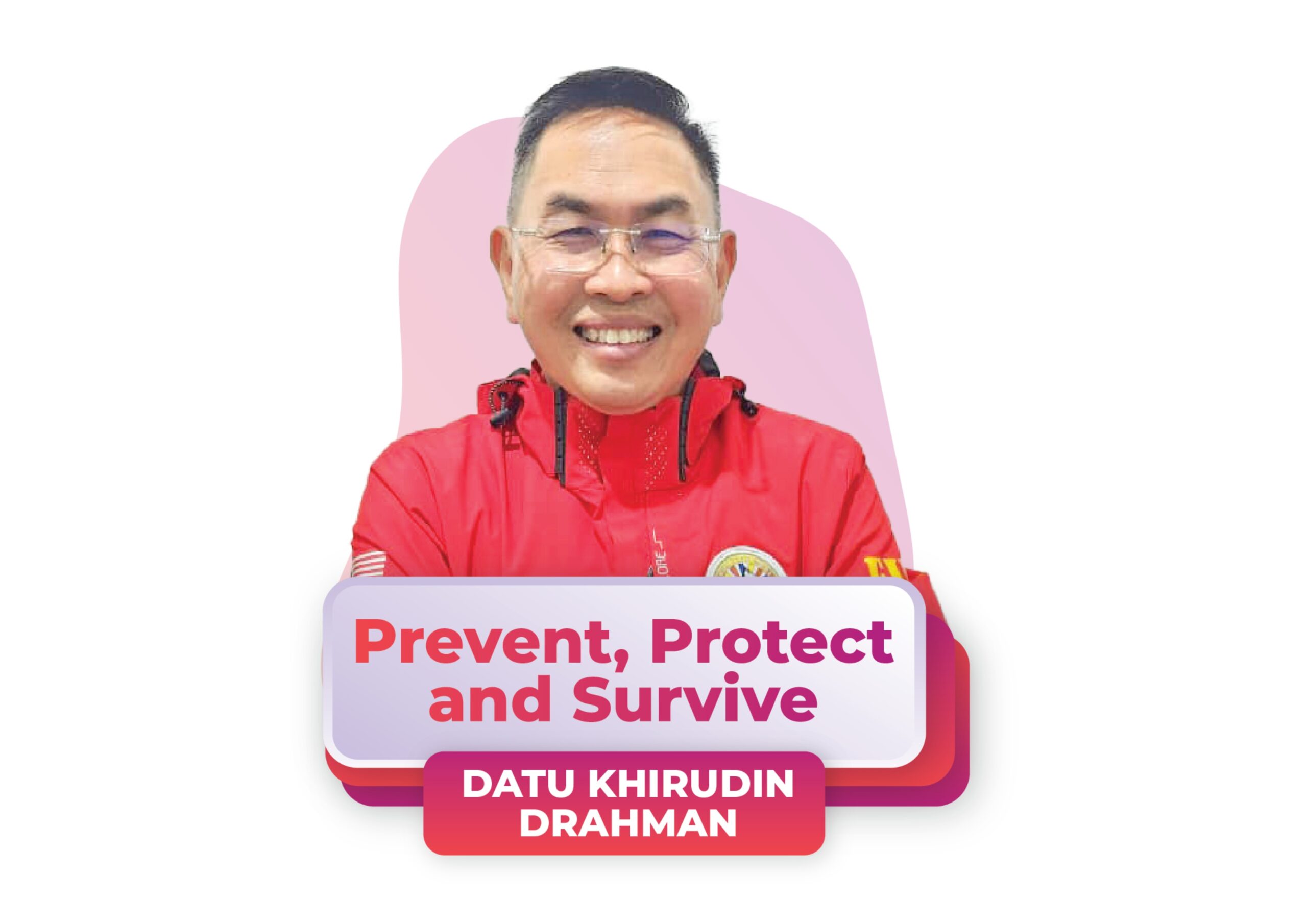
FOR decades, fire safety was largely a reactive science.
An alarm would sound, a fire would be reported, fire engines would roll out, and we would hope for the best.
Fire services traditionally graded risks based on response categories — A+, A, B, C, D and E — each representing the time taken to reach a fire scene under normal conditions.
Traffic congestion or unexpected incidents along the way were not always factored in.
In major cities, this approach may work reasonably well due to infrastructure and connectivity, with the National Average Response Time typically recorded at around 63 to 66 per cent within stipulated timeframes.
But Sarawak is different.
Across our vast 124,000 square kilometres, geography often dictates survival.
A ten-minute response time is simply not possible for every interior settlement.
Recognising this reality, a new philosophy took root during my service with the Sarawak Fire and Rescue Department — the concept of Total Fire Safety, which shifts the battlefield from the fireground to the drawing board and into our communities.
Communities play a crucial role in upholding what has been taught in avoiding the “3L syndrome” — lupa (forgetfulness), lalai (negligence) and leka (complacency).
Most fires classified as accidental stem from these human factors.
Aligned with the National Fire and Rescue Policy 2021–2030, Sarawak has moved towards creating Community Fire Safety Champions. Through initiatives such as Bomba Komuniti, Community Emergency Response Teams (CERT) and Pasukan Bomba Sukarela (PBS), trained volunteers become the first line of defence, capable of managing the critical first five minutes of a fire outbreak.
Another initiative, CELIK SURI — Sedia Urus Risiko di Rumah — recognises housewives as the real CEOs of the home, ensuring that fire safety begins in the kitchen, not at the fire station.
A major shift now under way is empowerment over enforcement. Beginning in 2026, the built environment will increasingly move towards industry-led compliance.
Instead of BOMBA being perceived as the “policeman”, buildings will be managed by certified Fire Safety Managers who take ownership of safety within their premises.
Recent amendments to the Sarawak Building Ordinance 1994, after more than three decades, alongside updates to the Fire Services Act 1988 (Act 341) in 2025, reflect the need to modernise laws to address complex high-rise developments and industrial hazards.
These amendments strengthen governance, formalise fire risk analysis, regulate the fire safety industry and introduce stricter penalties.
Fire engineering is now more relevant than ever in shaping safer living ecosystems.
The goal is simple yet profound — every Sarawakian becomes a fire safety advocate, and every building is designed to protect its most valuable asset: human life.
Safety is a commitment, not an option.
Beyond life safety, fire protection must also consider property protection, environmental preservation and business continuity.
This is where the 3P concept becomes essential: precaution by identifying hazards before they ignite; prevention through fire-rated materials and smart design; and protection through active systems such as sprinklers, alongside trained local champions.
In Sarawak, Total Fire Safety must also be culturally sensitive.
In a longhouse, a fire is not merely a loss of property — it is a loss of heritage.
Statistics show that since 2018, an average of around 111 lives have been lost in fire incidents, with the majority occurring in residential buildings.
The risk of death in building fires remains deeply concerning and often traces back to the 3L syndrome.
Too often, after tragedy strikes, communities begin asking why it happened — why their home, office or factory.
But the better question is how we can prevent it from happening in the first place.
Malaysia’s fire safety design framework offers both prescriptive methods — guided by laws, standards and codes of practice — and performance-based approaches that focus on achieving specific safety outcomes.
In reality, a hybrid approach is most effective, combining standard compliance with risk-based solutions for complex structures and modern developments.
Fire safety is a shared responsibility involving five critical parties: authorities, designers, builders, inspectors and occupiers.
Each must diligently fulfil their role.
The system itself is built upon a hierarchy in which Acts and ordinances provide legal mandates, regulations and standards define requirements, and best practices guide implementation.
Tools such as Fire Emergency Response Plans, fire safety audits, Fire and Explosion Risk Assessments, Hazard Verification Analysis and CIMAH compliance help identify, assess and control risks systematically.
With the latest amendments, fire safety professionals — including consultants, contractors and training providers — must now be formally registered with BOMBA, ensuring accountability and competency.
Certified fire engineers and Fire Safety Managers will be held responsible for their work, marking a shift from a government-inspected model to a more robust self-regulatory framework.
It is time for Sarawak’s property and construction industries to step up and fully align with these reforms to ensure compliance and safeguard lives.
As I have always emphasised, safety is a commitment, not an option.
We invest today for a safer tomorrow.
Let Sarawak lead by example and be the champions of Total Fire Safety.
The views expressed here are those of the writer and do not necessarily represent the views of Sarawak Tribune. The writer can be reached at khirudin.drahman@bomba.gov.my.