KUCHING: Members of the media have been urged to go beyond reporting politics and play a bigger role in telling the stories of communities, development and challenges in Puncak Borneo.
Puncak Borneo Member of Parliament Datuk Willie Anak Mongin said journalists played an important role in society by verifying information, asking difficult questions, highlighting issues and giving communities a voice.
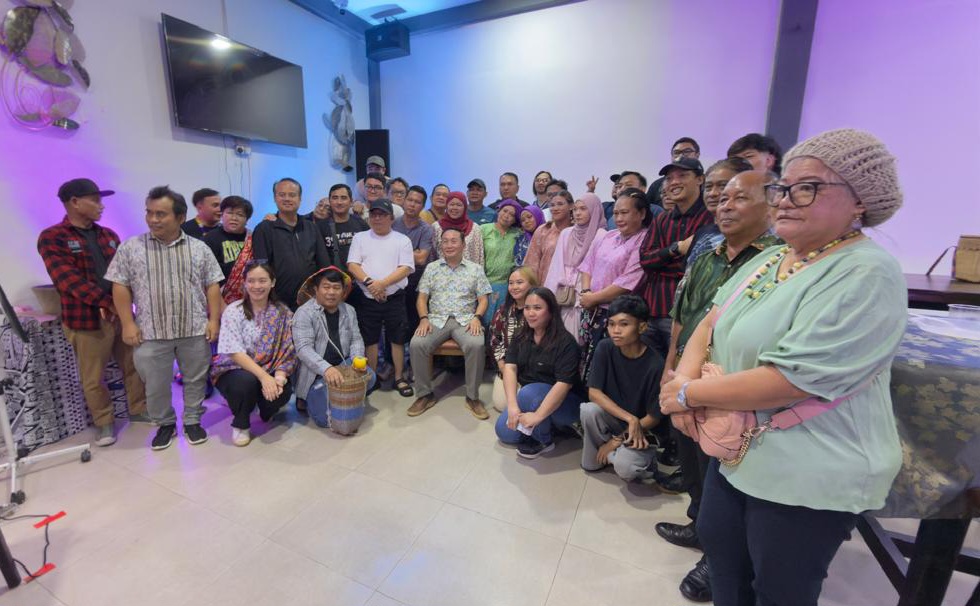
“A journalist does not simply report what a politician says. Sometimes people do not necessarily believe politicians, so you need to verify and check the validity of what they are saying. That is where journalists play a vital role in reporting the truth,” he said at the ‘Majlis Santai Bersama Media’ at Dewan Sinaruh, Pusat Khidmat Puncak Borneo, attended by more than 50 media personnel here yesterday.
He said good journalism should involve scrutiny and different perspectives, while also giving politicians an opportunity to explain, clarify and respond.
“A good journalist is not someone who simply writes things about us. A good journalist is someone who is prepared to ask difficult questions and, at the same time, give us the opportunity to explain, clarify and respond. That is how we keep public discussion healthy,” he said.
He said the gathering was not merely a dinner but an opportunity to strengthen relationships between the media, the community and elected representatives.
He also encouraged journalists to highlight the many stories and attractions in Puncak Borneo, including its natural environment, indigenous cultures, places of worship, farmers, entrepreneurs, young people, food, rivers and tourism potential.
“We should tell more stories about Puncak Borneo. Come and see it for yourself. Talk to the people, visit the villages, meet the farmers, talk to the young people, look at the projects and ask the community what they need,” he said.
Among the areas he highlighted were the region’s caves and waterfalls, including Wind Cave and Fairy Cave, as well as the Tang Raya cave, which he said had significant potential for exploration and tourism.
Willie added that development challenges in the constituency should also receive greater media attention, particularly issues involving water supply, roads, telecommunications, education, infrastructure and the development gap between rural and urban communities.
“These are not just political issues. They are human stories,” he said.
He said the media should not be afraid to highlight problems or raise issues that might be uncomfortable for elected representatives or community leaders.
“There is no need to worry that you will hurt the feelings of the YBs or community leaders. We have to learn to accept the truth. Sometimes it may hurt, but in order for us to progress and move forward, we have to speak about facts and truth, reflect on them and come up with a plan to address them,” he said.
He also shared several development projects and initiatives in Puncak Borneo, while acknowledging that securing approval was only one part of the process and that implementation remained dependent on the relevant agencies.
Among the projects he highlighted was the Puncak Borneo Phase Two Water Supply Project, which he said had faced delays involving changes to the design, land access and the construction of Jalan Padawan.
He said the project was particularly important as it would benefit 18 villages, some of which had experienced serious water supply problems during the recent prolonged dry spell.
Willie also highlighted the approval of SMK Puncak Borneo, which he said had an allocation of RM85 million, although implementation was still pending.
Another project he highlighted was Jalan Kampung Biya Jaber, which has also been raised in Parliament. In November 2025, Willie asked the Rural and Regional Development Ministry about the status of the RM24 million project, which had yet to be implemented at the time.
He also referred to the planned expansion of the Bengoh Resettlement Scheme, which he said was valued at RM45 million and had received funding.
Willie said the implementation of these projects was important to address infrastructure and basic needs in the constituency.
He also pointed to water security as an increasingly important issue, particularly as new residential, commercial and institutional developments continue to emerge in the area.
“We need to properly plan this for our future generations,” he said.
Beyond physical development, he also said he had also supported initiatives aimed at creating opportunities for young people.
He cited a programme known as ‘Program Peluang Kedua’, under which 61 Puncak Borneo residents who did not have formal educational qualifications were sponsored to obtain E-class driving licences together with Goods Driving Licence (GDL) qualifications.
He said the participants had since secured employment, including as drivers for heavy vehicles and container companies.
He also highlighted efforts to promote Dayak gastronomy, saying young people should be encouraged to develop and modernise traditional food while preserving its identity.
He said growing public interest in Dayak cuisine presented opportunities for young entrepreneurs to develop new menus and introduce traditional food to wider audiences.
On telecommunications, Willie said 30 towers had been requested for Puncak Borneo when he first entered office and that the towers had since been erected and brought online.
However, he said service quality remained an issue, with vandalism of telecommunications infrastructure among the challenges affecting connectivity.
He called for greater cooperation between relevant agencies and industry players to protect telecommunications infrastructure and improve service reliability.
Meanwhile, he also reiterated his call for greater transparency in government development projects, including making information on project status, costs, contractors, delays and expected completion dates more accessible to the public.
The issue was raised by him in Parliament in July, where he called for project information to be made more open and searchable by members of the public, rather than requiring elected representatives to raise questions in Parliament to obtain updates.
“People want to know where the money is going, why a project is delayed and when it will be completed. That information is important,” he said.
He also reminded that said his office remained open to journalists seeking information about Puncak Borneo and encouraged them to engage directly with communities and local leaders.
“My door is always open. Come and see Puncak Borneo for yourself, talk to the people and tell their stories,” he said.
He also thanked the media for their coverage and feedback, saying even negative reports could serve as constructive reflection and motivation to improve his service to the constituency.