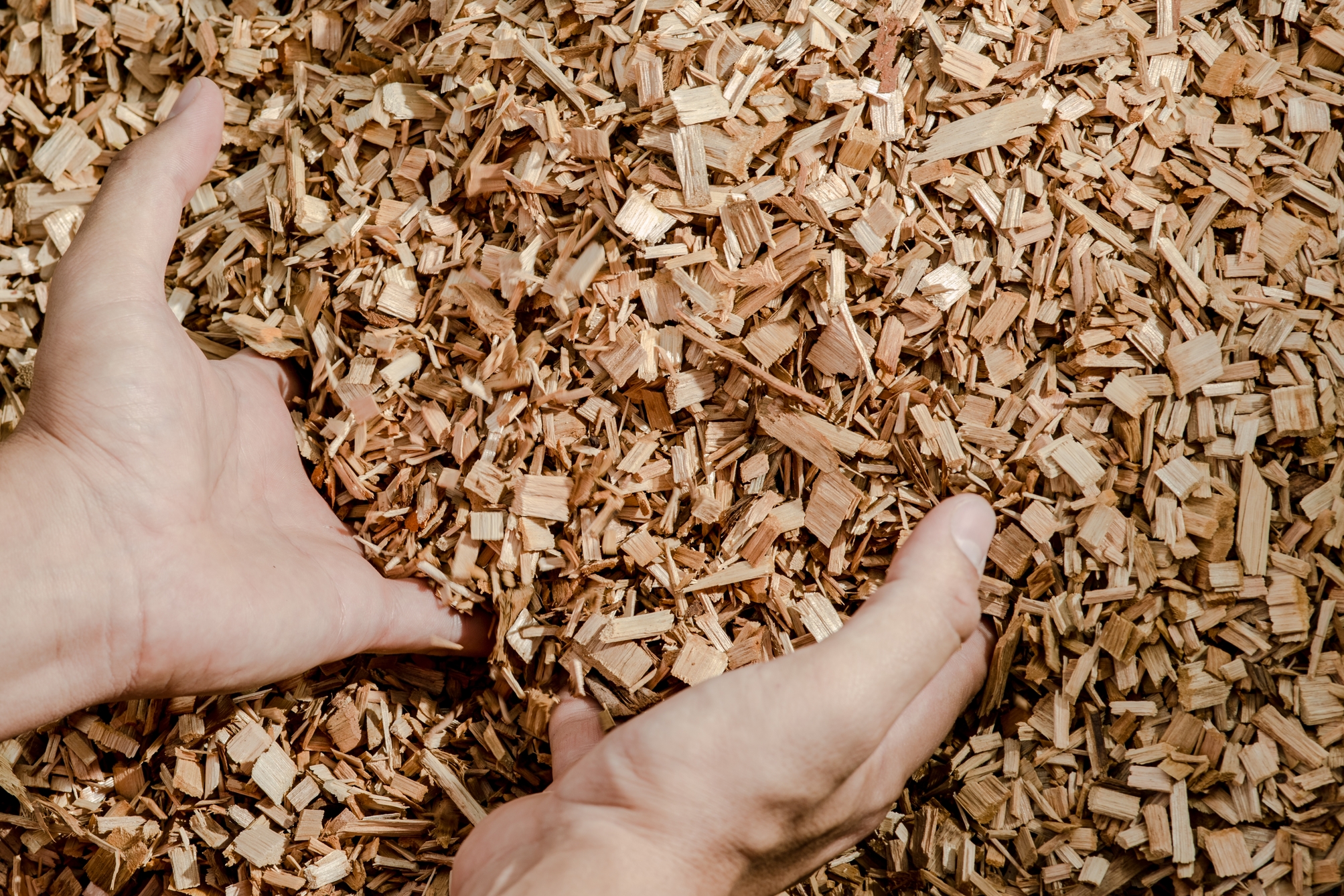
KUCHING: Malaysia and other top supplying countries have all reported a sharp drop in the exports of woodchips to China this year.
In the first five months of 2025 (5M2025), Malaysia’s woodchips shipment to China plunged by 73 per cent to 23,000 tonnes as compared to that of 5M2024,according to China Customs data quoted by International Tropical Timber Organisation (ITTO) Tropical Timber Market Report (July 16-31, 2025).
The No 1 supplier, Vietnam, registered a 12 per cent drop in exports to China to 4.4 million tonnes during the same period while second largest supplier Australia saw its exports fell by five per cent to about 1.1 million cu m.
Vietnam and Australia accounted for 87 per cent of China’s total woodchips purchases which amounted to about 6.29 million tonnes in 5m2025, down 17 per cent from 5M2024.
Other notable declines included Thailand and Brazil, with their exports to China shrank by 29 per cent to 339,000 tonnes and 76 per cent to 32,000 tonnes respectively.
However, China posted a big jump in woodchips imports from South Africa to 122,000 tonnes in 5M2025.
Imported woodchips are primarily used by pulp and paper mills in China.
In June 2025, China announced that it would implement a policy of granting 53 African countries having diplomatic relation with China zero-tariff treatment for all tariff lines, expanding the scope from 33 countries. The newly added countries are Gabon, Republic of Congo, Ghana, Cameroon and Angola.
“Wood products would also enjoy zero-tariff treatment which is expected to boost the export of wood from African countries to the Chinese market,” said the ITTO report.
In 5M2025, China’s imports of African wood plunged by 31 per cent to 813,700 cu m as compared to 5M2024.
In May 2025, China’s total wood imports stood at 4.966 million cubic metres, also a decrease of 17 per cent from the same period in 2024.Specificially,logs imports shrank by 18.5 per cent year-on-year to 2.961 million cu while sawnwood imports were down by 15 per cent to 2.005 million cu m.
Meanwhile, the Chinese authorities have come up and released an Oriented Strand Board (OSB) Consumption Guideline to help consumers to understand the product through simple language and pictures.
The guideline elaborates on OSB’s characteristics and applications, key qualities and environmental protection indicators. Also presented are inventories of major manufacturing enterprises in terms of product classification, quality identification, environmental protection indicators and purchase information.
“The release of the guideline is of significance for regulating the OSB market and guiding consumers to spend rationally.
“It provides consumers with a scientific and practical basis for selection which helps enhance their self-protection and prevents them from being misled. At the same time it also promotes the orderly development of the OSB industry and creates a favourable environment.
“It is believed that the OSB industry will enhance new development opportunities. It is expected that consumers will pay more attention to this type of board, enhance market awareness and acceptance and thereby fully unleashed the value and application potential of OSB,” added the report.
Separately, a new national standard for wood-based panels “Formaldehyde emission limits for indoor decoration and renovation materials–wood-based panel and its products” issued by China’s State Administration for Market Regulation” will come into effect on June 1, 2026.
The new standard incorporates E0 and E1 grade standards (which are European formaldehyde emission standards) into regulatory requirements and further refines the classification and testing methods for wood-based panel. The formaldehyde limit indicators have become stricter.
“The new national standard clearly defines wood-based panels and products thereof for the first time. In addition to classification, the new national standard has also changed the formaldehyde emission limit to a grading requirement, uniformly using EO and E1 grades as the judgement criteria.
“At the same time, the testing methods are standardised and a “small lab method” is added in the production quality control process, making the detection and management more scientific and rigorous,” said ITTO report.