In Sarawak’s shadowed rivers, crocodiles are more than beasts — they are legends, spirits, and sentinels of a land where myth and danger flow side by side.
Crocodiles and communities in Sarawak
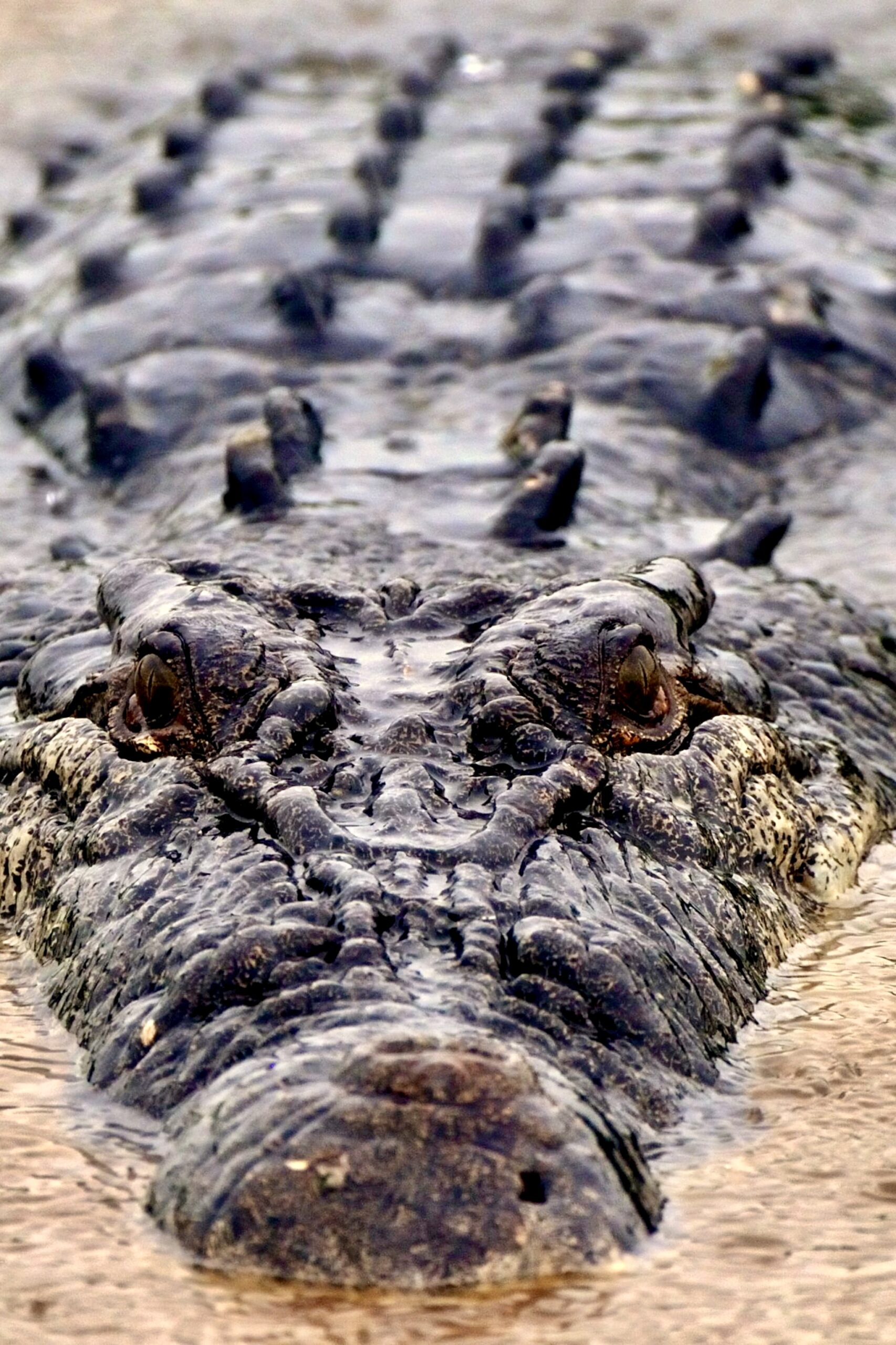
Each year on June 17, World Crocodile Day shines a spotlight on one of the planet’s most ancient predators — not merely to marvel at their power, but to reflect on how we coexist with them.
With this year’s theme, “Connecting Crocodiles and Communities”, the focus turns to the delicate, often dramatic relationship between people and these reptiles — a relationship steeped in culture, conflict, and coexistence.
Nowhere is this connection more vivid than in Sarawak, which harbours Malaysia’s largest population of crocodiles.
Here, crocodiles are more than apex predators. Known by many names — boyak, baya, buayeh, buai — they are feared and revered, woven deeply into the myths of Borneo’s Indigenous peoples, from the legendary Bujang Senang to the symbolic effigies placed to guard crops.
But these stories aren’t just echoes of the past. Today, these prehistoric reptiles still dominate Sarawak’s rivers, swamps, and peatlands — their presence a living reminder that myth and nature often share the same waters.
In this East Malaysian state, crocodiles remain deeply embedded in the spiritual beliefs, folklore, and cultural memory of its many ethnic groups.
On this World Crocodile Day, there is no better time to explore how the people of Sarawak live with — and in many ways, honour — these ancient creatures.
Of spirit and species
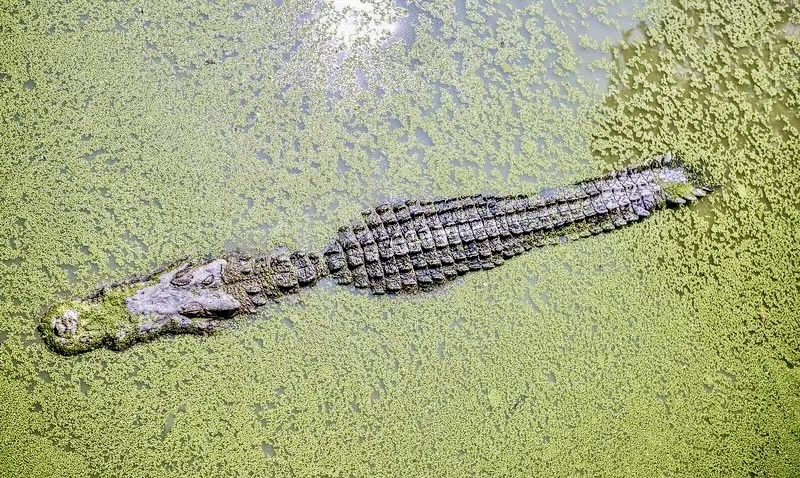
Sarawak is home to two native crocodilian species: the formidable saltwater crocodile (Crocodylus porosus) and the rare Malayan gharial (Tomistoma schlegelii).
Saltwater crocodiles roam across Sarawak’s major river basins, from tidal estuaries and mangroves to freshwater swamps and inland rivers hundreds of kilometres from the sea.
In contrast, the shy Malayan gharial can only be found in isolated locations like Loagan Bunut Lake and the upper reaches of Sungai Baram and Batang Sadong.
Despite their presence in the wild, crocodiles are not seen solely as wildlife. They are part of everyday vocabulary and village wisdom.
Across different languages — boyak (Malay), baya (Iban), buayeh (Lundayeh), and buai (Bidayuh) — these creatures have coexisted with Sarawak’s Indigenous communities for generations.
While feared for their strength and stealth, they are also respected, and in some cases, revered.

Bujang Senang: From warrior to river monster
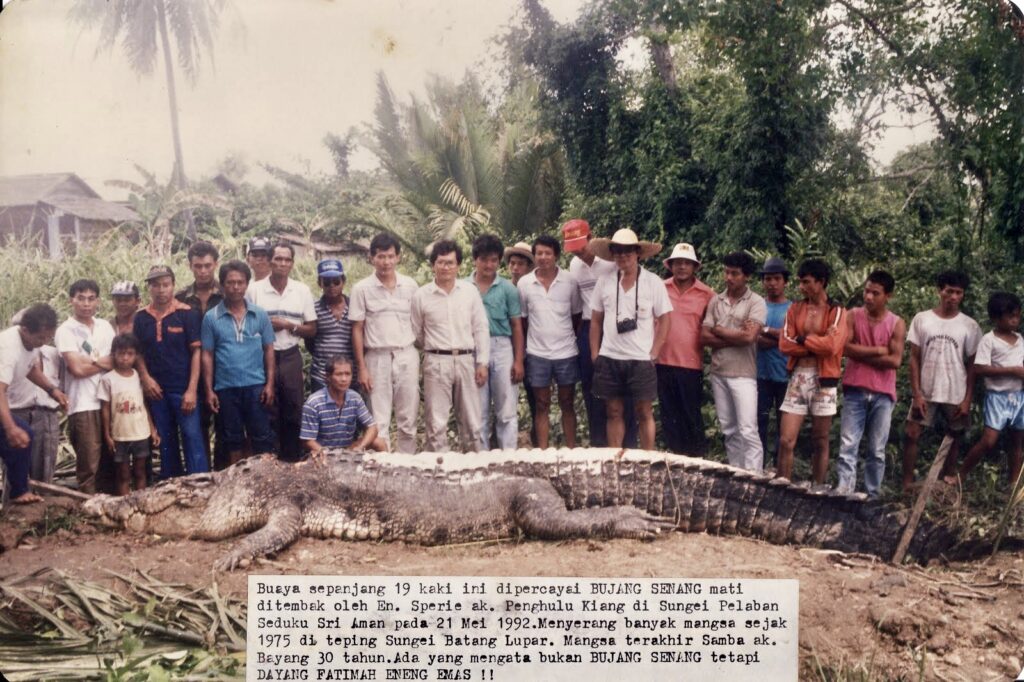
No story captures this complex relationship better than the legend of Bujang Senang, the mythical giant crocodile of Batang Lupar.
As told by Dr Ipoi Datan of the Sarawak Native Customs Council, Bujang Senang was once an Iban warrior named Simalungun.
During the era of ngayau (headhunting), Bujang Senang was believed to possess mystical powers that made him invincible — so long as he never stood in a river.
When his enemies discovered this taboo and exploited it, Simalungun and his wife were killed. Their bodies were cast into the river, where powerful spiritual forces transformed him into a fearsome white-striped crocodile.
Sightings and tales of Bujang Senang haunted the Batang Lupar for decades, until a large crocodile believed to be him was killed in 1992 following a deadly attack.
His skull remains on display at Jong’s Crocodile Farm in Siburan — a symbol of how myth, memory, and nature intertwine.

Cultural guardians, spiritual protectors
Beyond legend, crocodiles hold spiritual significance across Sarawak’s Indigenous cultures.
Among the Iban, wooden effigies known as baya tanah were once crafted for mali umai, a ritual to protect rice fields from pests.
It was believed that the crocodile spirit would emerge to devour rodents and insects, ensuring a good harvest. During the ritual, villagers observed a strict three-night curfew out of respect for the spirit’s journey through the land.
In Lundayeh tradition, crocodiles symbolised strength and leadership.
Before the outlawing of headhunting in 1905, warriors returning from raids would construct a sacred mound called nui ulung buayeh, complete with carved poles and hornbill decorations.
Though this ritual faded after Christianisation in the 1930s, crocodile motifs live on in luba’ buayeh (miniature food effigies) and ceremonial dress.
Conflict and coexistence
Still, reverence alone cannot prevent tragedy. As Sarawak’s development accelerates, humans increasingly encroach upon crocodile territory.
At the same time, conservation laws have enabled crocodile numbers to rebound — especially saltwater crocodiles, known for their territorial and aggressive behaviour.
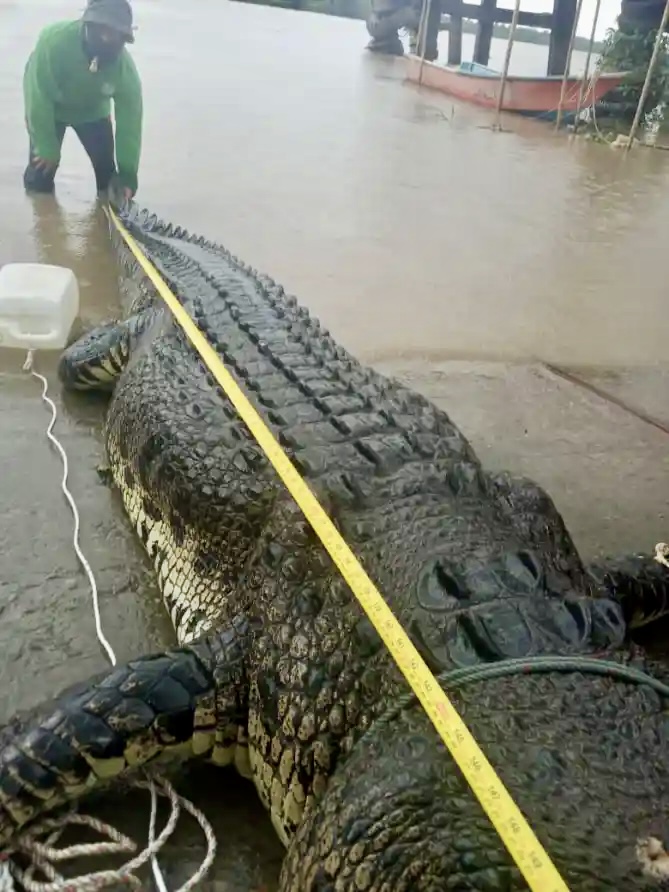
The Batang Lupar River, infamous for attacks, recorded at least 26 deaths between 1940 and 2000. More recent years have seen further incidents, including the 2021 capture of a 16-foot crocodile in Sungai Samarahan.
Experts believe that predictable human behaviour — such as bathing in the same river spot each day — or the disposal of food waste near riverbanks can make people more vulnerable to attack. Old, injured, or starving crocodiles may also turn to humans when fish and wild prey become scarce.
In response to these risks, riverside communities have long relied on traditional knowledge to stay safe.
It is taboo to enter the water before sunrise or after dusk — times when crocodiles are most active and may mistake humans for prey.
Crocodiles are also never addressed directly. Instead, respectful terms like aki (grandfather) or si pangan (dear one) are used, especially before bathing or crossing rivers — a gesture meant to show deference and avoid offence.
One widely held belief is in kempunan — the misfortune that follows when a person declines food, drink, or a cigarette offered by another. To avoid this, people will quickly say pun pun or dahkik to dispel bad luck, especially when near rivers, where danger may be listening.
And no matter the circumstance, locals believe that eating crocodile meat is strictly forbidden — doing so could invite vengeance from the creature’s kin.
Conservation through culture
In Sarawak, where tradition runs deep and crocodiles continue to command both fear and awe, conservation cannot rely solely on scientific management or legal protection. Instead, cultural narratives, taboos, and spiritual reverence can serve as powerful tools for coexistence.
By recognising crocodiles not just as biological entities but as creatures of cultural and spiritual importance, Sarawak offers a unique model of conservation rooted in respect, storytelling, and community engagement.
Yet as the state modernises and riverside communities expand ever closer to crocodile habitats, that balance grows more fragile — and the line between awe and anxiety continues to blur.
But the legacy of these reptiles lives on — in folklore, in ritual, and in cautionary tales passed down by elders.
Bridging this legacy with science, policy, and public safety is not just important — it is essential.
World Crocodile Day reminds us that protecting crocodiles also means understanding the people who live with them.
In Sarawak, that connection has already endured for centuries. If we are to build a future where both crocodiles and communities can thrive, we must continue listening — to the stories, the science, and the rivers that connect them all.