After losing his wife, Mr C, a man in his 30s, found himself living alone in Sarawak, far from his family and struggling to see a reason to carry on. In the quiet of an empty home, however, an unexpected companion gave him a reason to stay.
When Grief Makes Tomorrow Impossible
“It wasn’t necessarily that I wanted to die. It was more that I couldn’t see a reason to live anymore.”
“I must keep going.”
“Just give yourself the opportunity to find out what comes next.”
There are some kinds of loneliness that are difficult to explain.
For Mr C, who works and lives in Sarawak, it came after the death of his wife.
Suddenly, the person who had been part of his everyday life was no longer there. The familiar routines remained, but the person he had shared them with was gone. Coming home meant facing that absence day after day.
“The hardest part was the loneliness — a kind of loneliness that I hadn’t felt in a very long time,” he said.
Coming home to an empty house and facing everyday life without someone who had been such a huge part of his life was a reality Mr C had to learn to live with.
There was no simple way to adjust. Grief became part of the ordinary, woven into the quiet moments, routines and spaces that once felt familiar.
It took time. Eventually, he learned to live with it.
When silence feels easier
The first few months were particularly difficult.
Living in Sarawak while his family was far away meant much of his grief had to be carried at a distance.
Even when people wanted to help, Mr C could sense their uncertainty. He remembers feeling that people, whether near or far, were walking on eggshells around him because they did not know what to say or how to approach him.
Grief can make conversations difficult. Sometimes people are afraid of saying the wrong thing; sometimes the person grieving does not know what to say either.
But what stayed with Mr C was not what people failed to say. It was what they did.
His family and those around him never gave up on him. They were patient and considerate, making the effort to be there even from afar through phone calls and FaceTime.

There were no grand gestures — just people checking in, remaining present and reminding him that he was not forgotten.
“Those small efforts meant a lot to me,” he said.
Yet behind those conversations was something he rarely spoke about.
On particularly bad days, his grief became overwhelming. He found himself with little motivation to carry on and struggled to see what life was supposed to look like without the person he had lost.
“It wasn’t necessarily that I wanted to die. It was more that I couldn’t see a reason to live anymore,” he said.
When someone loses a person who was such a huge part of their life, imagining what comes next can become difficult. The future can begin to feel less like something to look forward to and more like a blank space.
And Mr C kept those feelings to himself.
At the time, he did not want to put what he saw as an emotional burden on people who were simply going about their own lives or dealing with problems of their own.
He did not want anyone to worry about his wellbeing.
Looking back, he realises that silence can make grief feel even heavier.
A small reason to stay
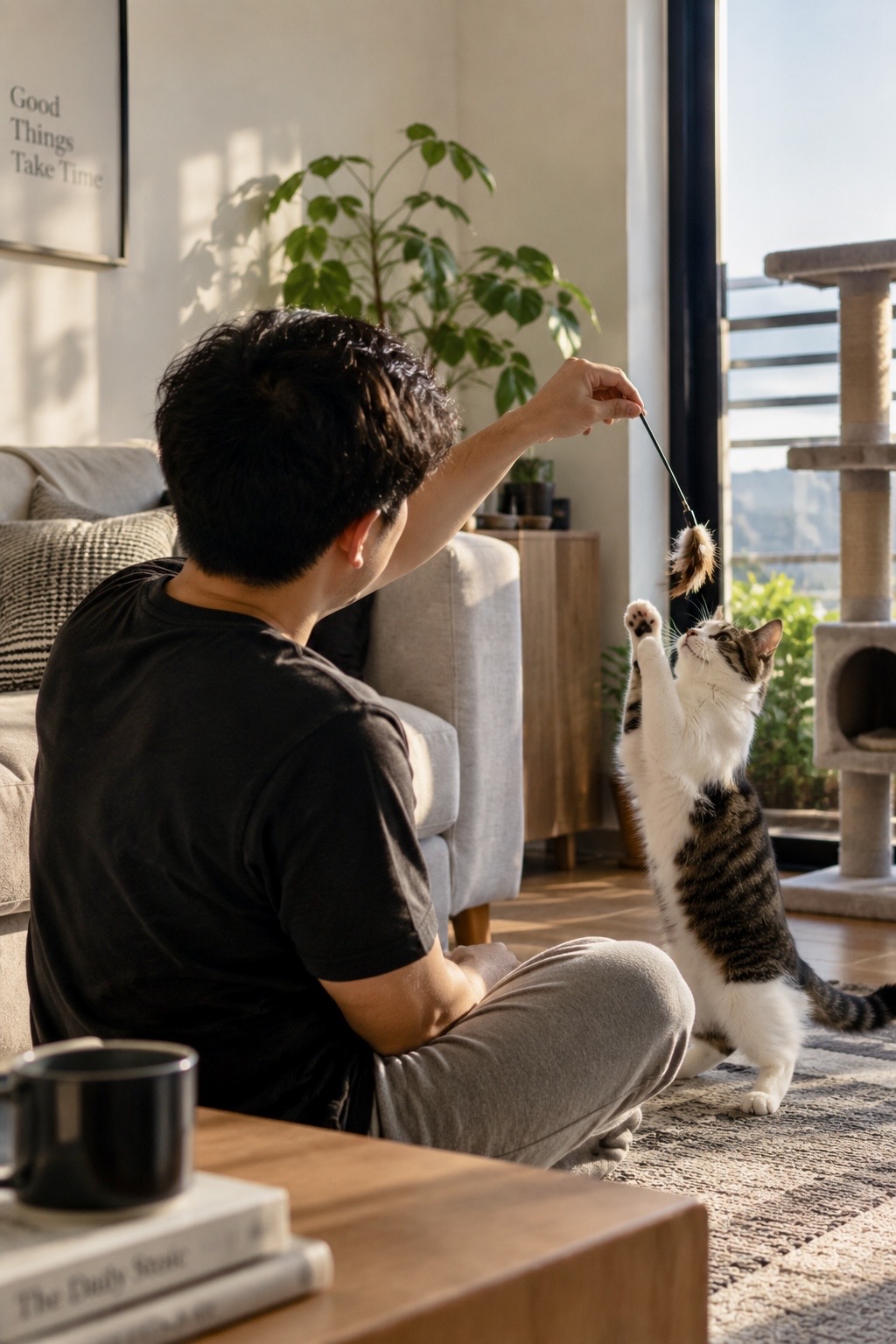
In the middle of that loneliness, there was one presence waiting for him at home.
His cat.
She could not ask what was wrong or offer the kind of reassurance a person might, but she was there — a living presence in a home that had suddenly become much quieter.

There was no single dramatic moment when she changed everything. No sudden revelation or grand gesture.
It was simply her existence.
As an animal lover, Mr C says animals give him a genuine sense of joy and love. During his darkest days, knowing his cat was there — and depended on him — gave him something he was struggling to find within himself: purpose.
“They are only a small part of your life, but you are their whole life.”
The saying stayed with him.
Knowing that another living being depended on him and loved him in her own way reminded Mr C that he still had a reason to stay.
It was a small responsibility, but one that mattered. Feeding her, caring for her and simply knowing she was there gave shape to days that otherwise felt difficult to navigate.
“I know that can be a difficult concept for people who aren’t pet owners or animal lovers to understand.
“But when you’re alone or lonely, having that companionship can make a much bigger difference than people realise,” he said.
The cat did not erase his grief.
She simply gave him one small reason to keep showing up. Sometimes, one reason is enough to get through another day.
From ‘maybe’ to ‘must’
Mr C’s turning point did not arrive as a sudden burst of optimism.
Instead, he remembers one day when something simply clicked.
It was not, “Maybe I can keep going.”
It became: “I must keep going.”
He began thinking about the people he had lost — people who, he says, would have done anything for the chance to keep living, to survive and have more time.
That changed the way he viewed his own life.

He realised he could not take the opportunity to live for granted.
The thought did not bring back what he had lost or make the grief disappear. But it gave him a different way of looking at the life that remained.
Today, Mr C sees himself as living not only for himself, but also for his cat and for the people he has lost who would have done anything to have the chance he still has.
That perspective gave him a reason to move forward.
What comes next
Today, Mr C does not claim to have all the answers.
Perhaps that is what makes his message to others who are grieving all the more important.
Moving forward does not necessarily mean forgetting the person you lost or suddenly feeling fine. Sometimes, it simply means allowing yourself another day, even when you cannot yet imagine what that day will bring.
For those who are grieving, Mr C believes there is no need to figure out their entire life at once.
“When you’re grieving, sometimes getting through the next day — or even the next hour — is enough.”
And asking for help does not make someone a burden. He wishes he had understood that sooner.
“The people who care about you would much rather know that you’re struggling than find out that you were carrying it alone.”
A reason to keep going may not appear immediately.
It can be a person, a friend, a family member, a pet, a responsibility — or even something as simple as the possibility that tomorrow might feel slightly different.
“You may not be able to see a reason to keep going today, and that’s okay. Sometimes that reason isn’t something you find immediately.”
You do not have to have everything figured out.
“Just give yourself the opportunity to find out what comes next.”