WITH the school year slowly winding down, children across Sarawak are looking forward to their long-awaited educational trips.
It’s a time when learning takes place outdoors, surrounded by laughter, curiosity and a little bit of chaos.
In Kuching alone, there are more than 10 destinations to choose from, ranging from museums and cultural centres to nature parks, wildlife sanctuaries and historic landmarks.
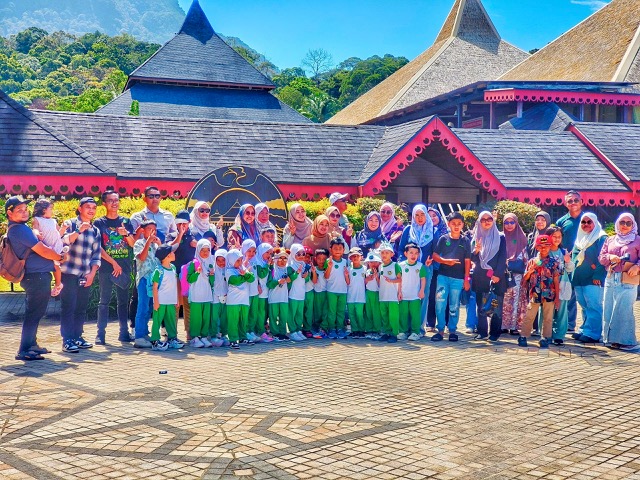
Recently, Tadika Hikmah Serian brought its students on a trip to the Sarawak Cultural Village (SCV), an award-winning living museum that showcases the heritage and traditions of Sarawak’s diverse ethnic communities.
Although the visit was primarily organised for students and their parents, families were also welcome to join. To me, it was a thoughtful gesture that made the small group’s journey livelier and more memorable.
My five-year-old son was among the excited little travellers, though, truth be told, he wasn’t exactly thrilled about visiting SCV itself.
What he truly looked forward to was spending a day out with his friends, sharing laughter and new memories.
Taking the chance, I decided to bring along my two-year-old daughter as well. My son had visited SCV when he was two, and this time, I wanted his sister to create the same kind of memory, one that she could look back on someday when we tell stories about their early adventures together.
Setting off for a day of discovery
Participants of the trip were free to choose their own mode of transport. The school had arranged an express bus for those who preferred to travel together while some parents, especially those with younger children, opted to drive their own cars for convenience.
The flexibility made the arrangement feel relaxed and family-friendly. No strict schedules, just everyone heading toward the same destination with shared excitement.
A week before the trip, my son had already made his plans clear. He wanted to sit next to his friend, Fawwaz, his partner-in-crime at school. Every day leading up to the trip, he reminded me of it, just to make sure I wouldn’t change my mind about letting him take the bus.
That morning, he joined his classmates and teachers, proudly waving at us from the window as we followed behind by car, with his little sister babbling excitedly in her seat.
When we arrived, the atmosphere was lively. The parking area was nearly full and the sound of children’s laughter echoed through the entrance. Several school groups were already there, easily recognised by their matching shirts and colourful hats.
Amid the crowd, SCV staff calmly and efficiently facilitated registrations, a small but commendable effort that kept things running smoothly.
Before entering, we couldn’t resist taking the iconic group photo at the entrance, framed by the majestic Mount Santubong, before gathering with the rest to begin our little expedition through the living museum.
Discovering cultures up close
The guide led us to our first stop, the Chinese Farmhouse. Built at ground level, its doorway was framed with red paper charms believed to ward off bad luck. Inside, the earthen floor and whitewashed timber walls gave the space a humble warmth, anchored by a small household shrine. Outside, a neat pepper garden completed the scene.
The guide then explained how black and white peppercorns are processed, demonstrating old-fashioned tools like the granite rice grinder. The children were instantly hooked, eager to try equipment rarely seen today.
Next came the Malay House, already bustling with visitors from another school. Built on stilts, it required guests to remove their shoes before climbing up.
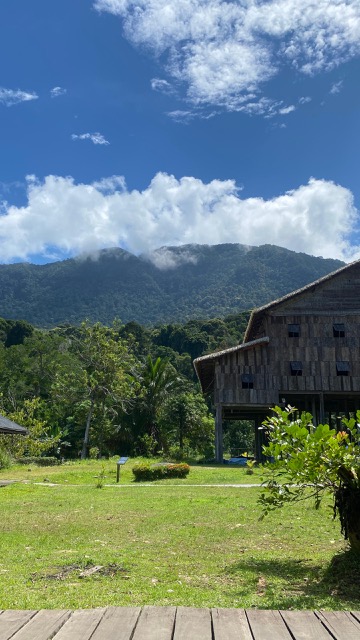
My daughter and I stayed below, content to watch from the shade while admiring the breathtaking view of Mount Santubong, a sight that makes every visit to SCV feel special.
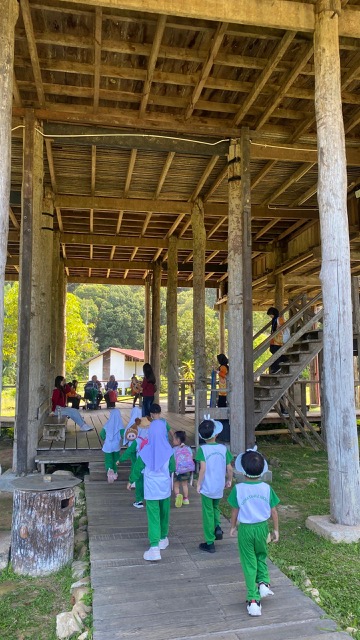
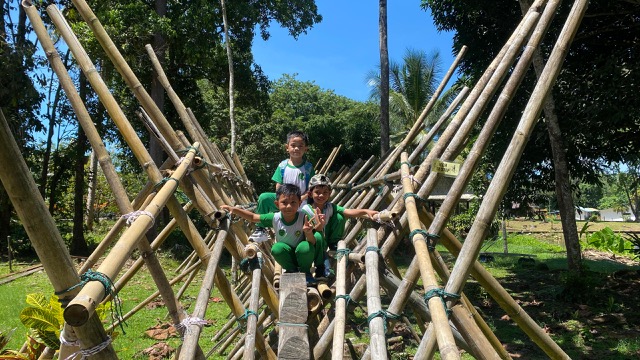
We then made our way to the Melanau tall house. My son was awestruck by its towering height and whispered a quiet “Wow”. Many of the Tadika Hikmah students – boys and girls alike – were quick to climb up.
Their laughter echoed from above as they explored every corner with fearless curiosity. I, however, preferred to stay grounded; heights were never my thing.
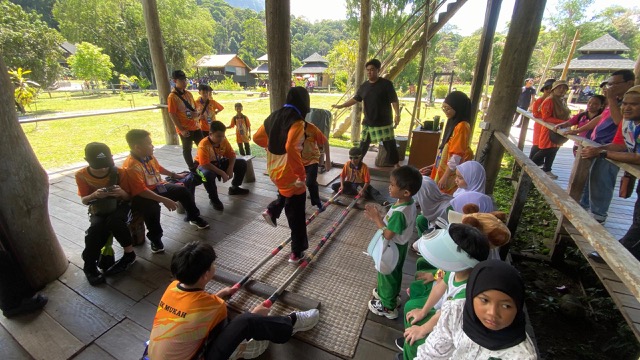
While resting beneath the house, I noticed a group of students from SK Mukah taking part in a Melanau bamboo dance demonstration. Curious, I approached and learned they were Primary Six students on their own school trip.
They had travelled all the way from Mukah by bus – nearly nine hours on the road – just to experience Kuching’s cultural treasures. Their enthusiasm reminded me that these journeys, no matter the distance, always leave lasting memories.
Finding our roots
Our next stop was the Orang Ulu longhouse. As we climbed the steep stairs, I took a moment to brief my children.
“Your grandmother is an Orang Ulu – Kenyah, to be exact,” I told them. “Now we’re visiting a house that’s part of her history and culture. You may never see one like this again but it’s important that you know your roots.”
Both of them nodded earnestly though I wasn’t entirely sure they understood, I appreciated their effort. What truly warmed my heart was when my son began asking questions.
“Did grandmother live in a house like this before?” he asked. “Where was her kampung?”
They were simple, innocent questions but they showed genuine curiosity, a sign he wanted to understand where he came from.
We couldn’t explore all the remaining ethnic houses as time was catching up with us; the cultural show was set to begin at 12:20 pm. Still, I managed to squeeze in a quick visit to the Bidayuh roundhouse, or ‘barok’.
As a Bidayuh myself, I felt a quiet sense of pride showing my children the traditional structure that once served as both a meeting hall and a defensive post for Bidayuh warriors.
Though they’ve long been familiar with Bidayuh customs and stories, they peppered me with questions: “Why don’t we see this ‘barok’ in your village, Mummy?” “Did my great grandmother live in one like this?” and my favourite – “Can grandpa build one next to his house?”
Sadly, I couldn’t show them the Bidayuh longhouse, which had been destroyed in a fire about a month ago. I promised to bring them back once it’s rebuilt so they could see, in full, the stories of who they are.
The heartbeat of the village
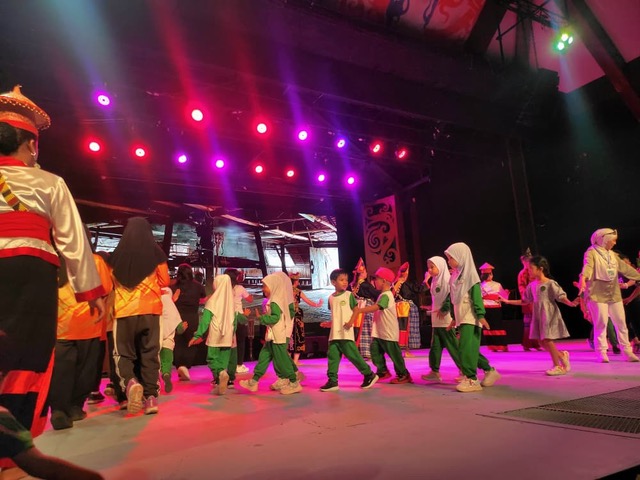
The highlight of our visit was the cultural show. We headed into the air-conditioned theatre where SCV’s award-winning dancers and musicians took the stage for their renowned multi-cultural performance.
Judging by the children’s faces, the colourful costumes and graceful movements were a feast for the eyes, a lively introduction to Sarawak’s diverse ethnic groups and traditions.
Some routines were soft and elegant while others carried a mythical energy that mesmerised the adults in the room. Backed by enchanting traditional music, the entire performance felt like a celebration of rhythm, history and pride.
But to my two-year-old daughter, it was something else entirely. A little too mysterious for her liking. I won’t name which segment but at one point, the lights dimmed completely, leaving only the faint glow of the LED backdrop. My daughter covered her eyes with both hands, clearly unsettled by the sudden darkness.
My husband and I whispered reassurances, telling her it was beautiful. We didn’t want to force her to watch so we asked her to hug her daddy tight and listen to the music instead as if it were a lullaby.
Thankfully, she calmed down though she refused to open her eyes until the lights came back on. Still, after every performance, she clapped enthusiastically, tiny hands applauding with delight.
I hope that one day, she’ll learn to appreciate our dances more deeply, perhaps even the traditional Bidayuh ‘bilanggi’. Unlike her mother, whose body is far too stiff to dance gracefully!
A taste of tradition and reflection
After the show, we stopped for lunch. Some meals were prearranged by the school while my husband and I decided to try the buffet at Budaya Restaurant. The spread offered a variety of traditional dishes – fragrant, hearty and best enjoyed together.
Between bites, we chatted about the performances earlier, still amused by our daughter’s reactions. From where we sat, we could see more groups arriving. The village was still alive with excitement.
Usually, each ethnic house in SCV features its own mini performance, giving visitors a glimpse into daily life, music and craftsmanship. We didn’t get to experience those this time as the crowd was simply too large.
Still, as I watched visitors moving from one house to another, I was reminded that culture isn’t confined to stages or schedules.
It lives in every curious gaze, every question asked and every child discovering something new about where they come from.
Before leaving, I took one last look around the village. The traditional houses, each distinct in architecture and story, stood quietly against the backdrop of Mount Santubong.
Even after a morning of walking and learning, there was still so much more to see and I knew we’d be back again someday, perhaps when it’s less crowded, to explore it all at our own pace.
SCV remains one of Sarawak’s greatest treasures, an open-air living museum that keeps the state’s cultural identity alive.
I’m proud that my children got to experience it, even just for a day. For them, it was an adventure. For me, it was a reminder that culture isn’t only something we learn about but something we pass on.