KANOWIT: The migration of youths here to big cities to seek a livelihood has resulted in more and more longhouses and villages in the upstream areas around Machan to be only inhabited by senior citizens.
Machan assemblyman, Allan Siden Gramong, said that the situation cannot be taken lightly since Kanowit District has been identified as one of the districts that is going through a significant population ageing phase.
According to him, based on data from the Department of Statistics Malaysia (DOSM) 2025, Kanowit is one of the districts that shows a significant increase in the elderly population, thus requiring more individuals with knowledge and skills in caring for this group.
“With the continuous migration of young people to cities to seek a livelihood, most of our settlements, especially the longhouses and villages in the upstream areas around Machan, are now inhabited by veterans and senior citizens. We cannot ignore this responsibility,” he said.
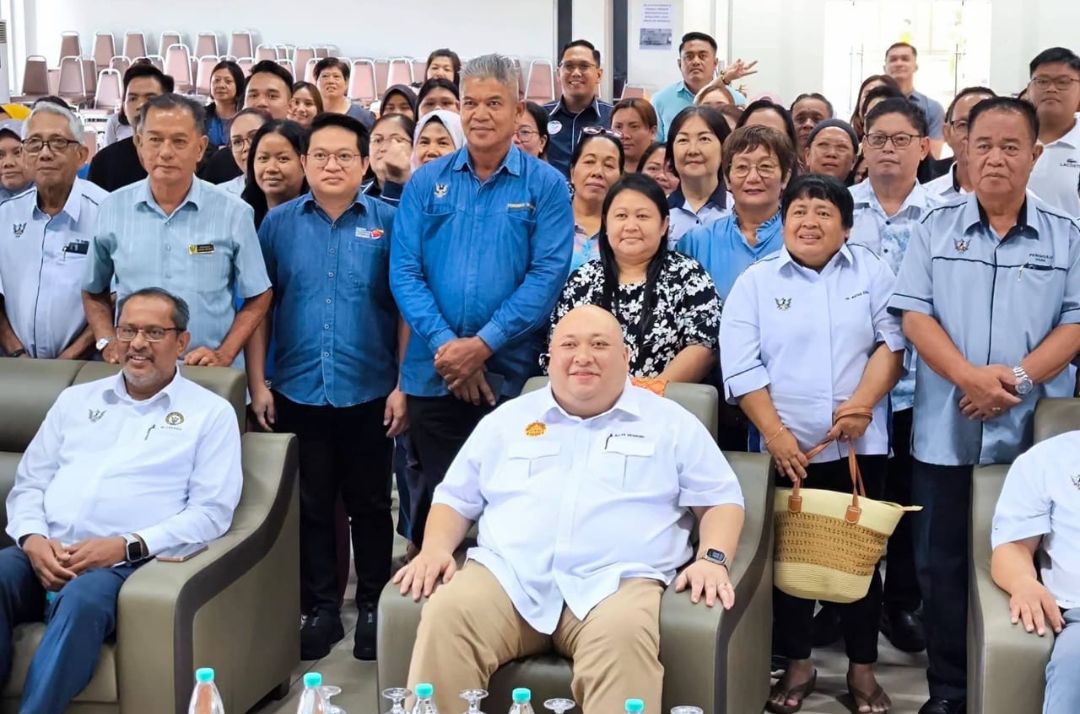
He said this when speaking at the closing of the Basic Elderly Care Course 2/2026 at the Kanowit District Office Hall today.
Allan said that the organisation of the course was a proactive step by the Sarawak Government through the Sarawak Women and Family Department (JWKS) to increase public awareness of the phenomenon of ageing and produce more skilled elderly carers.
He said that the effort was also in line with the state government’s commitment to taking care of Sarawak’s status as an ageing state by 2028 through the implementation of various policies and initiatives related to the well-being of the elderly.
He also praised the commitment of the 60 participants consisting of community and village heads (KMKK), non-governmental organisations (NGOs), welfare volunteer teams (PSK) and the local community for taking part in the course with full dedication.
According to him, the course modules, which were streamlined with experts from the Sarawak State Health Department (JKNS), provided theoretical and practical exposure to the participants so that they could play a more effective role in caring for the welfare of the elderly in their respective communities.
Meanwhile, Allan called on KMKK to use the knowledge gained to identify the profiles of senior citizens in their respective villages as a basis for regular welfare and health monitoring.
He also urged non-governmental organisations (NGOs) to intensify social activities and emotional support for senior citizens so that they remain active and do not feel isolated, in addition to hoping that the trained participants will be able to become an early reference group or first responders in the event of an emergency involving the group.
“Although the government will continue to strengthen various welfare programmes and initiatives, the real strength of a rural community depends on the spirit of concern, cooperation and willingness of the community itself to help each other,” he said.
He is confident that the knowledge gained through the course can be a catalyst in forming a community in Kanowit and Machan DUN constituency that is more senior-friendly, caring and always prioritises the value of kindness.