THERE are easier ways to spend retirement years than travelling from village to village explaining land documentation forms to skeptical villagers.
But Datuk Ik Pahon Joyik was never really looking for easy work.
Even after decades in Sarawak’s top civil service ranks – as former Deputy State Secretary, Permanent Secretary to several ministries, now Chief Executive Officer of the Greater Kuching Coordinated Development Agency (GKCDA), and board member of Universiti Malaysia Sarawak (UNIMAS) – one of his most demanding assignments remains deeply personal.
It is called the Dayak Bidayuh National Association or DBNA.
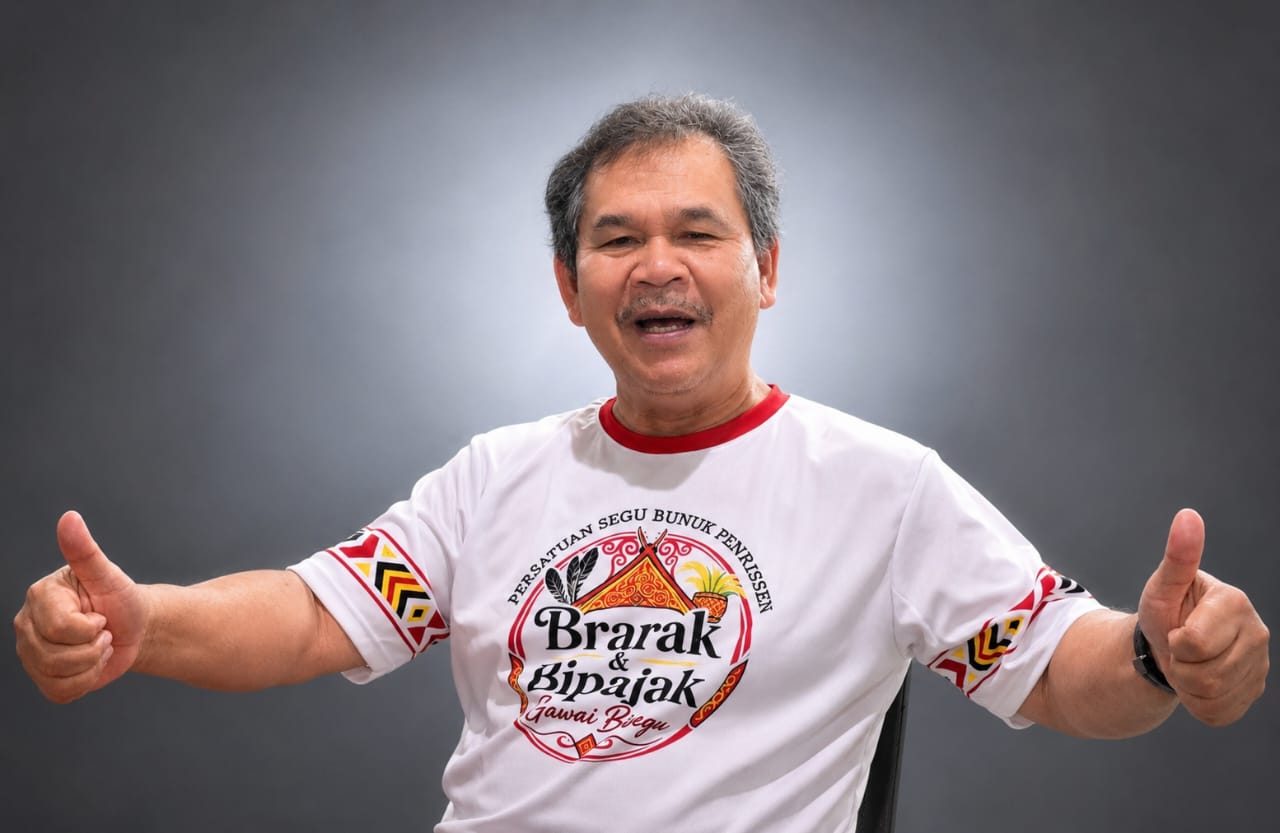
For 24 years, Ik Pahon has led the DBNA, taking over from the late Datuk Seri Dr James Dawos Mamit in 2002.
Recently re-elected for his eighth term, he speaks about the organisation not as a position of prestige, but almost like a family responsibility that never really ends.
When asked to look back at his years leading the association, he does not immediately list achievements or milestones.
Instead, he talks about people – villagers uncertain about land rights, parents no longer speaking Bidayuh to their children, and a culture slowly losing pieces of itself to time.
For him, leadership has become a long conversation about survival, not physical survival, but cultural survival.
A community of many voices
The Bidayuh community is often spoken of as one people. But inside that identity are many smaller identities.
Selako in Lundu; Biatah in Penrissen, Siburan and Padawan; Bukar-Sadong in Serian; Jagoi, Singai, Beratak in Bau – each carries its own dialect, traditions and sense of belonging.
When Ik Pahon first assumed the DBNA presidency, he inherited both a strength and a challenge.
How do you unite a people whose diversity runs deep?
“Unity must start from the small community,” he said.
Rather than forcing uniformity, he embraced the idea that strong roots at village and sub-ethnic level could feed into a stronger collective identity.
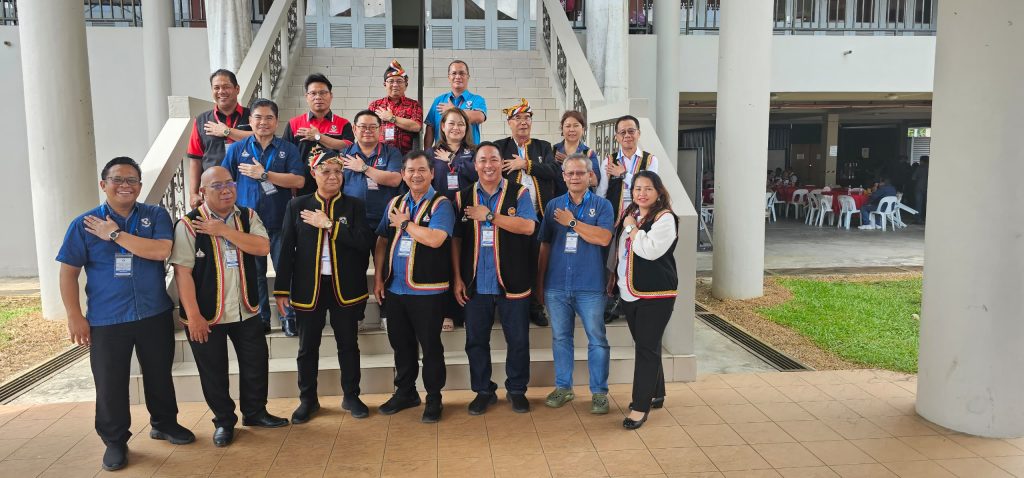
In DBNA’s leadership structure, he deliberately ensured representation across the various Bidayuh groups.
It sounds administrative on paper. In practice, it meant navigating personalities, expectations, regional interests and cultural sensitivities.
But perhaps years in government service prepared him for that balancing act.
The task, after all, was not simply managing an organisation. It was keeping a family of communities under one roof.
The roadshow that sometimes met anger
Of all the battles he has fought during his DBNA years, none has tested patience more than Native Customary Rights (NCR) land documentation.
The mission began after a socio-economic study by UNIMAS, commissioned by the Dayak Cultural Foundation, exposed serious development gaps in Bidayuh areas.
One finding hit home. The community had land but much remained undocumented and untitled.
“We say we have land, but we cannot monetise it,” Ik recalled.
The solution sounded straightforward: help communities document their land and eventually pursue formal titles.
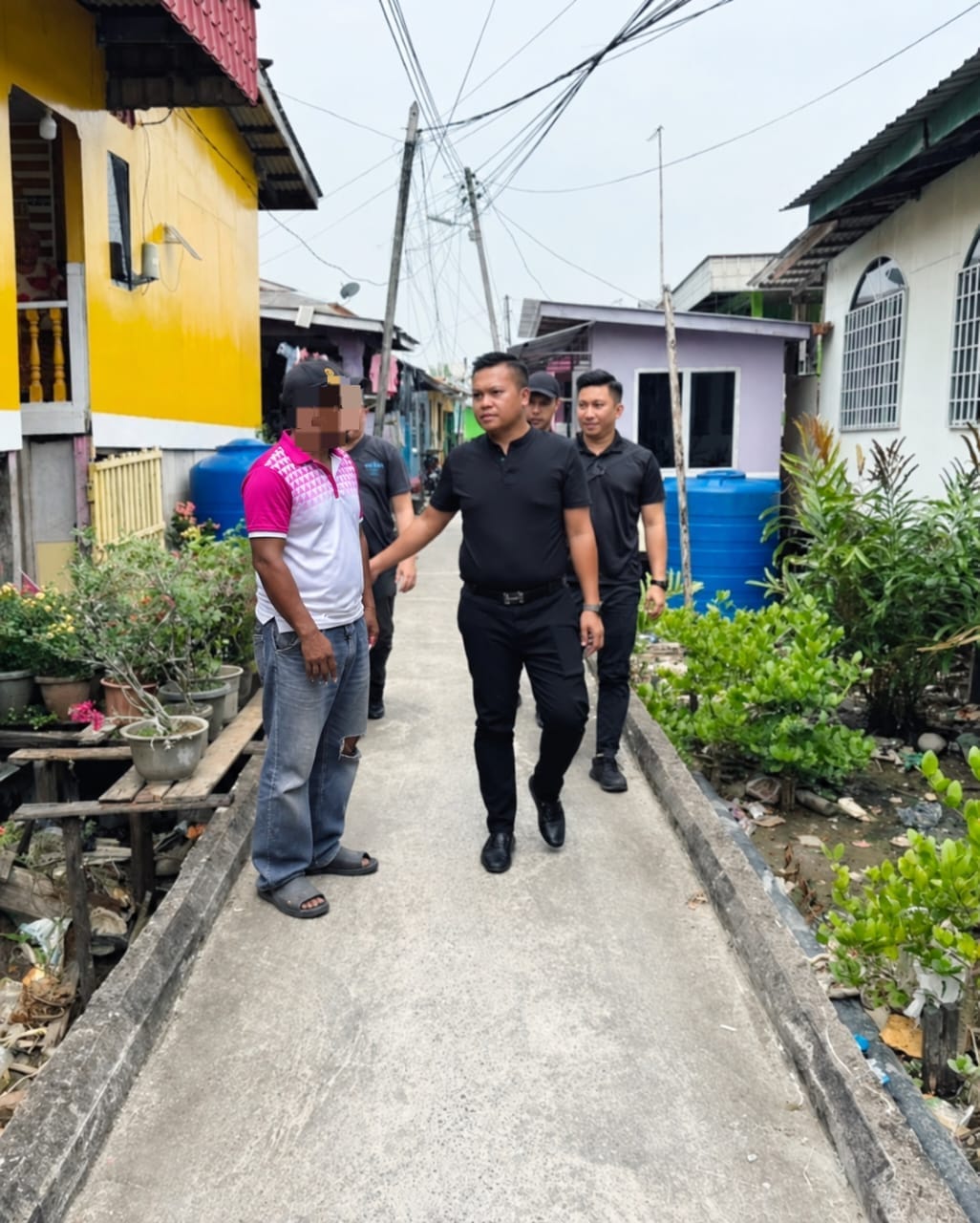
Reality proved much harder. In village after village, DBNA teams conducted roadshows explaining why documentation mattered.
Not everyone welcomed them. Some villagers challenged their legitimacy.
“Who gave you the authority?” they asked.
He still remembers those moments. There was suspicion, resistance, doubt.
DBNA avoided using the word “survey”, careful not to overstep the authority of the Land and Survey Department.
Instead, they framed the exercise as community preparation. Villagers agreeing on their own boundaries before formal state processes could begin.
It required something deceptively difficult: neighbours agreeing where one person’s land ended and another’s began.
Yet slowly, something changed. Communities began participating. Village leaders stepped forward.
People started recognising the value of having documented evidence of ownership claims.
Today, around 60 per cent of registered Bidayuh villages have worked with DBNA on land documentation.
More than 60 villages have submitted documents to the Land and Survey Department.
Over 40 villages, according to DBNA records, have already obtained land titles or related approvals.
He speaks about these achievements without triumphalism. There is no chest-thumping, no claim of personal victory.
Instead, he repeatedly shifts attention back to the Bidayuh political leaders, community leaders and villagers.
“This is not mine or DBNA’s success alone,” he insisted.
Perhaps that humility reflects his understanding of community work: nothing sustainable happens unless people themselves decide it matters.
The language that children no longer speak
Among the issues that trouble him most, one cannot be measured in hectares or legal documents. It is language.
He notices it in conversations with young people.
Children who proudly identify as Bidayuh but cannot understand the language spoken by their grandparents.
Families where English, Malay or other dominant languages have quietly replaced mother tongue communication.
“Our generation can still speak. But many children don’t even understand the language,” he said.
The concern in his voice is unmistakable.
Because once a language weakens, identity begins losing its natural home.
Without language, stories become harder to tell. Jokes lose their flavour. Traditional knowledge loses its vocabulary. Relationships with ancestry become thinner.
So DBNA’s work expanded beyond land into words.
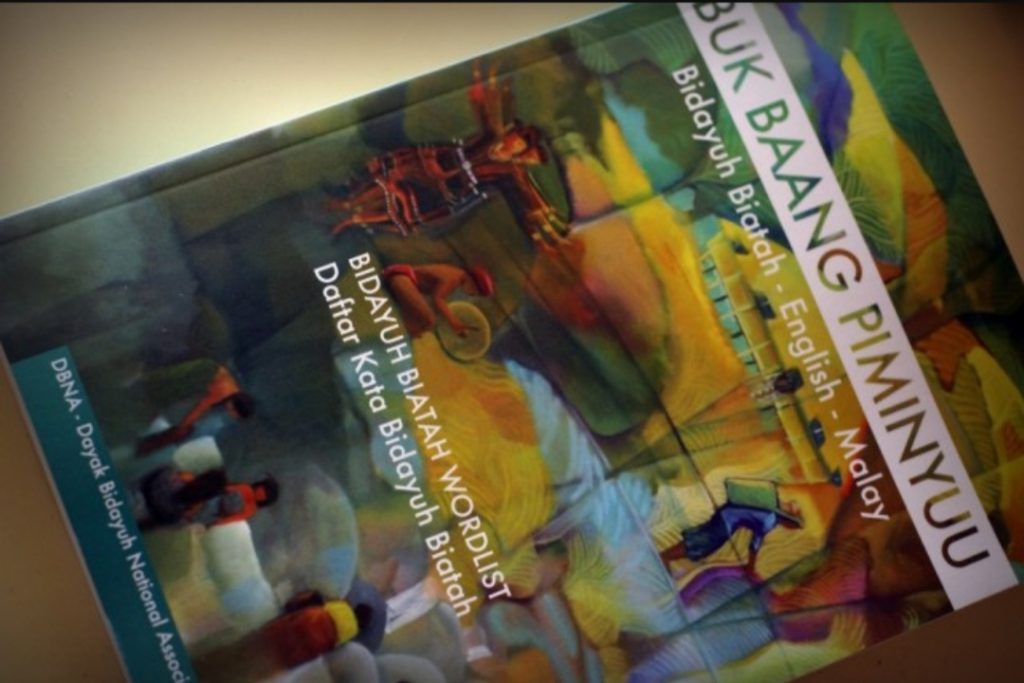
The organisation produced play or picture dictionaries and word lists covering four major dialect groups.
Simple tools, perhaps.
But behind them lies a larger fear: what happens when a community remembers its name but forgets its voice?
Now DBNA is pushing something even more ambitious, which is a Bahasa Bidayuh curriculum for schools.
A special task force, coordinated by Dr Florence Kayad and supported by retired teachers, has completed curriculum development for Primary One, Two and Three.
Pilot programmes are planned in Lundu, Bau, Biatah and Bukar areas.
If all goes well, he hopes the Bidayuh language could begin appearing as an elective subject in Bidayuh-majority primary schools.
For him, this is more than educational policy. It is cultural rescue work.
“Without our language,” he asked, “where is our identity?”
Preserving what time erodes
There is one more project close to Ik Pahon’s heart.
At the DBNA headquarters, the familiar Baruk structure is being transformed into a Bidayuh Heritage Gallery.
But the vision goes beyond displaying artefacts behind glass.
The DBNA logo
Working with the Sarawak Museum, DBNA wants the gallery to be interactive and digitally driven.
The reason is practical. The Baruk itself is small but the motivation runs deeper.
Time erodes memory. Customs disappear. Old photographs fade. Stories vanish when the people who carry them are gone.
Digitising heritage, he believes, offers a way to preserve fragments of identity before they slip away.
The project is still underway. Like many of DBNA’s initiatives, it remains unfinished.
But perhaps unfinished work has become a defining feature of his leadership.
Twenty-four years later
After eight terms as president, he could easily talk about accomplishments in numbers – villages documented, programmes launched, committees formed.
Instead, his reflections circle back to the same three things – land, language and heritage.
Three burdens, perhaps. Or three forms of love for a community.
The challenges remain real – convincing reluctant villagers, encouraging parents to revive mother tongue use at home and keeping younger generations interested in traditions shaped by another era.
None of these comes with quick victories.
Yet after 24 years, he still sounds more determined than tired.
Maybe that is what human-interest stories often reveal: behind public titles and official positions, leadership can also look like a man spending decades trying to ensure his people do not lose sight of who they are.
Not all battles are fought loudly.
Some happen quietly, in village halls, in family conversations, in forgotten words waiting to be spoken again.