MIRI: Strengthening sustainable palm oil production begins at the farm level, with smallholders playing an important role in improving agricultural standards, workplace safety and responsible plantation management.
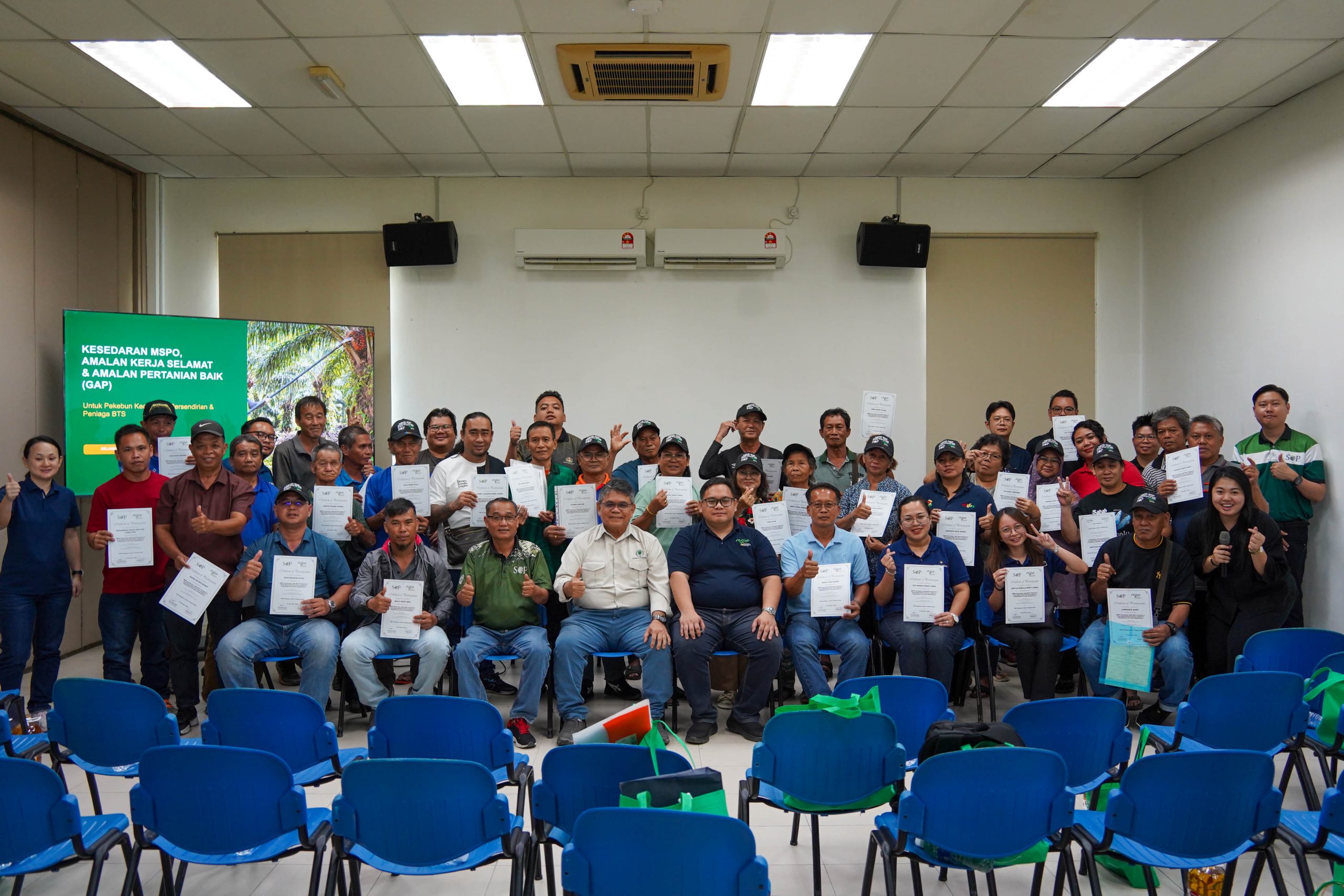
Recognising this, Sarawak Oil Palms Berhad (SOP), in collaboration with the Malaysian Sustainable Palm Oil (MSPO), organised a one-day awareness training programme for independent oil palm smallholders and fresh fruit bunch (FFB) dealers at SOP Lambir Academy on Nov 21.
The programme brought together approximately 50 participants, including independent smallholders, FFB dealers and SOP personnel, for a knowledge-sharing session aimed at promoting better agricultural practices and raising awareness of MSPO certification.
The training covered several key aspects of responsible plantation management, including occupational safety and health (OSH), the proper use of personal protective equipment (PPE), safe frond stacking, responsible chemical handling, efficient fertiliser application and improved harvesting techniques.
Beyond classroom learning, participants also visited the estate for practical field demonstrations, providing them with first-hand exposure to how good agricultural practices can be implemented in day-to-day plantation operations.
SOP Head of Sustainability Galau Melayong said building a sustainable palm oil industry requires collective commitment, with improvements at individual farm level contributing to broader industry progress.
“Sustainability is a shared responsibility. Through initiatives like this, we hope to encourage smallholders to adopt safer and better agricultural practices, as every improvement at the farm level contributes towards a more sustainable palm oil industry,” he said.
The programme also featured a dedicated session on MSPO certification, during which Ajeng Jok Wan, Senior Regional Lead for Northern Sarawak at MSPO, highlighted the importance of certification in encouraging responsible and well-managed plantation operations.
He stressed that MSPO certification should be viewed not merely as a compliance requirement, but as a framework for embedding good agricultural practices into everyday operations.
“MSPO certification is more than just meeting requirements. It is about putting good practices into action, from farm management and worker safety to responsible chemical use and environmental protection.
“We hope this training helps smallholders better understand the value of certification and how they can benefit from adopting these practices,” he said.