IN the fast-moving world of casual dining, consistency is currency. Sarawakian entrepreneur Jasmine Kho is betting that Malaysian food can scale without losing its soul.
From Laksa Queen’s lunch queues to Nasi Ah Ma’s one-rice-one-vege-one-protein formula, Jasmine is using branding, operations, and design thinking to turn traditional flavours into everyday staples across Beijing in China.
Laksa Queen, now a popular lunchtime destination, actually started as something else entirely.

From Kakikopi to Laksa Queen
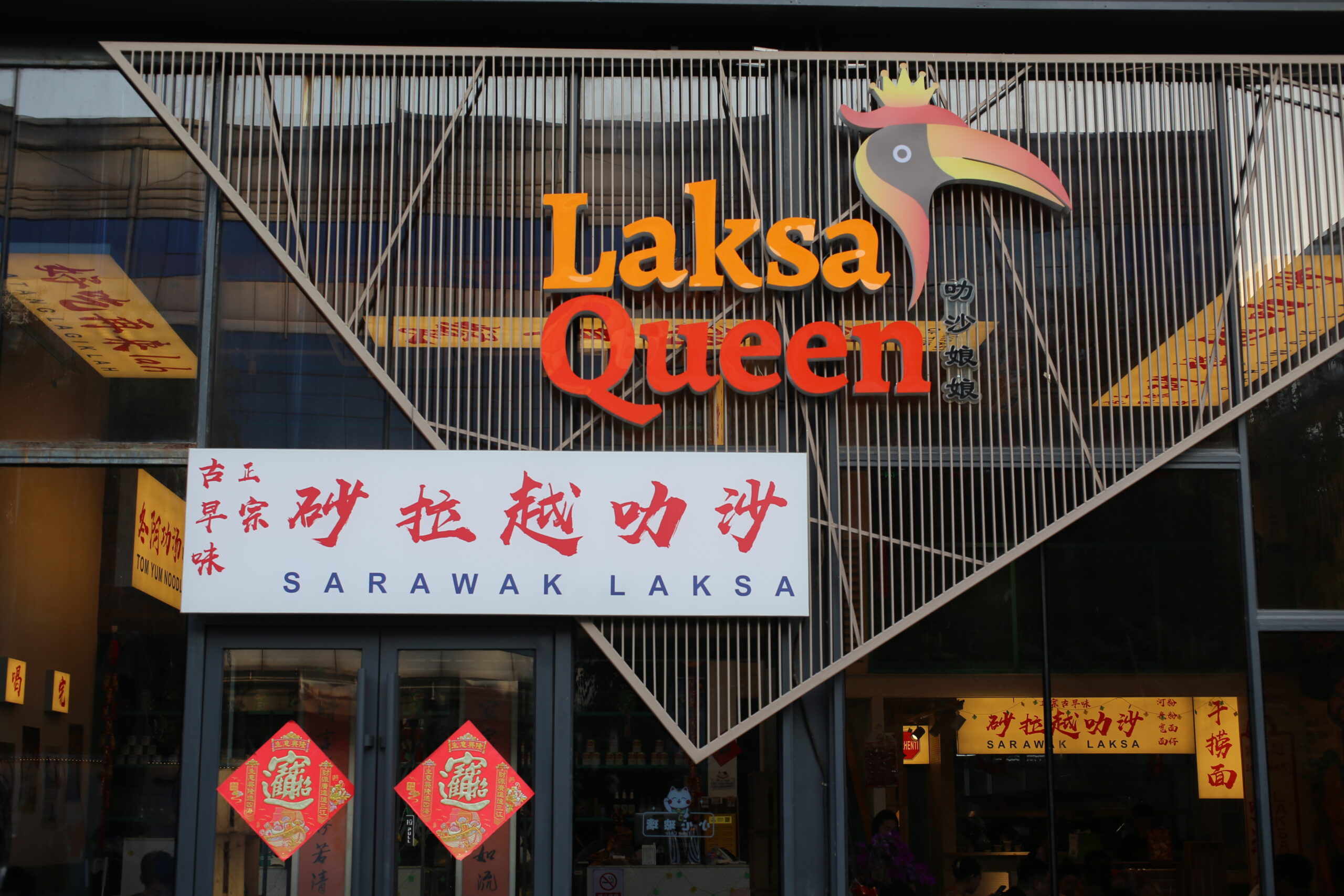
If you walk into Laksa Queen around lunchtime, you’ll likely find it packed with Chinese locals tucking into bowls of Sarawak laksa, kaya toast, Hainanese chicken rice, Char kway teow and even nasi lemak.
The sign outside may be unassuming, but inside it’s a sensory immersion into Malaysia’s heartland.
Tables are lined with prints of old Malaysian newspapers on the birth of Malaysia.
The walls feature hornbill and MULU Pinnacles murals, four generations of Jasmine’s grandmothers and her daughter, old posters from the 60s and 70s, and pastel menus hand-scrawled in nostalgic lettering.
The background music includes songs by P Ramlee, Siti Nurhaliza and At Adau.
Everything is designed to feel familiar – even if you’ve never tasted laksa before.
This wasn’t how it began.


The brand started as Kakikopi, a modest venture to introduce ASEAN street food and home cooking culture to Beijing, during COVID-19 in 2020.
“When the second wave of COVID hit, we were the only restaurant open during that time. Just when I thought no one would come and started preparing for take-out, dine-in crowds and lines kept us really busy.
“During that time, people could not travel at that time so this was the only place for them to feel as though they had flown to Southeast Asia!
“So we had a tagline ‘Proud to be Southeast Asian’ and I was suddenly amazed at how many foreigners and Southeast Asians there were in Beijing,” Jasmine shared.
Last year in conjunction with Malaysia-China 50th Anniversary Diplomatic Relations, she took the decision to rebrand the venue to Laksa Queen, giving a full recognition to Malaysian cuisine.
“It took me 10 years to promote Sarawak laksa and I was confident that it was time to give a home to this ‘breakfast of the gods’.
Laksa Queen: A Personal Staple

The restaurant’s laksa isn’t just a dish – it’s a story.
“When we say Laksa Queen, it doesn’t mean our laksa is the best. We’re honouring all the women.
“This includes anyone’s grandmother, mother, godmother, even the makciks and aunties back home who kept culture alive through food,” she said.
Her specialty, Sarawak laksa, is made with a broth that simmers for five hours with 36 spices.
Laksa paste is cooked painstakingly for 12 hours with at least three days for fermentation. It’s rich, packed with flavours and layers.
Jasmine believes she is the only one making Sarawak laksa paste from scratch outside of Kuching.
“Our first article on Time Out Beijing in 2014 was about our laksa; the editor gave us a 4-star rating. And during the Asian Food Festival under Asian Civilisation Conference in 2019, we served over 300 bowls in a single day,” she said.
Beyond Sarawak laksa, Laksa Queen’s menu includes Malaysian delicacies from different states of Malaysia, including kaya toast and soft-boiled egg, ‘nasi lemak’, oxtail ‘bak kut teh’, Hainan chicken rice, Ipoh ‘ayam hor fun’, ‘char kway teow’, Hokkien prawn mee and seasonal specials such as ‘tempoyak’ and ‘laksa Johor’.
Drinks such as ‘teh-C peng’ and ‘teh tarik’ use Sarawakian ‘gula apong’ which makes it stand out. Desserts include ‘Musang King cendol ABC’.
She shared that it was all about offering Malaysian food that felt like home – no matter where ‘home’ was.
Nasi Ah Ma: One Plate, One Purpose
After the establishment of Laksa Queen, Kho opened up Nasi Ah Ma, her first ‘nasi campur’ brand focusing on Malaysian home cuisine.
It also features Sarawak Laksa in a different style.
“It’s my first takeout brand. We designed it to be a brand with a backbone. From the team’s jackets to the soundtrack playing in the kitchen, everything was planned,” Jasmine said.
She added that she was able to give her paternal grandma a recognition in shaping her perfectionist side on how food should be treated.


The slogan ‘Eat Properly’ is probably a childhood lecture in every household in Southeast Asian families, where grandmas would always remind the grandchildren not to waste food and not to leave behind even a grain of rice on the plate.
The concept is minimalist: one rice, one vegetable, one protein, and ‘lauk’ of your choice.
“Menus rotate daily, but you will get vegetable and chicken curry daily. On weekends, dishes like ‘sambal petai’ prawn, ‘daging masak hitam’ and ‘ayam pansuh’ make an appearance. Our goal for Nasi Ah Ma is home-cooked comfort, ready within five minutes.
“As we enter into the fourth week of soft launching to fine-tune operations, and with zero marketing done, we are somewhat amazed that what was intended as a takeout place became a neighbourhood canteen and we are grateful for that. This will be a very successful concept,” Jasmine said.
With ‘Malaysian Nasi Campur & Laksa’ written at the entrance, it serves Sarawak Laksa with ‘hor fun’ and the hearty and healthy broth which she encourages everyone to bottom up, is turned into Chinese version of ‘malatang (spicy lok-lok)’.
“Our consommé is using French techniques which Grandma Yan taught me using seven kinds of vegetables, chicken carcass and prawn head. It is already very umami, so there is no need for any additives,” she said.
While Laksa Queen draws customers into a nostalgic, kopitiam-inspired space, Nasi Ah Ma appeals to a different rhythm – lunch breaks, grab-and-go orders, weekday regulars, and weekend hangover cure.


Scaling Without Selling Out
Despite the demand, Jasmine is careful not to grow too fast like most food and beverage brands with venture capital behind.
She already has a central kitchen to make pastes and sauces and even pre-packaged food.
“We will be participating at China International Import & Export Expo (CIIE) and MIHAS this year to test the market. We will be opening two more Laksa Queen outlets and one Latin eatery this year,” she shared.
“Besides expanding down south to Shanghai, Chengdu and Shenzhen, in the next two years, it is our plan to enter New York, Los Angeles, London and Tokyo.”


Laksa Queen and Nasi Ah Ma are just two Malaysian concepts, which will allow more people to find home or fall in love with Malaysian cuisine and culture.
Although Jasmine does not rule out returning to Malaysia someday, for now, Beijing remains the corporate headquarters and her home.
“I want to prove that our food can go anywhere,” she said.