Tracing faith across borders, Esther Law’s pilgrim journey through Jasna Góra reveals why this centuries-old sanctuary continues to move hearts across the world.
Częstochowa: A Pilgrim’s Haven in Poland
By 7.30 in the morning, Law and her fellow pilgrims had checked out of their Prague hotel. Their bus departed at 7.55, carrying them across borders and landscapes towards Poland.
As the journey began, Father Ramon lifted the group in prayer — a gentle reminder of the sacredness that lay ahead.
The bus soon fell into silence. Then, led by Group 3, the pilgrims began to pray the rosary together.
“It was a moment of unity. As we prayed the rosary, its rhythm bound us together — drawing us closer not just to God, but to one another.
“When I took a turn to lead, my heart soared; the voices around me became a symphony of faith guiding us towards Częstochowa,” Law recalled.
The Road to Częstochowa
The drive itself revealed the rustic charm of Eastern Europe — rolling highways, quaint villages, and a countryside quietly preparing the heart for something greater.
Częstochowa lies in southern Poland, about 140 kilometres northwest of Kraków and not far from Prague. A two-and-a-half-hour drive from the Czech capital is enough to bring travellers to this hub of spirituality and history.
By mid-afternoon, the bus entered Częstochowa, a city with a population of about 200,000. Despite its modest size, it combines the warmth of a small town with the amenities of urban life.
Its story stretches back to the 11th century, but the city’s identity was transformed by the mining boom of the 19th century, when it emerged as an industrial centre.
“Through wars, occupations and economic upheavals, Częstochowa has remained resilient, preserving both its cultural heritage and spiritual heartbeat.
“Częstochowa welcomed us with its history and architecture, but the heart of our visit was undeniably the Jasna Góra Monastery — the beacon that draws both pilgrims and travellers from across the world,” Law said.
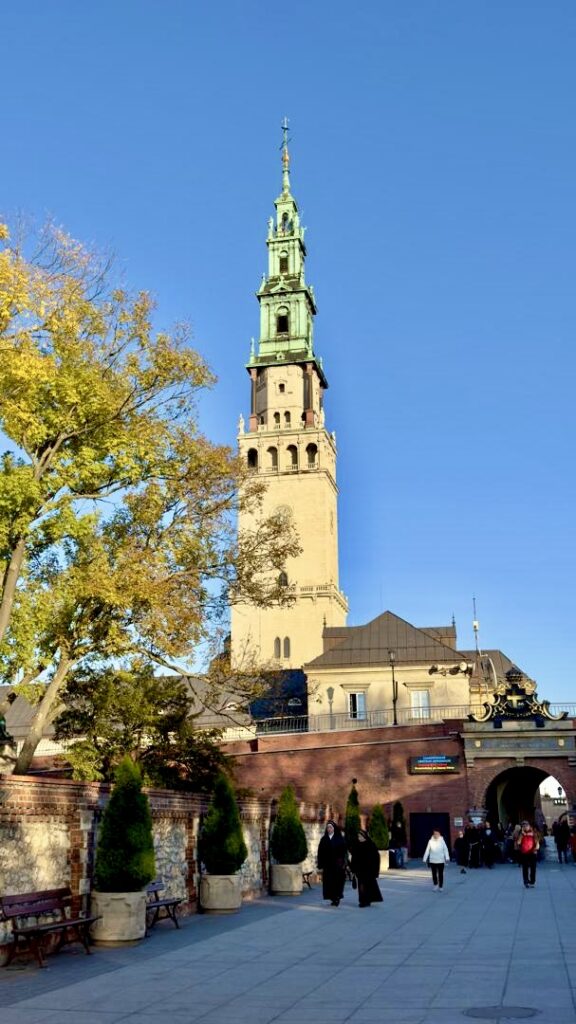
Hours later, the sight of Jasna Góra’s spires rising above the city marked the end of their long road — and the beginning of something deeply spiritual.
Arrival at Jasna Góra
At around 4pm, the group arrived at the monastery. Founded in 1382 by the Pauline Fathers at the request of Prince Ladislaus of Oppeln, Jasna Góra was built to shelter a miraculous painting of the Virgin Mary.
Its fortress-like structure has stood for centuries as both sanctuary and stronghold, embodying Poland’s endurance in faith and history.
Law remembered feeling a shift the moment she stepped through the gates.
“The air was charged with spiritual energy, as if the walls themselves held the prayers of generations of pilgrims.
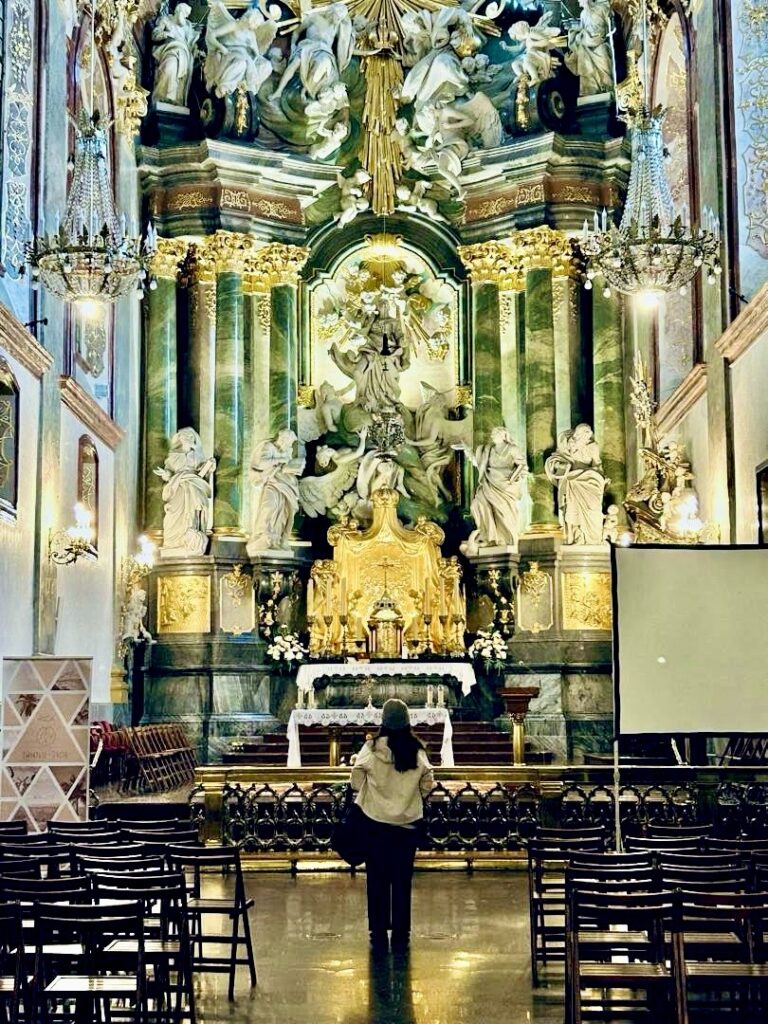
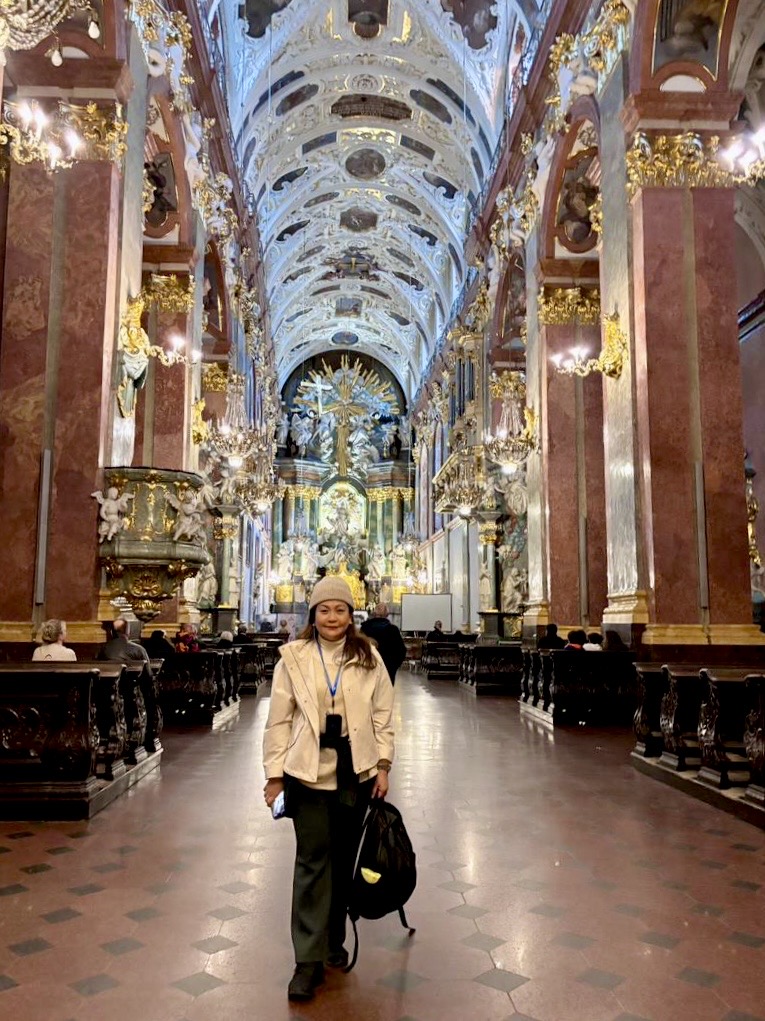
“The golden interior was breathtaking — every inch ornate — yet what struck me most was the deep sense of peace and humility,” she said.
Encounter with the Black Madonna
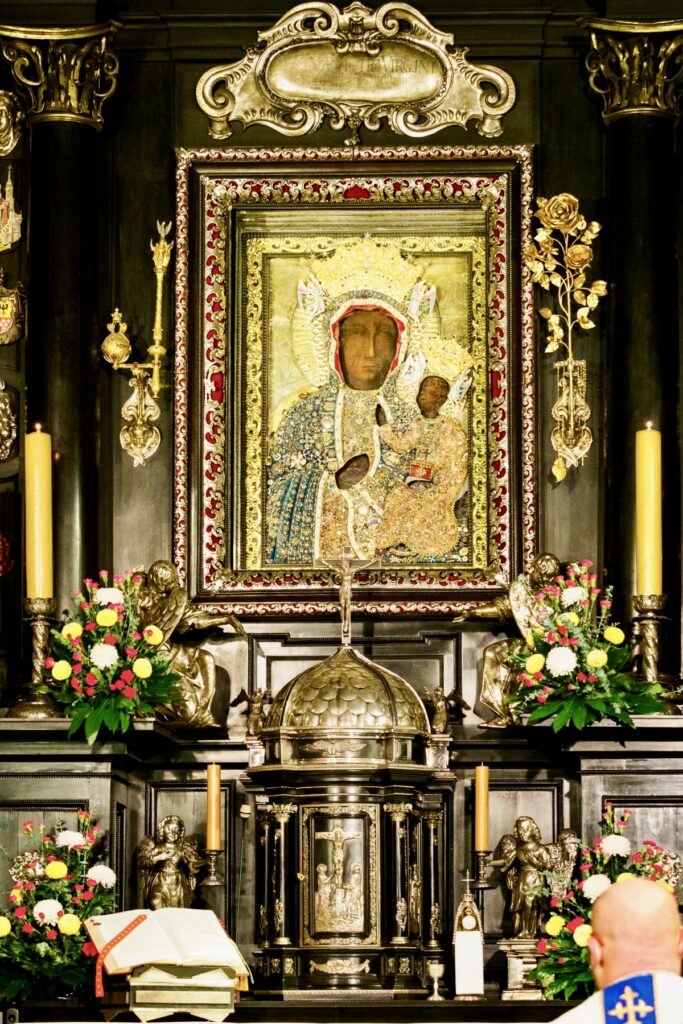
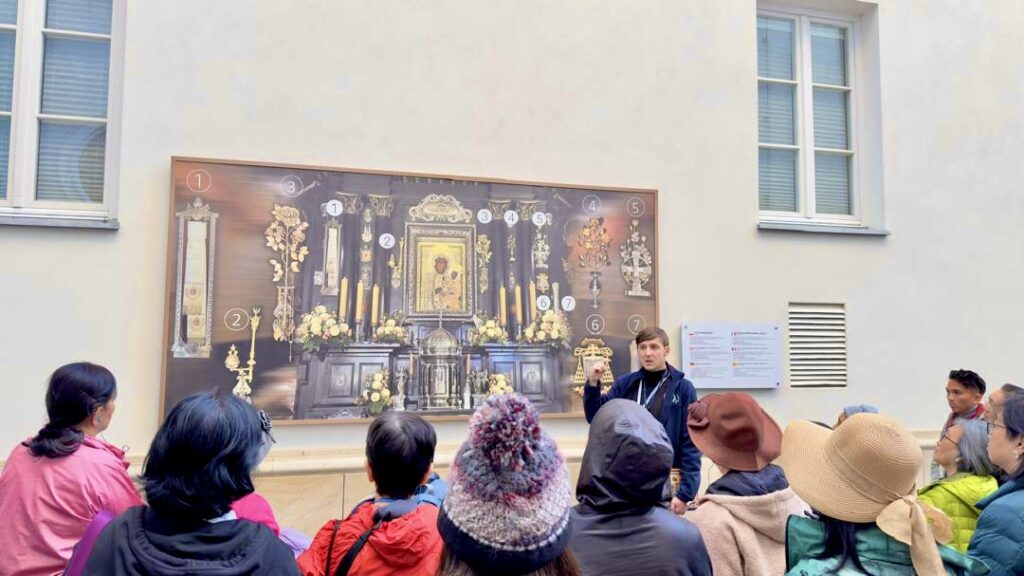
The shrine’s heartbeat is the revered Black Madonna, an icon that has shaped the faith of millions.
According to tradition, it was painted by Saint Luke and has since become a symbol of Mary’s intercession and protection. Crowned upon the main altar, the image radiates both strength and tenderness.
Its darkened features have inspired centuries of speculation, with many seeing them as a sign of solidarity with humanity’s suffering.
For Law, standing before it was overwhelming.
“I felt an overwhelming calm wash over me. The atmosphere was charged, yet deeply peaceful.
“I was struck by the devotion of those around me — people who had come from distant lands just to kneel in prayer before this icon.”
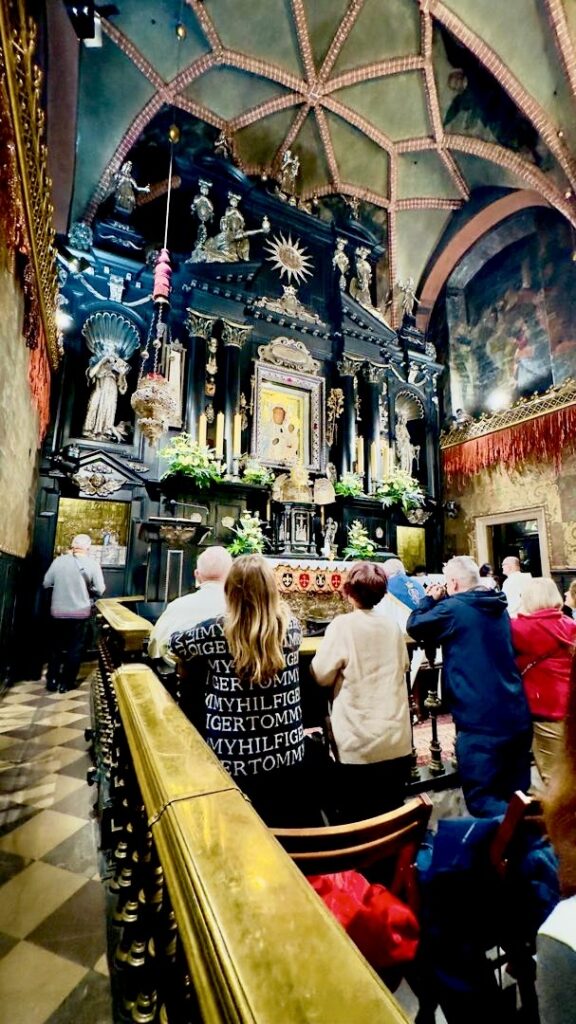
Around the icon, pilgrims moved in reverence. The shrine glowed with flickering candles and vibrant flowers, creating a living mosaic of colour and light.
Kneeling figures whispered prayers that rose like incense — their breaths almost in rhythm, as if carrying the hopes of generations.
Beneath the painting, the ornate marble altar drew all attention, its craftsmanship creating a sacred space where the physical and spiritual meet.
That evening, Father Ramon celebrated Mass within the sanctuary. The solemn beauty of the liturgy filled the pilgrims with a quiet sense of fulfilment.
His homily centred on identity: “We are not just Christians; we are Catholics.”
Law was deeply moved by his words.
“He reminded us that we weren’t mere tourists passing through holy places. We were pilgrims on a journey with purpose.
“Though our bodies were tired and hungry, the spiritual sustenance we found filled us in ways no meal ever could,” she recalled.
More Than a Pilgrimage
Leaving Jasna Góra, Law carried with her a profound reflection.
What began as a plan to see a religious icon became a transformative experience.
“I expected to witness a famous painting, but I left with a deeper understanding of faith that transcends borders and cultures.
“It was not just about the Black Madonna — it was about community, resilience and the hope people find in devotion,” she said.
For her, Częstochowa encapsulated more than religious tradition. It represented the resilience of humanity in the face of struggle, the universal longing for hope, and the strength found in shared faith.
The Black Madonna, with her weathered face and enduring presence, stood as a mirror of vulnerability and grace.
Even in a modern world often sceptical of religious symbols, Law found comfort in the timeless devotion embodied here.
Standing in the UNESCO-listed site, she came to appreciate the solace people draw from faith and how these sacred spaces carry centuries of human longing and gratitude.
As the bus rolled away from Częstochowa, she knew this was not just another stop on a journey.
“Częstochowa is not just a destination — it is a chapter in the greater narrative of faith, culture and the resilience of humanity.
“Whether you are a devout pilgrim or simply a traveller seeking meaning, this place reminds you of the heart’s capacity for hope,” she reflected.
As she departed, Law carried that sense of renewal with her — a quiet reminder that the soul’s journey never truly ends.