KUCHING: Malaysia’s post-war development stands as a notable success story, but a new chapter published by Oxford University Press argues that the country’s state-centred yet market-reliant model may now be approaching its limits.
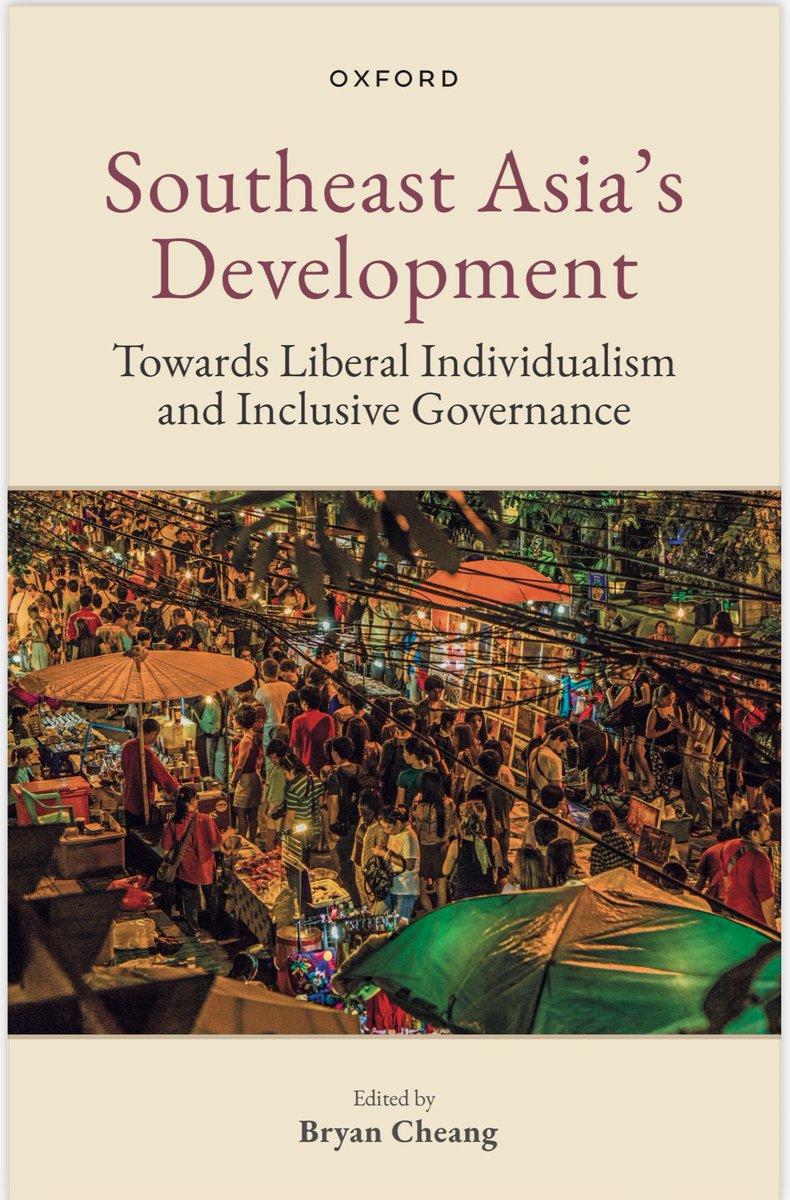
Titled Fragmented Personalistic Capitalism in Malaysia, the scholarly work appears as Chapter 3 in Southeast Asia’s Development: Towards Liberal Individualism and Inclusive Governance, edited by Dr Bryan Cheang and published by Oxford University Press.
Authored by Center for Market Education CEO and Universitas Prasetiya Mulya faculty member Dr Carmelo Ferlito, together with Benedict Weerasena and Imran Shamsunahar, the chapter offers a reflective interpretation of Malaysia’s political–economic trajectory within the broader context of elite-led capitalism in Southeast Asia.
The authors recognise Malaysia’s post-war rise as a major transformation, citing decades of sustained economic growth, significant poverty reduction and far-reaching social change. They note that Malaysia moved from an economy heavily dependent on primary commodities — which accounted for nearly 80 per cent of exports in 1960 — to an upper-middle-income country with a diversified industrial base.
However, the chapter argues that this same trajectory reveals an inherent tension. Malaysia’s development model blends market-oriented policies with a strong and centralised role for the state. While this hybrid approach supported rapid early progress, the authors suggest it may now be reaching its limits in driving the next phase of development.
They say institutional rigidities have accumulated over time and are weighing on long-term growth prospects. Four areas are highlighted in particular: continued dependence on foreign direct investment, limited depth in domestic entrepreneurship, the dominant role of government-linked companies, and persistent challenges in human capital development.
These constraints, the chapter argues, are not purely economic. Malaysia’s political and institutional context shapes the pace and direction of reform, making structural adjustment a complex and gradual process.
In explaining weaker productivity and innovation outcomes, the authors point to the interaction between Malaysia’s political–economic framework and its fragmented production structure. They describe the outcome as “fragmented personal capitalism”, where personalised networks and relationship-based coordination are favoured.
While such arrangements have provided stability in the past, the chapter argues they can dilute competitive pressure and weaken incentives for firm-level upgrading, scale expansion and integration into higher-value global production networks.
More broadly, the chapter highlights enduring tensions between institutional arrangements and production structures, as well as between state coordination and market-driven dynamism. To address these challenges, the authors suggest gradual moves towards greater industrial consolidation, more open and contestable markets, and deeper integration into global trade.
Beyond policy reform, the chapter places strong emphasis on culture and education, arguing that long-term economic vitality ultimately depends on nurturing a social environment that values freedom, experimentation and entrepreneurship — cultivated through education, intellectual openness, and traditions that encourage critical inquiry and creative enterprise.