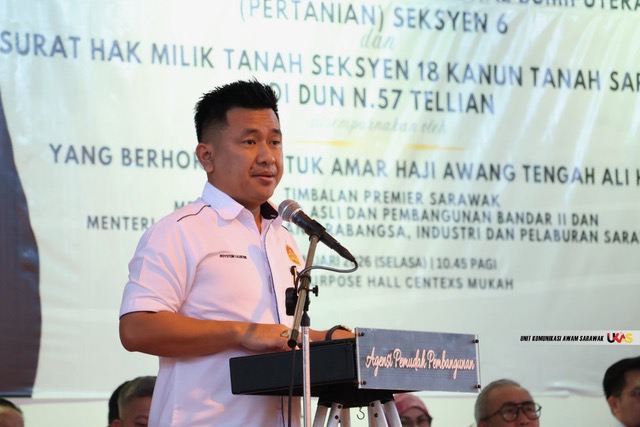
MUKAH: The Sarawak government is moving ahead with the Tellian Tengah Phase 1 Village Expansion Scheme (SPK), a RM30 million project implemented under the People’s Project initiative to strengthen rural development in the area.
Tellian assemblyman Royston Valentine said the project reflected the state government’s continued focus on improving the welfare of rural communities.
“The Tellian Tengah Phase 1 Village Expansion Scheme is among the earliest projects approved during my first year as an elected representative.
“Its approval was announced by Deputy Premier Datuk Amar Awang Tengah Ali Hasan during the winding-up speech of his ministry at the Sarawak State Legislative Assembly sitting four years ago,” he said.
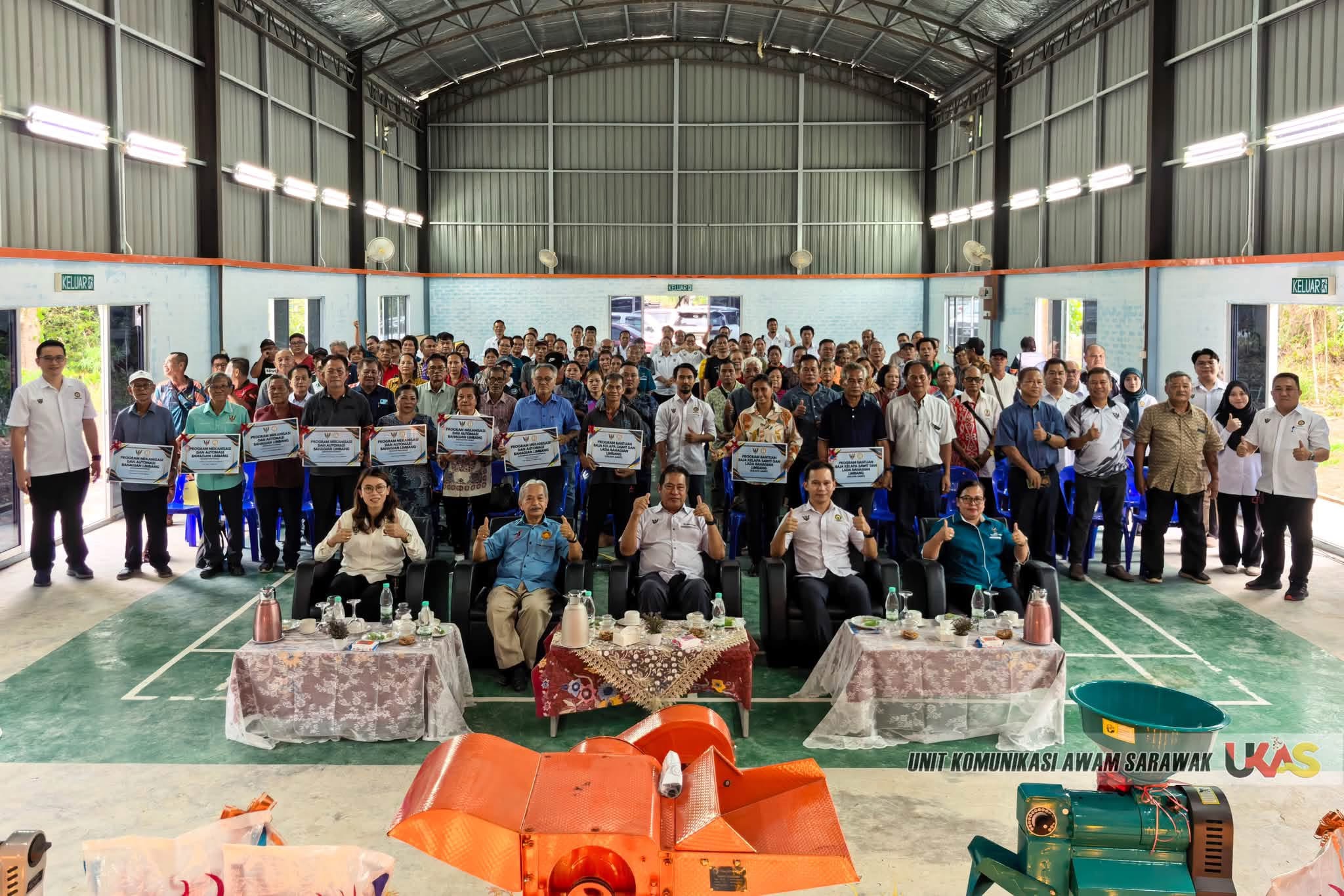
Royston was speaking at the ground-breaking ceremony for the Tellian Tengah Phase 1 SPK, which was held together with the handover of gazette documents for Bumiputera Communal Reserve (Agriculture) land under Section 6 and land titles under Section 18 of the Sarawak Land Code at the CENTEXS Mukah Multipurpose Hall here today.
The ceremony was officiated by Awang Tengah, who is also Minister for Natural Resources and Urban Development II.
Royston said that several other high-impact development projects had been approved for the Tellian constituency, including the Mukah Waterfront project as well as riverbank erosion control works at Sungai Tellian and Sungai Penakub, with a combined allocation of RM40 million expected to commence this year.
In addition, projects under the Rajang Delta Development Agency (RADDA) are being planned, including the Mukah Integrated Market, Medan Selera Kala Dana Mukah, Anjung Ria Senaga and coastal erosion control works at Kuala Petanak.
Royston asserted that the provision of basic infrastructure such as treated water supply, electricity and road connectivity to interior areas, including Nanga Baoh, Ulu Baoh, areas across Bukit Inkerbai and Lubok Bemban, remain a priority.
“All planning and implementation of these projects are aimed at improving the wellbeing of Sarawakians as a whole and are aligned with the Post-Covid-19 Development Strategy (PCDS) 2030,” he said.