AS artificial intelligence (AI) makes financial services faster and more convenient, it is also giving scammers more sophisticated tools to deceive victims, forcing financial institutions to rethink how fraud is detected and stopped.
For Sarawak, where digital payments, online businesses and emerging technologies are becoming increasingly important to the state’s digital economy ambitions, strengthening digital trust is no longer simply a matter of cybersecurity.
It is becoming an essential part of ensuring that people continue to have confidence in digital banking and financial services.
TrustDecision’s Chief Data & AI Officer, Dr Simon Liu, said one of the biggest challenges for financial institutions is finding the right balance between preventing fraud and ensuring legitimate customers were not unnecessarily inconvenienced.
He said a wrongly blocked transaction could have consequences beyond a frustrated customer, potentially making people less willing to use digital banking.
“The way through is not turning security up or down; it is making the decisions more precise. Precision comes from context.
“A judgement backed by many independent signals – the device, the behaviour, the history and the risk of the receiving account – will always beat a crude rule like ‘flag everything above RM5,000’,” he told Sarawak Tribune in a written response.
He said financial institutions should also ensure their fraud models continuously learn from confirmed cases, while maintaining proper governance, auditability and explainability.
“What I have seen in practice is that banks moving from rules-only to multi-signal, network-aware decisioning improve fraud detection and customer experience at the same time. It really is not a zero-sum trade,” he said.
Quality over quantity
Liu said banks should also focus on the quality of fraud alerts rather than simply increasing their volume, particularly as compliance teams risk being overwhelmed by large numbers of false or repetitive alerts.
Instead of generating separate alerts for dozens of mule accounts, he suggested identifying the wider network connecting them so investigators could tackle an entire syndicate more efficiently.
“Rather than 50 separate alerts on 50 mule accounts, raise one case on the network they belong to, so that investigators resolve the syndicate once instead of rediscovering it 50 times,” he said.
He added that AI could increasingly assist compliance officers by gathering transaction histories and identifying links between accounts, allowing human investigators to focus on making decisions rather than collecting information.
Prevention must come before the money moves
As Malaysia strengthens its anti-scam framework, Liu said financial institutions needed to move fraud prevention to the point of transaction authorisation.
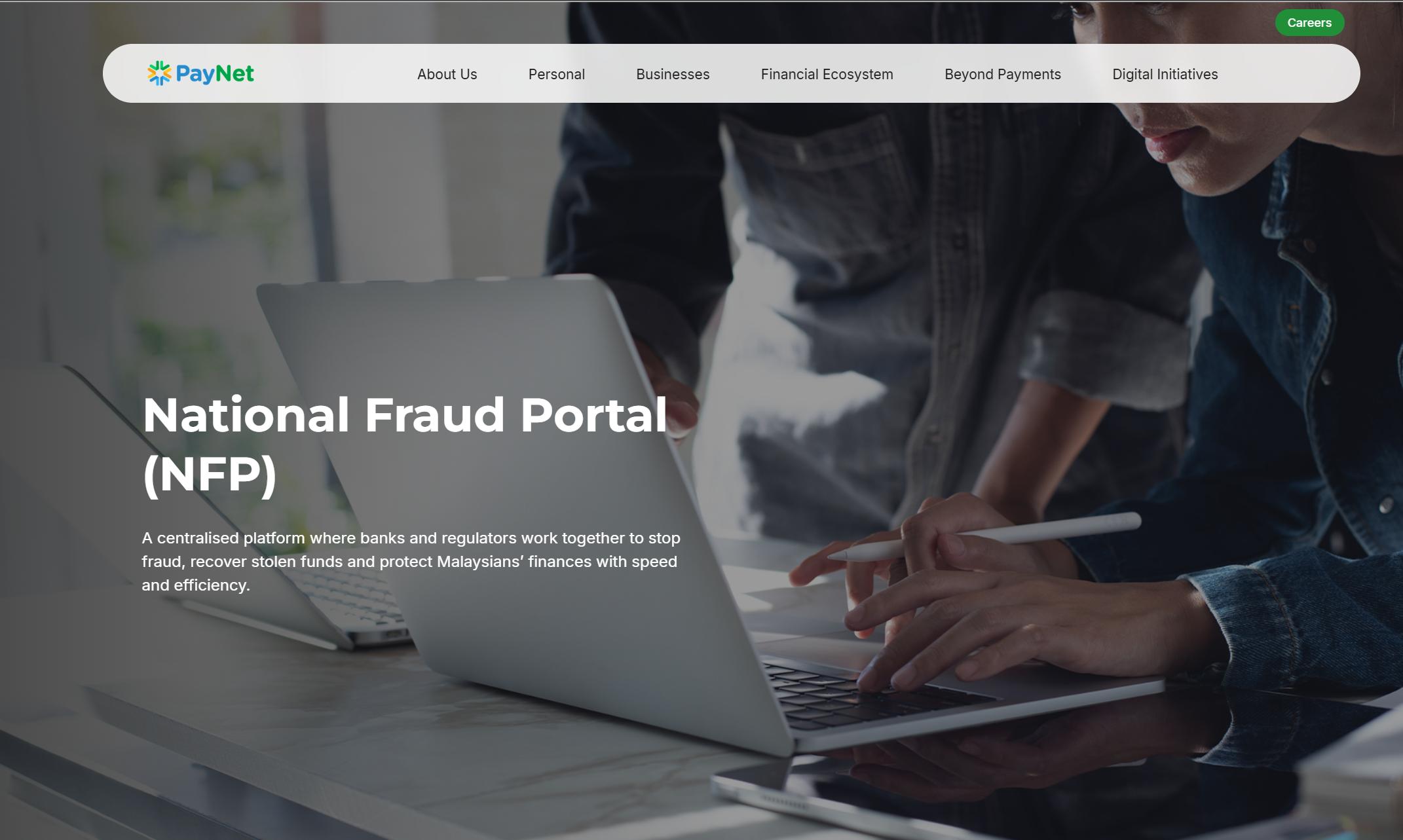
He pointed to the National Fraud Portal, launched by Bank Negara Malaysia (BNM) and Payments Network Malaysia (PayNet) in 2024, as an important development in strengthening information-sharing and tracing stolen funds across institutions.
However, he stressed that tracing money after it had moved was different from preventing the transaction in the first place.
He said fraud and anti-money laundering teams should also operate from a shared intelligence base because criminals themselves did not separate their activities into departments.
“The criminal pipeline is a single continuous flow and separate systems effectively hand syndicates a corridor between departments,” he said.
Scams begin before they reach the bank
TRM Labs’ Head of Deployment Strategy, APAC, Jonno Newman, said effective fraud prevention must also look beyond financial institutions because many scams begin on social media and messaging platforms long before money reaches a bank or cryptocurrency exchange.
He said blockchain intelligence could help identify and disrupt the movement of stolen funds, particularly in investment and romance scams where victims were often encouraged to make smaller payments before transferring larger amounts.
“If we can identify those small payments early, that’s our opportunity to intercept, disrupt, and reach victims before the bigger, more damaging transfers happen,” Newman said.
He said financial institutions and cryptocurrency exchanges should be able to identify suspicious addresses and block transactions before funds leave their platforms.
Newman also called for stronger legislation to allow exchanges and financial institutions to temporarily hold or freeze suspicious funds while protecting them from potential legal action when acting in good faith.
He said information-sharing between banks and cryptocurrency businesses also needed improvement so that victims identified by one institution could be protected from being targeted again elsewhere.
AI: threat and defence
Rachael Johnson, Global Head of Risk Management and Corporate Governance for Policy & Insights at ACCA, said AI was changing both sides of the fraud landscape.
While criminals could use AI to create highly personalised messages, realistic websites, deepfake identities and convincing impersonations, the same technology could strengthen fraud detection and prevention.
“Fraud has become an ecosystem challenge that cannot be addressed by any single organisation acting alone,” she said.
Johnson said financial institutions should go beyond educating customers by using behavioural analytics, continuous transaction monitoring, stronger authentication and identity verification, while sharing fraud intelligence promptly with relevant authorities.
For Sarawak, she said fraud prevention should advance alongside the state’s digital transformation.
“Building trust is essential, because consumers and businesses are more likely to embrace digital services when they are confident those services are secure,” she said.
She called for fraud risk management to be embedded into digital transformation strategies rather than treated as a separate compliance function.
A whole-of-society response
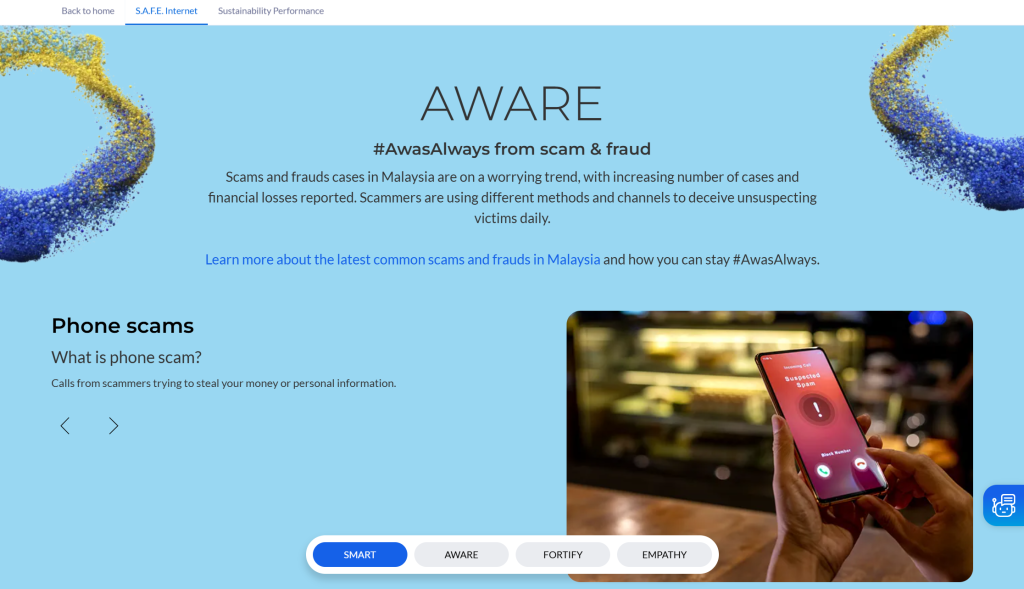
CelcomDigi Berhad’s Head of Sustainability, Philip Ling, said scams today cut across communication networks, digital platforms and financial systems, requiring a whole-of-society response to tackle them effectively.
“This is why it needs a whole-of-society approach to tackle and combat scams. No single stakeholder, institution or country can do it alone,” he said.
He said telecommunications companies had an important role to play in disrupting scams at the network level while working with financial institutions, regulators, digital platforms and enforcement agencies.
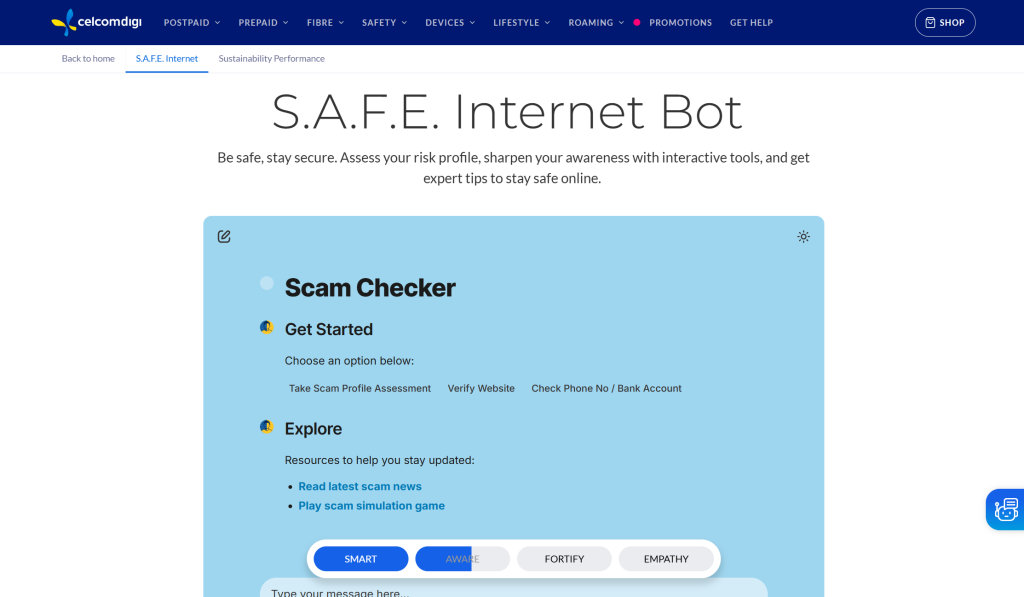
CelcomDigi’s approach, he said, was guided by ACT: to create Awareness, drive high Compliance internally while supporting enforcement agencies, and leverage Technology to combat cybercrime.
Ling said early observations from CelcomDigi’s ongoing anti-scam survey in Sarawak showed that scam attempts were not confined to major urban centres, with communities in both urban and rural areas being targeted.
Of concern, he said the early observations also indicated that those surveyed had very low awareness of common scam tactics.
He urged Sarawakians to pause before responding to unexpected requests involving money, personal information, verification codes or unfamiliar links.
Building digital trust
Johnson said stronger coordination between regulators, financial institutions, law enforcement agencies, telecommunications companies and technology providers was essential.
“Collaboration is no longer just about exchanging information. It’s about building collective resilience,” she said.
She said Sarawak should continue investing in AI-driven fraud detection, data analytics and continuous monitoring while strengthening intelligence-sharing and developing a culture of fraud awareness among organisations, employees and consumers.
Ultimately, the fight against financial fraud is not only about stopping criminals from taking money.
It is about protecting confidence in the digital economy.
As Liu put it, Malaysia processed 8.44 billion digital payments in 2025, while Sarawak continues to push ahead with its digital transformation.
“Every ringgit lost to scams taxes that future; every gain in digital trust accelerates it. Trust is not a soft outcome. It is the infrastructure the digital economy runs on,” he said.