SARAWAK is a hidden paradise. Here, it does not matter what race you are or what religion you practise. I feel that Sarawakians are one people, living in peace and harmony.
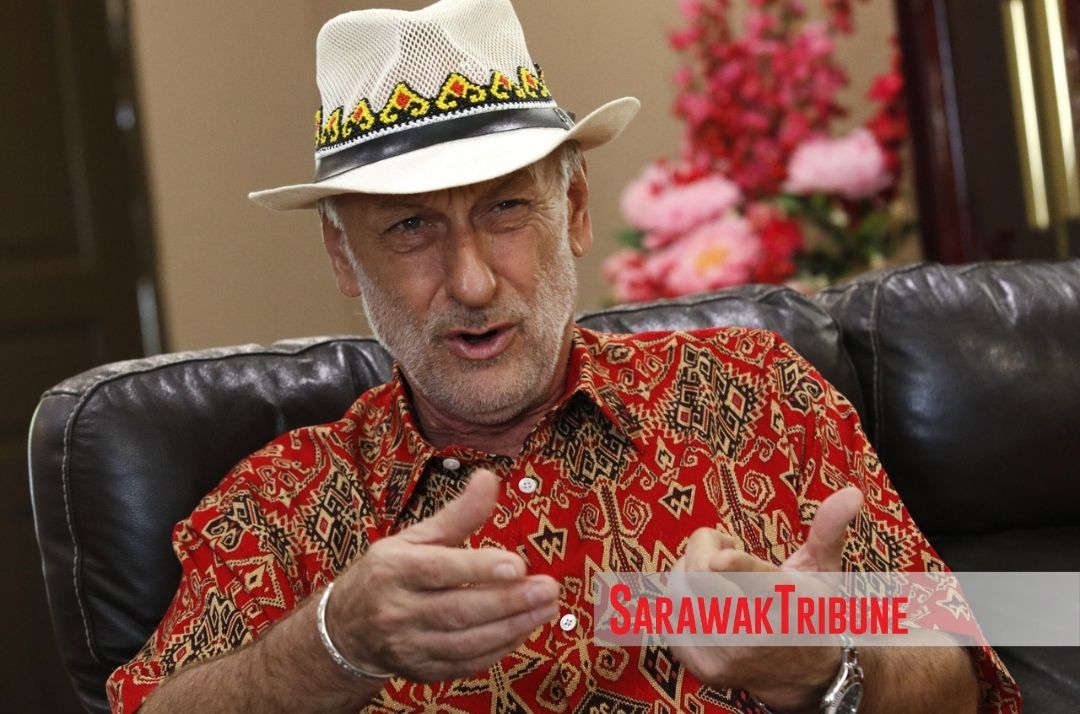
Austrian Rich Oberbucher repeats this vote of approval, mantra if you will, whenever he explains why his heart became attached to the Land of the Hornbills.
His love for Sarawak began with a sense of acceptance he felt the moment he stepped into Kuching.
That moment came at the immigration counter of Kuching International Airport.
There were no lengthy questions, no scrutiny; it was just a simple greeting: Welcome to Sarawak.
For the well-heeled Rich, a 65-year-old businessman who has been to more than 100 countries, often facing scrutiny and repeated questioning, that reception felt like a red-carpet welcome to this vast land spanning 124,450 square kilometres.
He vividly remembers arriving in the city for the first time. Before reaching the immigration counter, he had already briefed his wife on how to respond should they be questioned.
“But the experience completely changed my perception. The female immigration officer simply stamped my passport and said, ‘Welcome to Sarawak, sir. Enjoy your time here.’
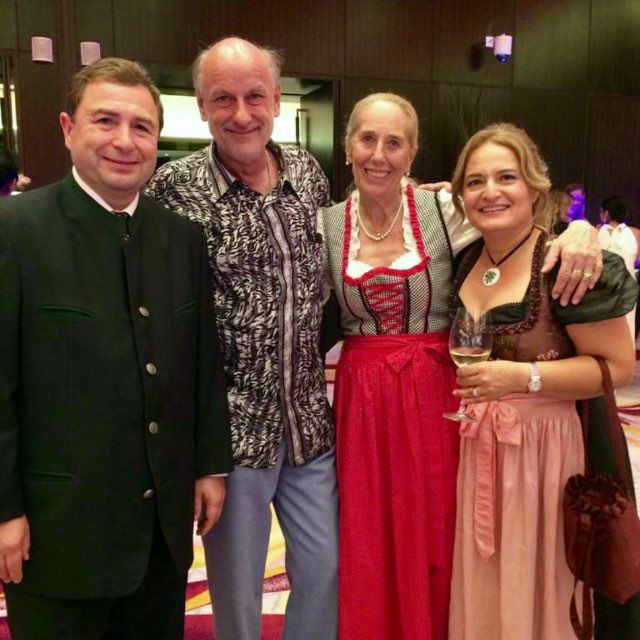
“I spontaneously replied, ‘Wow.’ The officer smiled and asked why I seemed surprised.
“I told her to look at my passport and explained that while living in Peninsular Malaysia for business, I frequently travelled to Vietnam, Indonesia, Cambodia and many other countries. Every time I returned, there were always questions and sometimes, problems.
“And she gave me a simple answer that has stayed in my heart until today. She said, ‘This is Sarawak. You are very welcome here.’”
“That was when I felt something different,” he said to Suara Sarawak at a Chinese New Year open house.
The visit had been somewhat personal, fulfilling his wife’s request for a short trip to Sarawak.
“After living in Peninsular Malaysia for three years, I realised it was not the place for me, and I intended to return to Europe and settle in Switzerland.
“But my wife suggested we visit Sarawak before going back. After five days and four nights here, she looked sad because she wanted to spend her retirement in Asia.
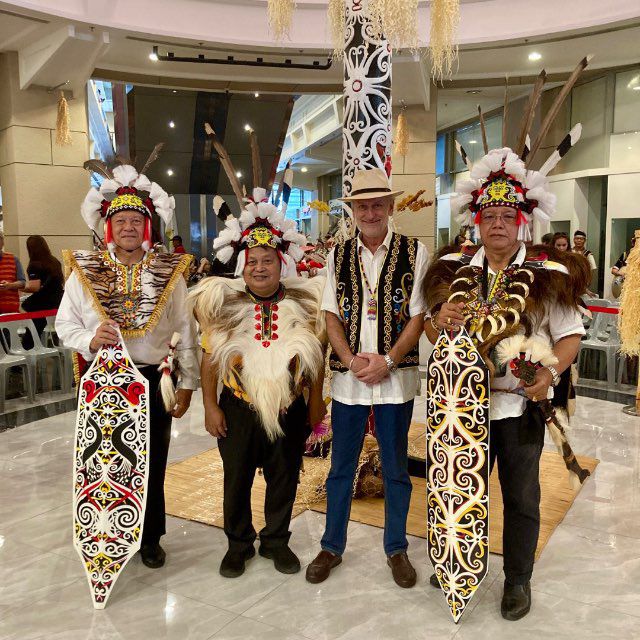
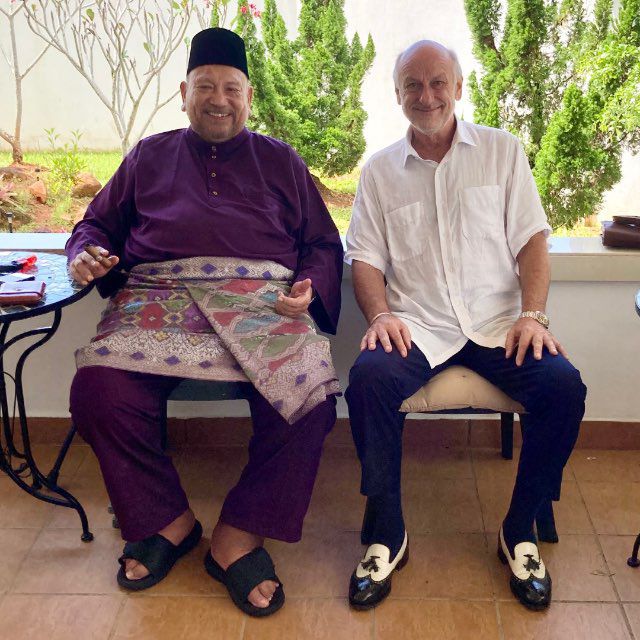
“I told her, let us settle everything in Switzerland and Austria first, and then we will return to Kuching and see what happens,” he recalled.
Rich, raised in a farming family in post-World War II Austria, grew up in a community where neighbours helped one another.
If a family lacked food, it was shared. If there was heavy work, it was done together. Yet, he said, such values have gradually faded in the Western world.
Here, he was struck by how people of different races and religions celebrate life together without reservation. Even in a major city like Kuching, he still feels a sense of peace and safety, able to walk outside day or night without worry.
“In the rural areas, I saw even greater sincerity and simplicity in Sarawakians. One unforgettable experience was sharing a meal with a family living deep in the interior.
“I knew the food was not enough for everyone. But I also knew that if I did not eat, they would feel hurt. So I sat down and ate with them. That experience truly touched my heart.
“Here, I feel like a grain of sand in God’s plan. They do not look at who you are, your religion or your skin colour. They see you simply as a human being. They do not live in pretence. That value has long been lost in the Western world.
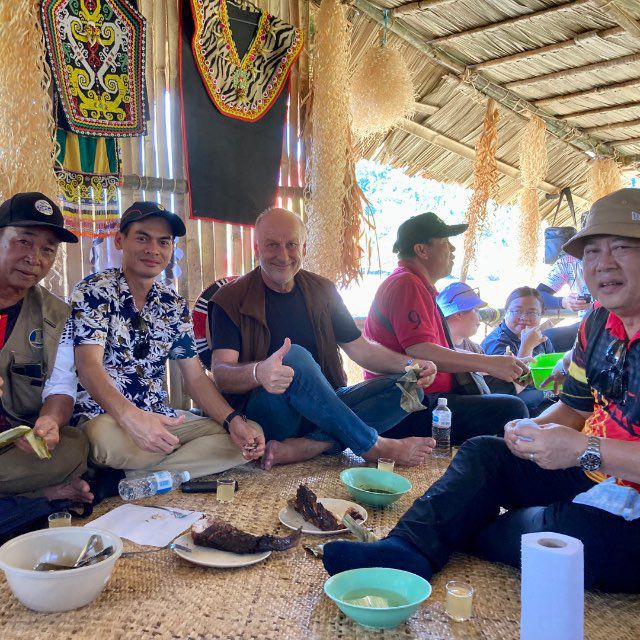
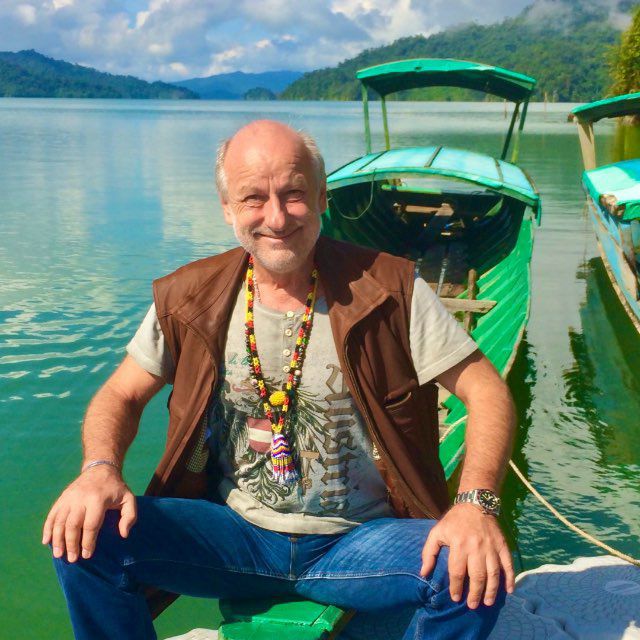
“That was when I realised Sarawak possesses something increasingly rare elsewhere, and that is sincerity. The warmth and unity of the people here deeply captivate me,” said Rich, who has since travelled to nearly every corner of the state.
He sees Sarawak as a state that is unique, not only for its safety and hospitality, but also for the balance it maintains between development and nature.
“The basic infrastructure here is already very good. But do not go overboard like Europe. I come from a country that is overly developed with too many roads, infrastructure, housing and so on. The next generation will bear the heavy maintenance costs.
“Sarawak is still at a healthy point — developing, but not exceeding its limits. I hope the state does not fall into the trap of uncontrolled development or overtourism that eventually damages its social system and environment.
“Sarawak should focus on quality tourism, leveraging its vast forests and opening space for health tourism, especially for individuals under stress who seek a beautiful retirement,” he said.
He also touched on the potential of rural products, noting that farmers could increase their income by processing raw produce into value-added goods.
“If pork is sold raw at RM13 or RM14 per kilogramme, but processed into bacon, ham or sausages, its value can reach RM100 per kilogramme or more.
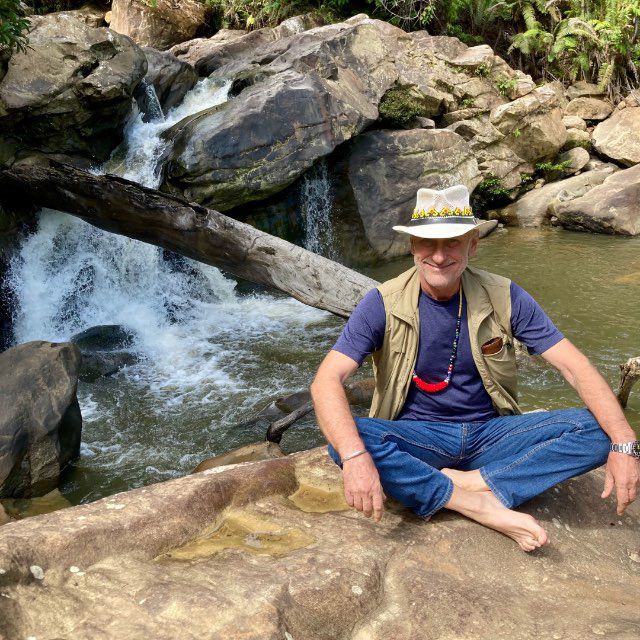
“That approach can be implemented through collaboration with universities or gradually from farmer to farmer,” he added.
For Rich, the true strength of the state, located some 9,500 kilometres away, or a 19-hour transit flight from his homeland, lies not in its physical development but in its people.
“If the outside world wants to learn how to live together peacefully, come to Sarawak. I love everything about this state. Throughout my time here, I have never faced challenges or obstacles,” he said.
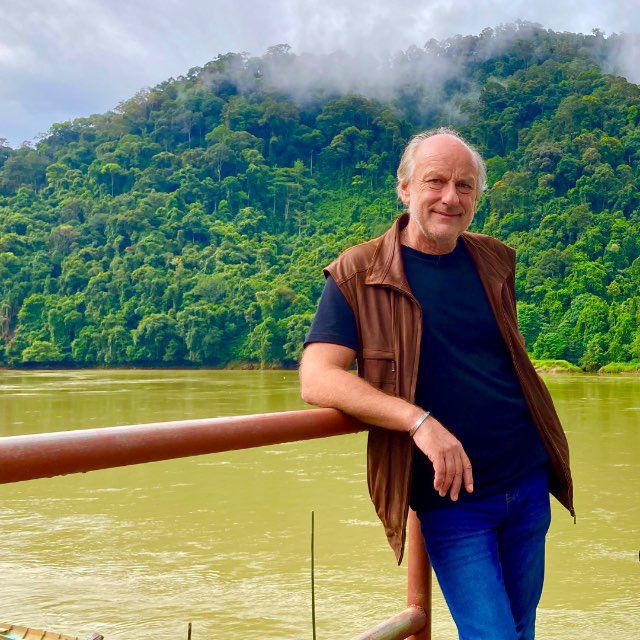
Now, after nearly nine years living in Kuching with his wife, he no longer sees himself as an outsider, as he has always felt accepted, valued and part of the community.
Every morning, standing on the balcony of his home overlooking the river, he gives thanks that fate brought him here.
From a five-day, four-night visit, Sarawak ultimately became home.
He has chosen to close the final chapter of his life in a state that, to him, reminds humanity of the true meaning of togetherness.