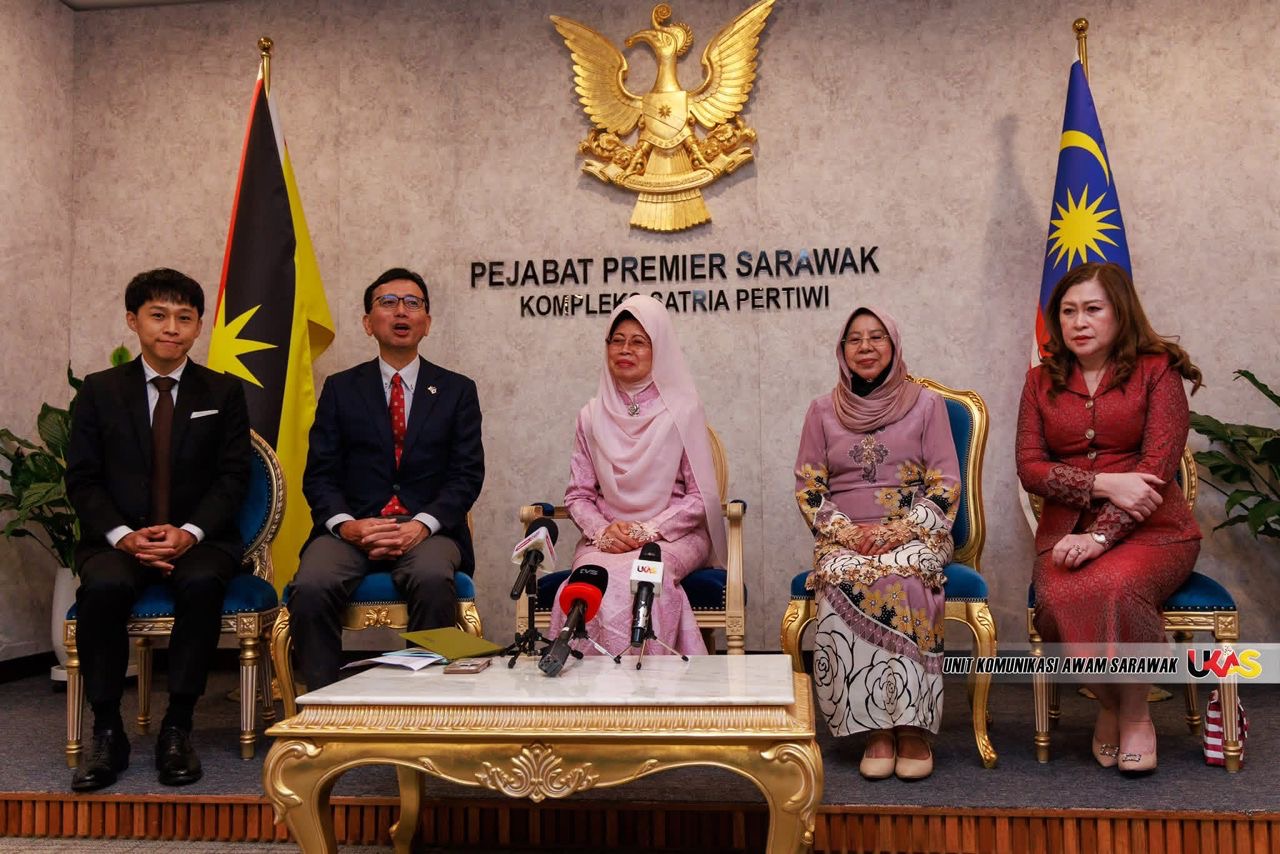
KUCHING: Sarawak will become the first state in Malaysia to implement a pilot project utilising artificial intelligence (AI)-based digital screening for early childhood development, said Minister of Women, Early Childhood and Community Wellbeing Development, Datuk Seri Fatimah Abdullah.
She said the initiative follows the signing of a memorandum of agreement (MoA) between ToyBox Creations and Technologies Sdn Bhd (ToyEight Holdings Inc) and SeDidik, marking a significant milestone in advancing inclusive education across the state.
Fatimah said the programme will support Sarawak’s commitment to inclusivity under the Post COVID-19 Development Strategy 2030.
“This approach will help us strengthen early childhood education throughout Sarawak, not just in Kuching, especially under SeDidik’s open-door policy where no child is turned away, including those with developmental delays or disabilities,” she told a press conference after a courtesy call on Premier Abang Johari Tun Openg at Satria Pertiwi Complex today (April 22).
Earlier, Fatimah alongside Ambassador of Japan to Malaysia, Shikata Noriyuki, briefed the Premier on the launch of a the partnership, which introduces innovative solutions for inclusive education in Sarawak.
She said that the collaboration will begin with training teachers to conduct digital screening using AI technology, followed by screening of all children enrolled in SeDidik centres statewide.
“We are looking at screening about 1,800 children. From this, those identified with developmental delays or disabilities can undergo early intervention, which is crucial as outcomes are better when intervention is done early,” she said.
Fatimah noted that many children have yet to be diagnosed or assessed, while some parents remain unaware or in denial about their children’s developmental conditions.
“With digital screening, the data does not lie. It will help us guide parents and encourage them to seek early intervention for their children,” she added.
She said the initiative also addresses current limitations faced by the One-Stop Early Intervention Centre (OSEIC), where diagnosis is carried out by paediatricians but capacity is limited.
“At present, we only have one doctor who visits once a month, and only a few children can be diagnosed in a day, resulting in a long waiting list. This programme will help ease that challenge,” she said.
Fatimah added that the screening process is conducted through interactive, game-based methods, making it engaging and stress-free for children.
“It is done in a fun way, so children do not feel burdened. Even after 20 minutes, some want to continue, not realising that screening has already taken place,” she said.
Beyond screening and intervention, she emphasised that the programme also promotes inclusive learning environments where children of all abilities learn together.
“We do not segregate children with special needs. They learn alongside others in the same classroom, fostering values such as empathy and acceptance among all students,” she said.
Fatimah expressed confidence that the pilot project, expected to run its full cycle by June 2027, will yield positive outcomes and could serve as a model not only for other parts of Malaysia but also internationally.
“Usually we look at Japan for models, but this time, Japan can also look at what we are doing in Sarawak,” she said.