
THE recent daycare abuse case in Yogyakarta, Indonesia, is difficult to read about, let alone process as a parent.
Indonesian authorities detained 13 individuals after children at Daycare Little Aresha Jogja were allegedly found bound, neglected and confined in poor conditions.
Police reportedly discovered 20 children in a room measuring only three by three metres, while more than half of the approximately 100 enrolled children were believed to have experienced some form of maltreatment.
What makes it even more distressing is that these were very young children, many of them under two.
At that age, children cannot fully explain what has happened to them.
They cannot defend themselves, nor can they say, “I was scared”, in the way adults expect them to.
That is why daycare abuse shakes parents so deeply.
Daycare is supposed to be a place of trust.
For many working parents, sending a child to a nursery or childcare centre is not a decision made lightly.
It often comes with guilt, worry and constant mental calculation.
Parents leave their children in the care of others because they have to work, provide and survive.
So when abuse happens in a place that is meant to keep children safe, it breaks more than the law.
It breaks the silent agreement between parents and caregivers.
Malaysia, too, has had its share of disturbing cases.
Just this month, two former caregivers were jailed for one year each after pleading guilty to abusing a nine-month-old baby girl and a six-month-old baby boy at a childcare centre in Kuala Lumpur.
Closer to home in Sarawak, the issue feels even more unsettling.
In Kuching, two nursery teachers were recently charged in court over the alleged abuse of a two-year-old boy at a childcare centre in Stampin Baru.
These are not distant stories; they are happening within our own communities. They are not merely “viral cases”, but warnings.
They remind us that child safety cannot depend on trust alone.
Trust must be supported by strict licensing, proper training, regular inspections, functioning CCTV, clear reporting channels and real consequences.
It is easy to say that parents should be more careful when choosing a daycare.
But the truth is that many parents already try their best.
They visit centres, ask questions, check fees, observe the environment and listen to recommendations.
Still, abuse can occur behind closed doors, especially when centres are understaffed, unlicensed or poorly supervised.
The responsibility cannot rest on parents alone.
Authorities must ensure that childcare centres are not merely registered on paper but monitored consistently.
Operators must understand that caring for children is not just a business.
It is a responsibility that requires patience, skill and emotional maturity.
Caregivers must be trained not only to feed, bathe and supervise children, but also to manage stress without harming those in their care.
At the same time, parents should feel empowered to question, observe and report.
Sudden behavioural changes, unexplained bruises, fear of going to daycare, sleep disturbances or unusual clinginess should never be dismissed.
Children communicate in different ways, especially when they are too young to speak clearly.
As a mother, this is where the story becomes personal.
I count myself fortunate that my job offers the flexibility to look after Rafael myself.
It is not always easy.
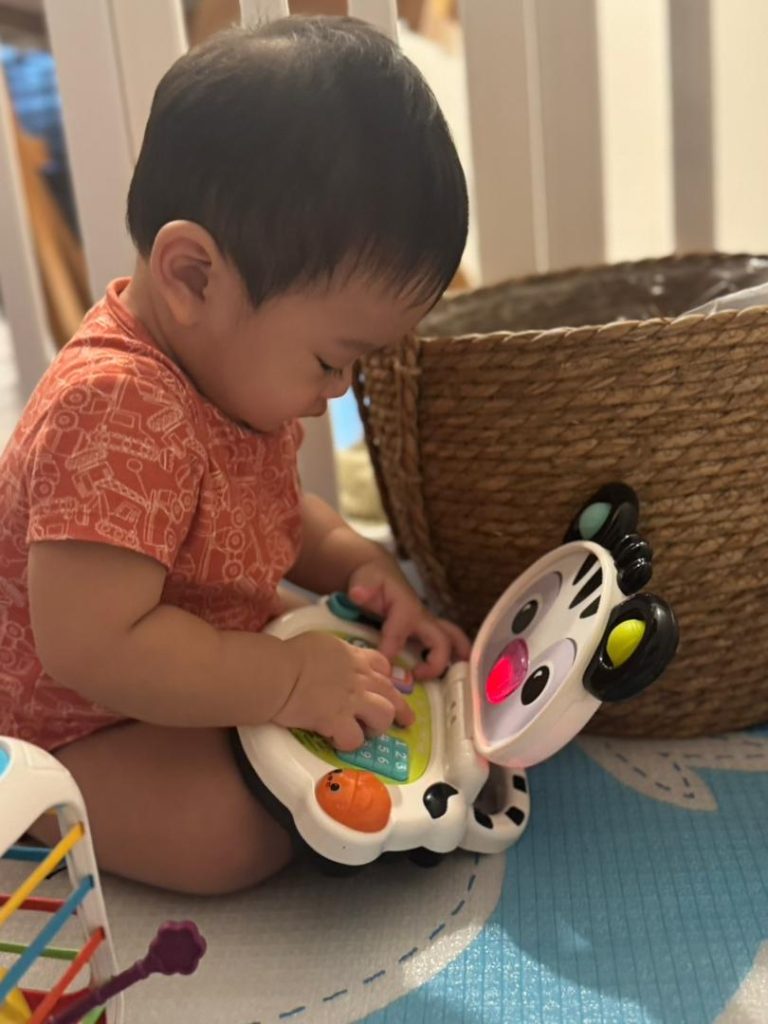
There are days when deadlines do not wait, when interviews need to be conducted, when stories must go out, and he is right there beside me – babbling, playing, demanding attention and needing me.
There are moments during his independent playtime in his playpen when I glance over and find him tapping away on his toy laptop, as if he is mirroring me.
Babies do that – they copy what they see.
It is an adorable sight, one that makes me smile without fail.
But if I am honest, it also tugs at my heart.
Because behind that small and innocent imitation is a quiet reminder of the reality I am trying to balance – being present as his mother while also being present for my work.
There are emails to send, stories to file, a team to oversee, calls to take and, in between all that, there is him.
It can be exhausting and overwhelming.
But even on the hardest days, I remind myself that I am there.
I can see him, hear him, respond to him and comfort him the moment he needs me – and that, in itself, is a privilege.
Because the truth is, I cannot imagine having him looked after by strangers and not knowing what happens in those unseen hours.
I also know that not every parent has this choice.
Many mothers and fathers have to return to work, rely on childcare and place their trust in others.
That reality deserves understanding, not judgement.
Which is why cases like the one in Yogyakarta, and those closer to home, matter so much.
They are not just isolated incidents.
They raise serious questions about whether the systems we have in place are strong enough to protect children when parents are not around.
Because no child should be tied up, slapped, silenced, hidden or harmed in the name of care.
And no parent should have to live with the fear that the place meant to protect their child has instead become the place that hurt them.
The views expressed here are those of the writer and do not necessarily represent the views of Sarawak Tribune. The writer can be reached at sarahhafizahchandra@gmail.com.