THE conclusion of the 11th Triennial General Assembly (TGA) of the Dayak Bidayuh Nasional Association (DBNA) was far more than a routine organisational exercise. It was a decisive affirmation of continuity, stability and confidence in leadership that has guided the association for over seven decades.
Delegates sent a clear message: they value steady stewardship and believe the present leadership remains capable of bringing DBNA to greater heights. At a time when many organisations are distracted by internal divisions and rivalry, the TGA projected unity, maturity and a shared sense of purpose.
The unopposed return of Datuk Ik Pahon Joyik as president for an eighth consecutive term speaks volumes. Since assuming the presidency in 2005, he has become closely identified with DBNA’s growth, consolidation and rising prominence within the Bidayuh community. To be returned unchallenged repeatedly over more than twenty years reflects deep trust in his stewardship and long-term vision.
Under his leadership, DBNA has strengthened both its institutional standing and its service to the community. Among its notable achievements are the construction of its new headquarters at Jalan Kumpang, the establishment of the multi-storey DB Stay hotel, and initiatives to survey extensive tracts of Native Customary Rights (NCR) land in Bidayuh villages. These milestones underline DBNA’s evolution from a purely cultural body into a catalyst for socio-economic development and community empowerment.
Leadership continuity is sometimes mistaken for resistance to change. In reality, continuity can provide the stability, institutional memory and consistency necessary for sustained development. The delegates’ decision to retain the current leadership was not rooted in complacency, but in the conviction that the present team has delivered tangible results and is best placed to navigate future challenges.
Confidence in continuity was also evident in the return of key office bearers. Deputy president Dr Charlie Ungang retained his post in a straight contest, while secretary-general Jubilant Austinway, treasurer-general Shirley Kho Kim Hai and assistant secretary-general Senorita Senong were returned unopposed. Such outcomes are uncommon in large organisations and signal broad satisfaction with DBNA’s direction. More importantly, they reflect a collective preference for stability as the association enters its next phase.
Yet the TGA was not devoid of contest or renewal. The race for three vice-president posts attracted seven candidates, generating lively but healthy democratic participation. The election of Associate Professor Dr Kismet Hong Ping, Bronnie Marshall Benedict Poris and Joseph Jindy Peter Rosen demonstrated a blend of professional expertise, experience and fresh perspectives. Their success showed that while delegates strongly support continuity at the top, they also value inclusivity and broader participation in shaping DBNA’s future.
Other appointments reinforced this balance. Aden Nagrace was elected unopposed as Information Officer, while Esther Andrew Mapi and Richard Banter assumed the roles of assistant treasurer-general and cultural officer respectively. Eight ordinary council members were elected from a field of 21 candidates: Datuk Dr Adrian Susin Ambud, Simon Ilus, Datuk Lester Matthew, John Riba Marin, Dr Les Met, Dr Bernard Stephen Jussem, Thomas Daling and Kencha Dewok.
Taken together, the leadership line-up reflects a commendable mix of professionals and grassroots leaders from diverse backgrounds. This diversity strengthens institutional capacity and broadens DBNA’s ability to respond to evolving needs and aspirations. The equilibrium between continuity and renewal may well prove one of its greatest strengths.
Community-based organisations today can no longer confine themselves to ceremonial roles or cultural preservation alone. Members increasingly expect them to address education, youth empowerment, leadership development, economic participation and wider social progress. Over time, DBNA has moved decisively in this direction.
It now serves as an important platform for articulating the aspirations of the Bidayuh community, safeguarding identity and contributing meaningfully to Sarawak’s broader development agenda. As the state undergoes rapid transformation driven by economic growth, digitalisation and shifting social realities, organisations such as DBNA must adapt while remaining grounded in their cultural roots. This demands leadership that is experienced, forward-looking and inclusive.
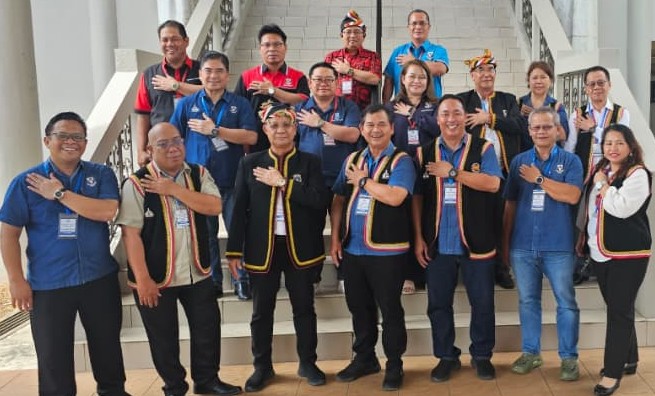
The renewed mandate reflects delegates’ belief that the current team understands both the heritage and future ambitions of the community. In his concluding remarks, Pahon thanked delegates and observers for ensuring the smooth conduct of the TGA and expressed appreciation for the trust placed in the leadership.
“The commitment and dedication shown by delegates throughout the assembly reflect the unity and shared aspirations of our community,” he said.
His words captured the spirit of the gathering. The TGA was not merely about electing office bearers, but about reaffirming a collective vision for DBNA and for the future of the Bidayuh community.
Equally significant was the emphasis on strengthening leadership, fostering unity and advancing community interests through experienced stewardship alongside the participation of emerging leaders. Continuity alone is insufficient unless accompanied by deliberate efforts to nurture future leadership and encourage broader involvement.
Community organisations like DBNA play a vital role not only in preserving heritage and identity, but also in supporting educational advancement, leadership development and socio-economic empowerment. One of DBNA’s enduring strengths has been its ability to bridge tradition and progress. While safeguarding the rich heritage of the Bidayuh people remains central, the association must also prepare the community to navigate modern economic and social realities.
Stable and experienced leadership is crucial in this regard. Long-term initiatives in education, youth development, cultural preservation and socio-economic advancement require sustained commitment. Frequent changes at the top can disrupt momentum and weaken focus.
Delegates appear to recognise this. Their endorsement of the current leadership was less about personalities than about preserving momentum and ensuring steady progress.
At the same time, a strong mandate brings responsibility. Delegates and the wider community will expect DBNA to continue evolving, expanding its programmes and delivering tangible impact. The challenge will be to ensure that continuity does not drift into complacency, and that the association remains dynamic and responsive to younger generations while upholding values that have sustained it for decades.
Ultimately, the 11th TGA reaffirmed confidence in a leadership team delegates believe can continue guiding DBNA towards greater achievements. The overwhelming support for Pahon and his team reflects a shared commitment to stability, unity and steady stewardship — and a collective hope that DBNA will continue to grow as a strong, respected and forward-looking institution capable of uplifting the Bidayuh community for generations to come.
The views expressed here are those of the writer and do not necessarily represent the views of Sarawak Tribune. The writer can be reached at drnagrace@gmail.com.