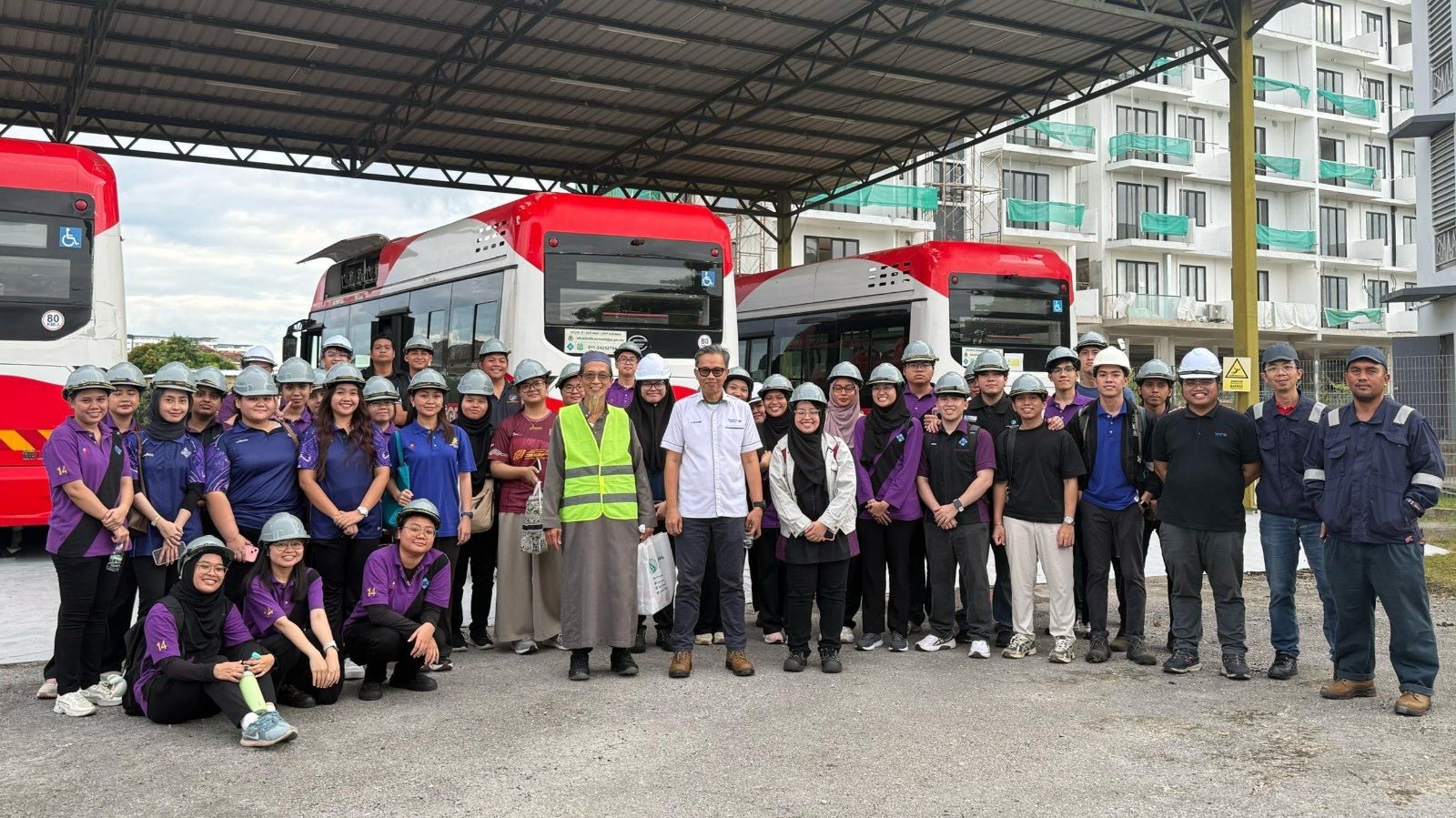
KUCHING: Students and lecturers from Universiti Malaysia Sarawak (UNIMAS) recently visited Sarawak Metro’s hydrogen bus depot at the Sarawak Skills campus here to gain first-hand exposure to hydrogen fuel cell technology used in public transportation.
The educational visit involved 43 students and six lecturers from UNIMAS’ Faculty of Engineering, particularly those enrolled in the university’s Biodiesel and Fuel Cell for Transportation course.
During the visit, the participants had the opportunity to observe up close the three hydrogen buses previously used by Sarawak Metro for trial operations in Kuching, allowing them to better understand the real-world application of sustainable energy systems and support their ongoing fuel cell-related projects.
Sarawak Metro chief executive officer Mazli Mustaffa welcomed the initiative by the university, saying the company remains open to educational visits from academic institutions interested in hydrogen-based transportation technology.
“Whenever possible, we always welcome requests from academic institutions to organise study visits to see the hydrogen buses up close, to allow their students to learn more about the hydrogen-based powertrain technology.
“I believe such initiatives will benefit the industry in the long run by helping to nurture a pool of young talent to support Sarawak’s vision of becoming a hydrogen economy and green energy hub,” he said in a statement.
Mazli said the three hydrogen buses, which had been deployed since 2020 for trial operations, had successfully fulfilled their role in collecting important operational data and technical insights ahead of the rollout of a larger hydrogen-powered public transport fleet.
The new fleet is expected to arrive in phases beginning in the second half of 2026 as part of the Kuching Urban Transportation System (KUTS) project.
He added that the trial operations also helped raise public awareness on the safety, reliability and environmental benefits of hydrogen fuel technology.
Apart from supporting research and education, Mazli said that the initiative had also strengthened the technical capabilities of Sarawak Metro’s local workforce.
“Our engineers, technicians, and drivers acquired valuable hands-on expertise in operating and maintaining hydrogen-powered vehicles, preparing us well for the upcoming passenger service operations of the Kuching Urban Transportation System (KUTS),” he said.