When Haniff Omar first arrived in the Sarawak interior 17 years ago, he struggled to imagine a future for himself there. But somewhere between illness, community kindness, and the children who found joy through painting, he discovered that Long Laput was no longer just a posting – it had quietly become home.
The interior that quietly became home
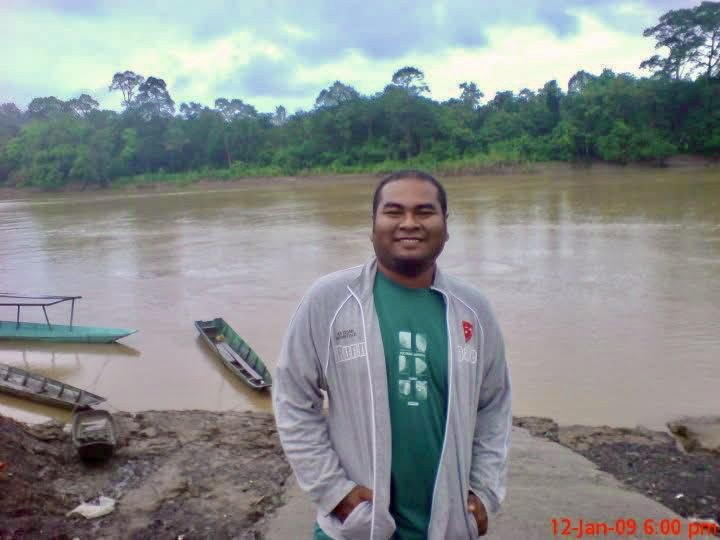
WHEN Haniff Omar first arrived in Long Laput, Baram, in 2009, he was not sure whether he could survive life in the Sarawak interior.
Fresh from Peninsular Malaysia, the young teacher struggled to adjust to a place so different from the world he had always known.
Everything felt unfamiliar – the surroundings, the pace of life, the limited facilities, and even the daily realities faced by the children he would soon teach.
Back then, Long Laput was never part of the future he had imagined for himself.
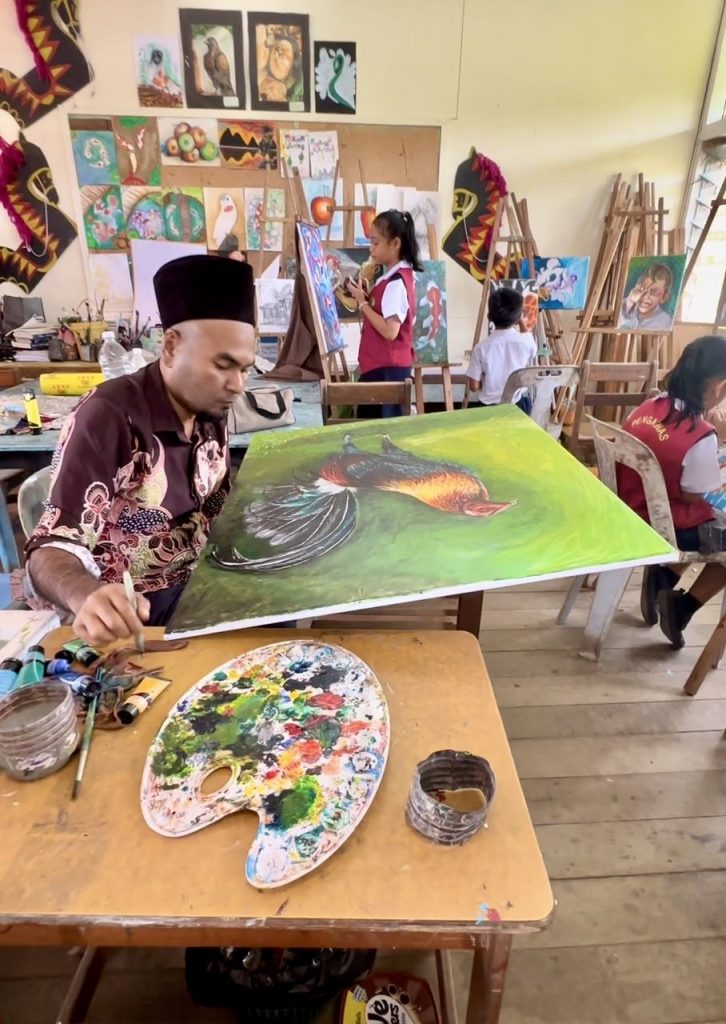
Born on June 10, 1979, Haniff is the fifth of six siblings. He began his educational journey in Jengka, Pahang, before pursuing a certificate in Creative Arts at Institut Kemahiran Baitulmal Kuala Lumpur.
He later earned a Fine Arts degree from Universiti Sains Malaysia before completing the Postgraduate Teaching Course (KPLI) in Visual Arts Education and Bahasa Melayu in 2008.
A year later, he received his first posting at Sekolah Kebangsaan (SK) Long Laput.
Like many young teachers sent to remote schools, Haniff arrived with fear and hesitation quietly tucked inside him. Deep down, he assumed he would eventually return somewhere closer to home.
But life, he said, has a way of changing people slowly.
Despite the difficulties he faced during his early years in the interior, Haniff never once applied for a transfer through the eGTukar system.
“People always say you cannot love what you do not know. I think that was exactly what happened to me,” he said.
“At first, I struggled to accept this place. But the longer I stayed, the more I began to understand the people here and the meaning behind their way of life.”
Today, after 17 years in Long Laput, the place he once struggled to accept has become inseparable from his life.
The illness that changed everything
If his first few years in Long Laput taught him resilience, what happened in 2011 changed his relationship with the community forever.
After three years of serving in the interior, Haniff fell seriously ill after contracting leptospirosis and melioidosis – severe infections commonly associated with contaminated water and soil.
The illness left him in a coma for three months. He spent another six months in intensive care at Miri Hospital. For his family, it was one of the darkest periods of their lives.
But it was also during that difficult time that Haniff saw another side of the people in Long Laput – one that remains deeply etched in his heart.
“While I was in the ICU, the villagers helped my family tremendously. They came regardless of religion or background. Some took care of things for my family, while others simply came to offer support and prayers.
“That was when I truly realised that the people here had already accepted me as one of their own,” he said.
His voice softened as he reflected on those memories.
“Honestly, I still feel indebted to them today. That feeling never left me. How could I think about leaving a place where people stood by me and my family during one of the hardest moments of my life?”
From then on, Long Laput no longer felt like a temporary posting. It became home.
The experience also changed the way Haniff viewed his role as a teacher.
In the years that followed, he became more emotionally invested in the lives of his pupils – not just academically, but personally as well.
Eventually, art became one of the ways he connected most deeply with them.
When art began to mean something bigger
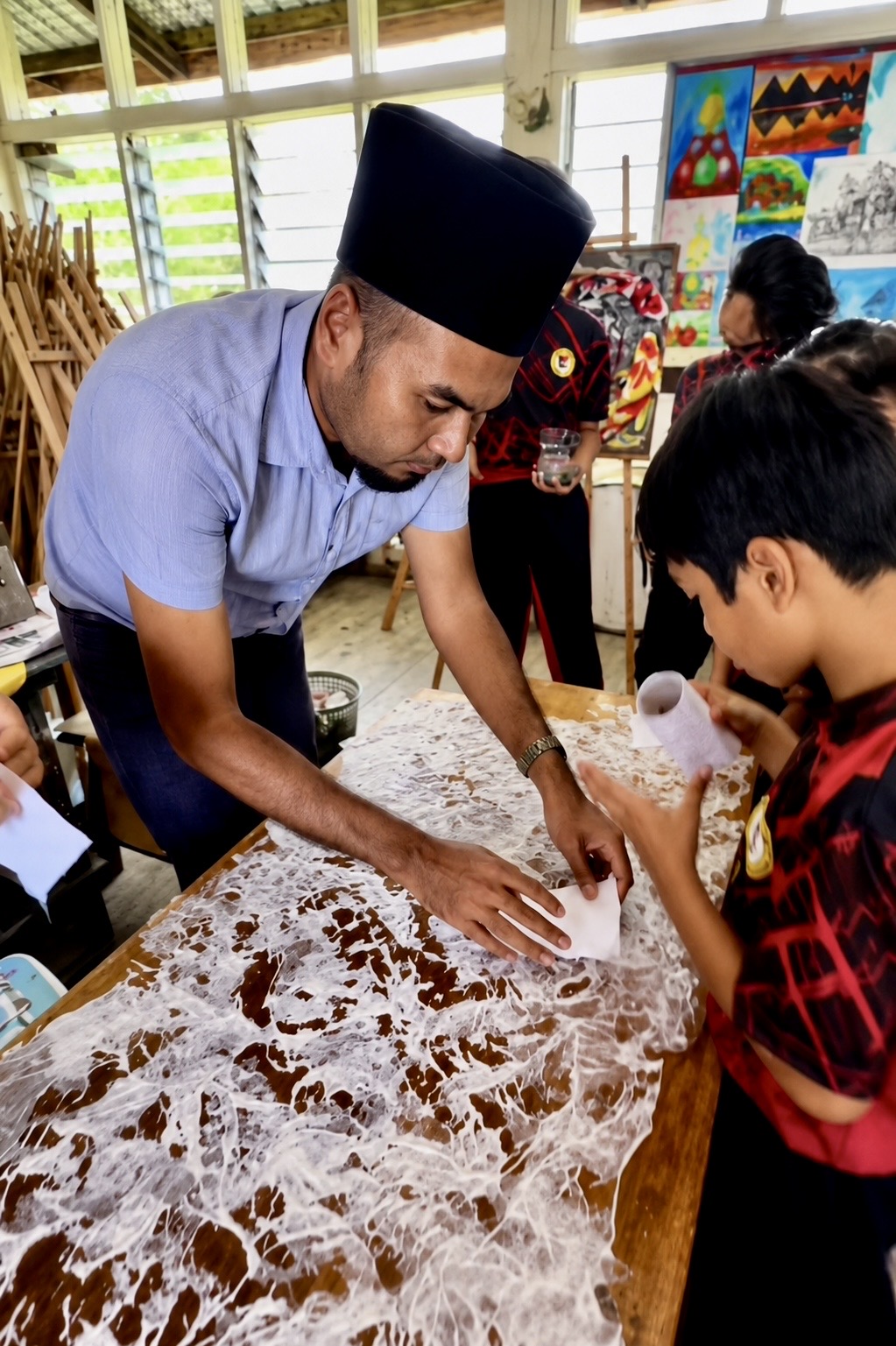
Haniff first started encouraging pupils to paint in 2014. At the time, Ujian Pencapaian Sekolah Rendah (UPSR) candidates who had completed their examinations often had little to do while waiting for the school term to end.
Wanting to keep them occupied meaningfully, he began gathering leftover plywood boards and turning them into makeshift canvases. The children painted whatever came to mind.
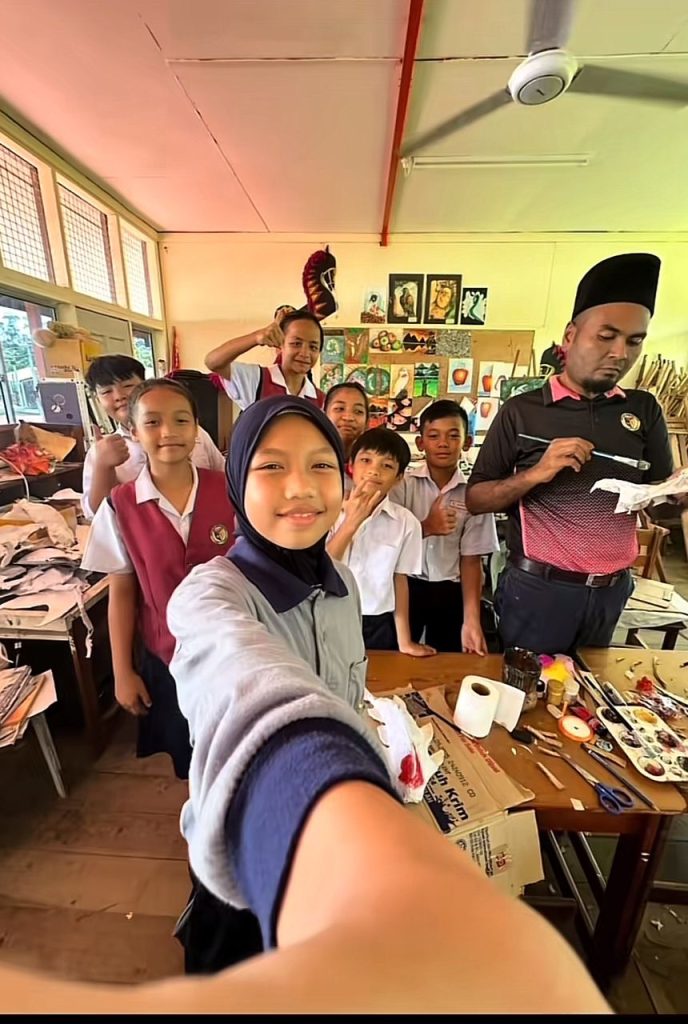
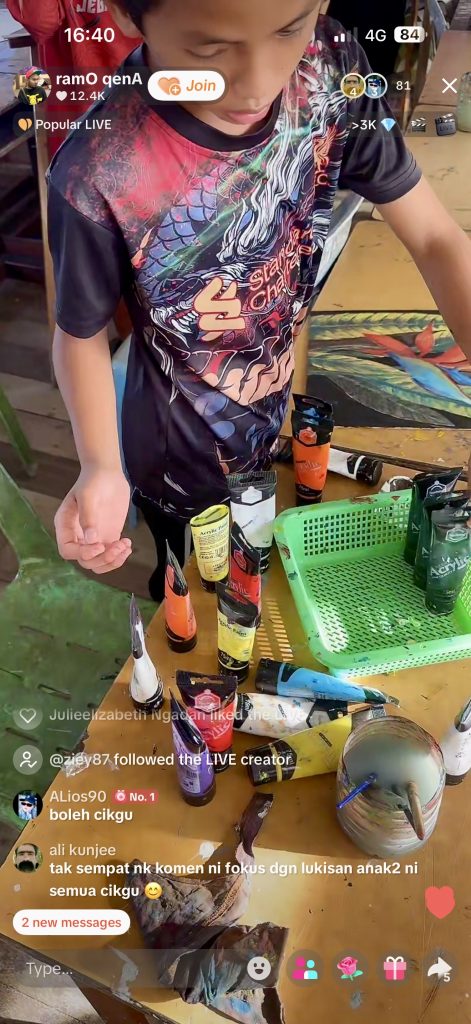
“At first, it was just a simple activity to fill their free time. I never imagined it would become something much bigger,” he said.
He uploaded the artworks onto Facebook, never expecting much from it. To his surprise, friends began purchasing the paintings.
But when UPSR was abolished and the COVID-19 pandemic disrupted school life, the painting sessions slowly faded away.
In 2021, however, the spark returned. His pupils became fascinated whenever they saw him painting and eagerly asked to learn.
“They were truly excited. You could see it in their faces. They genuinely wanted to learn,” he said.
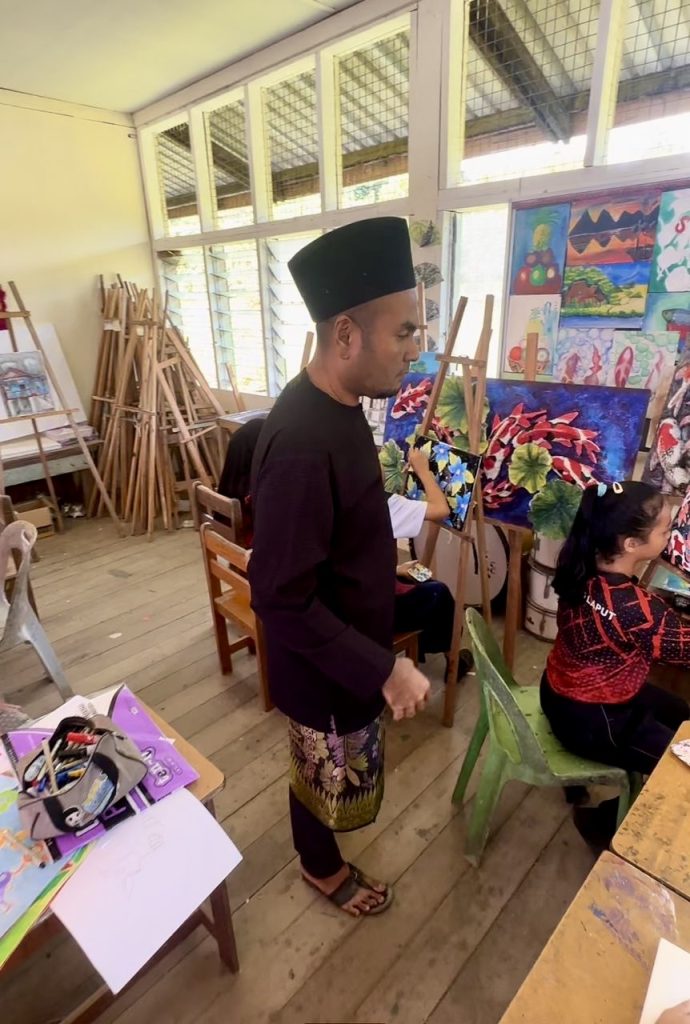
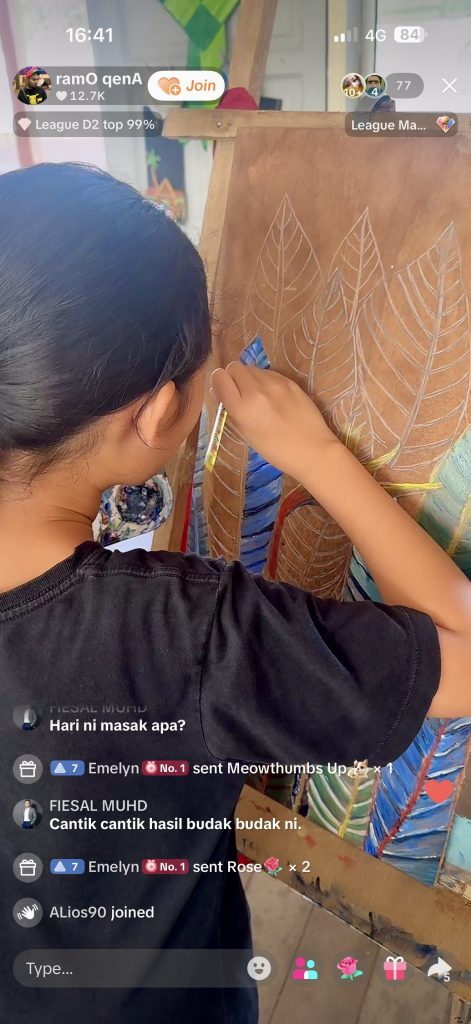
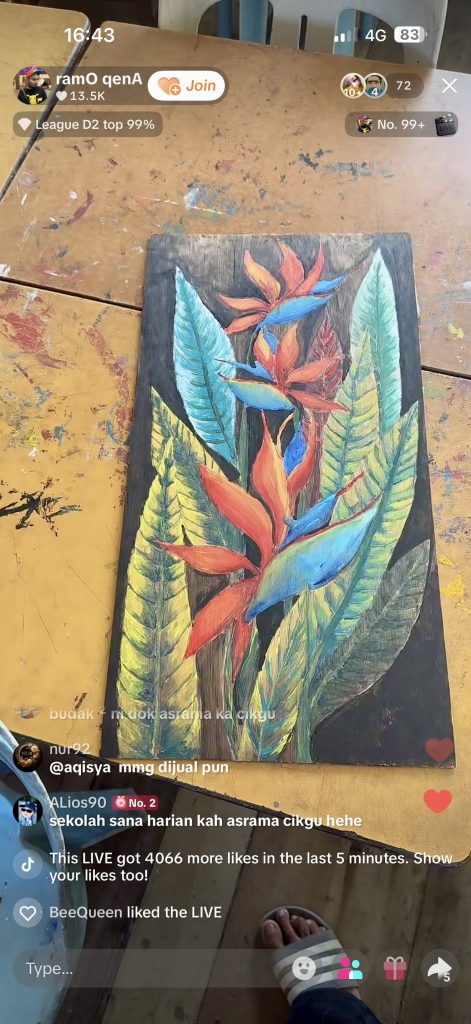
That was when he decided to properly revive the sessions. This time, he bought canvases and art materials using his own money and began promoting the children’s artworks through TikTok.
What followed surprised even him.
Soon, paintings created by children from a remote school in Baram began attracting buyers from outside the community.
But for Haniff, the true value of the initiative had very little to do with social media attention. Instead, it was about what art was doing for the children themselves.
“I noticed that when they paint, they become very happy and learn to value their time better.”
As both their Visual Arts and Bahasa Melayu teacher, Haniff eventually introduced one important rule.
“If they wanted to join the art sessions, they had to complete their schoolwork first,” he said with a smile.
“Alhamdulillah, the rule worked very well.”
To outsiders, the paintings may appear simple. But behind every completed canvas lies hours of patience and guidance.
Haniff explained that because his pupils are still primary school children, every painting session requires close supervision and encouragement.
“You cannot just ask them to paint and leave them alone. I have to sit with them, guide them and encourage them throughout the process.”
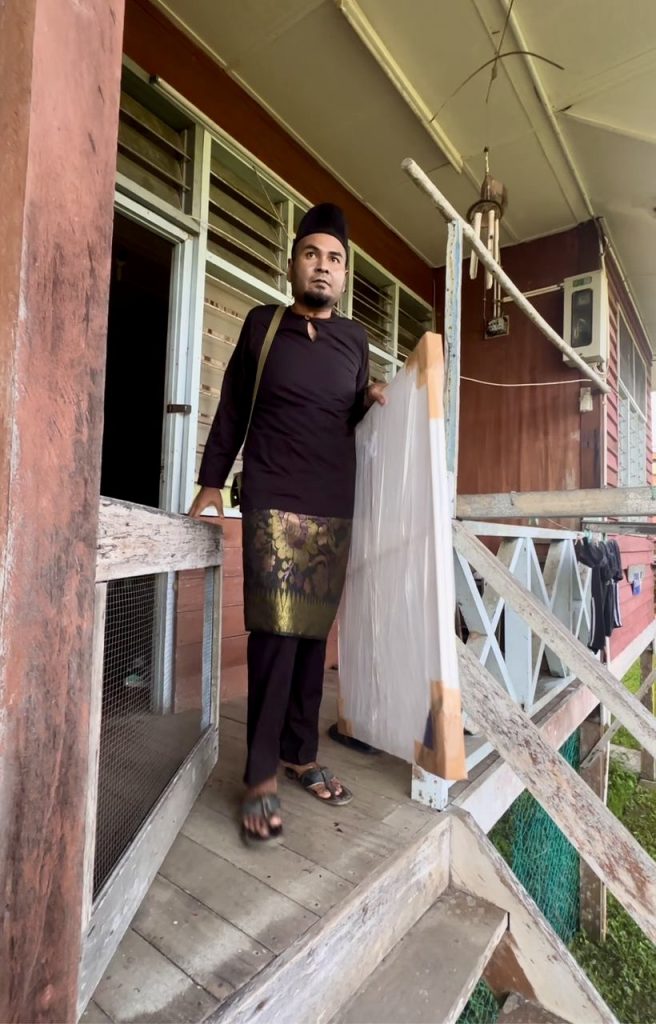
Although he personally pays for the canvases and materials, Haniff insists that every cent earned from the sales belongs entirely to the pupils.
For him, it was never about making money. Instead, he wanted the children to understand that their talents have value and that art is not meaningless.
“I want them to believe that art can take them somewhere; art can generate income,” he said.
Some pupils have even used the money earned from their paintings to prepare for secondary school expenses.
Understanding the meaning of ‘Cikgu’
Among the many pupils he has taught over the years, Haniff still remembers one particularly gifted child from 2022.
The pupil excelled not only in painting, but also academically and in sports. But what impressed him most was not the child’s talent – it was his attitude.
“What amazed me most was his respect towards teachers. I truly admired the way his mother raised him,” Haniff said.
For him, that is one of the most remarkable things about children in the interior. They may grow up far from modern conveniences, but many possess a quiet resilience, humility and respect that are becoming increasingly rare elsewhere.
Those are the qualities that slowly changed him too.
Now 47, Haniff has spent nearly two decades of his life in Long Laput – far longer than he ever expected during those uncertain early days in 2009.
After all these years, he believes the children there have taught him far more than he could ever teach them in return.
“In the interior, I learned patience and endurance. But more importantly, I learned the true meaning behind the word ‘cikgu’.
“Being a teacher is not just about teaching lessons in a classroom. Sometimes it means guiding, listening, encouraging and simply being there for your students,” he said.
Perhaps that is why Haniff never really left Long Laput. Somewhere deep in the Sarawak interior, a teacher from Pahang found a place that quietly changed his life forever.