KUALA LUMPUR: The Japanese Government and industries’ support is critical to helping Malaysia build its capabilities in advanced technologies, particularly semiconductors, artificial intelligence (AI), quantum computing, and advanced packaging, said Prime Minister Datuk Seri Anwar Ibrahim.
He said the country is positioning itself to move beyond traditional growth sectors by embracing digitalisation, AI and other emerging technologies, while strengthening its role as a regional semiconductor hub.
“(As for) semiconductors, we are more fortunate, because now Malaysia has become the semiconductor hub in the region, not only for the low-end, but also more high-end (products).
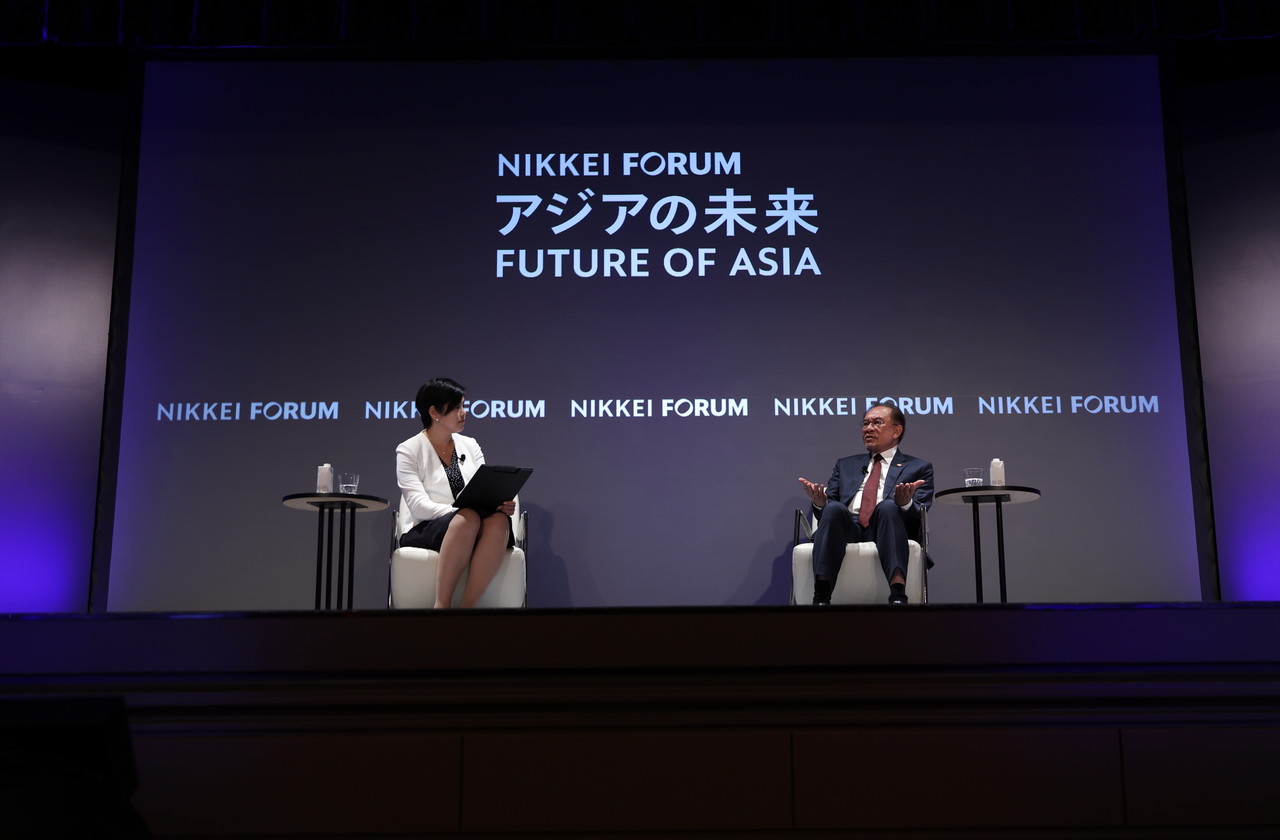
“We are talking about packaging and advanced packaging. And that is where collaboration with Japanese industries and support from the Japanese Government are critical,” he said during a question-and-answer session following his keynote address at the Nikkei Forum in Tokyo, Japan, today.
The session was broadcast live on television and social media.
Anwar said Malaysia is also focusing on developing capabilities in quantum technologies, noting that the country is learning from international partners that are further ahead in the field.
Beyond technology, he said, energy transition would be another key driver of Malaysia’s next phase of growth, supported by the country’s existing strengths in the energy sector.
“We are fortunate we have PETRONAS (Petroliam Nasional Bhd). Then we have this thinking of the ASEAN (Power) Grid, which I promoted very strongly and is supported by the Vietnamese Government, Laos and now Singapore, and we are also working with Sarawak,” he said.
While these are new areas, he also noted that there are stages of growth even with regard to old technologies.
Anwar said Malaysia would continue to maintain its traditional growth engines while simultaneously pursuing new areas and disciplines to accelerate economic transformation and achieve high-income nation status.
He also highlighted that political stability, strong institutions, and a clear policy direction remain essential in supporting the country’s long-term development agenda.
“Our duty is to ensure that reforms take place gradually, to fortify and strengthen. And this means, with the political stability which we are fortunate (to have), then we should start embarking on clarity of policies,” he said. – BERNAMA