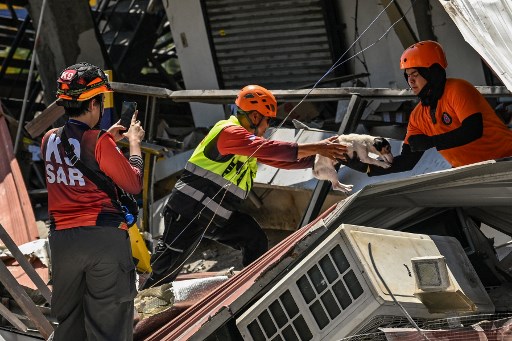
KUALA LUMPUR: Insured losses from damage caused by a recent 7.8-magnitude earthquake in the Mindanao region are expected to be limited and account for only a small fraction of total economic losses due to the catastrophe protection gap in the Philippines.
According to a new commentary by global credit rating agency AM Best, while the full scope of insured losses remains subject to ongoing assessments and has yet to be quantified, the domestic non-life insurance market is expected to absorb the primary layer of exposure through a risk-sharing programme.
The programme involves direct policies and the Philippine Catastrophe Insurance Facility (PCIF), which was established to pool domestic catastrophe risk.
AM Best said insurers in the Philippines remain dependent on the global reinsurance market to transfer extreme earthquake risks, with international reinsurers expected to absorb a portion of the overall insured losses.
“An increase in net retention of catastrophe risks in recent years by primary Philippine insurers is a strategic response to balance high reinsurance costs with profitability targets.
“Consequently, this shift has heightened sensitivity to climate risks and exposed inaccuracies in traditional risk models due to the inherent uncertainty associated with climate change, which could lead to elevated underwriting volatility,” said AM Best senior financial analyst, Susan Tan in a statement.
The commentary noted that while gross premiums written have been rising steadily in recent years, the average combined ratio has also increased. Claims volatility, together with higher administrative costs, may offset premium gains and affect overall earnings.
“The event underscores the importance of catastrophe risk management for insurers – a greater risk for insurers would be if an event happens in one of the more commercial centres in the country, such as Manila,” said the AM Best senior director, analytics, Victoria Ohorodnyk. – BERNAMA