KUCHING: Bintulu is set to play a pivotal role in shaping the future of low-carbon industrial development in Asia through the newly launched Transitioning Industrial Cluster (TIC).
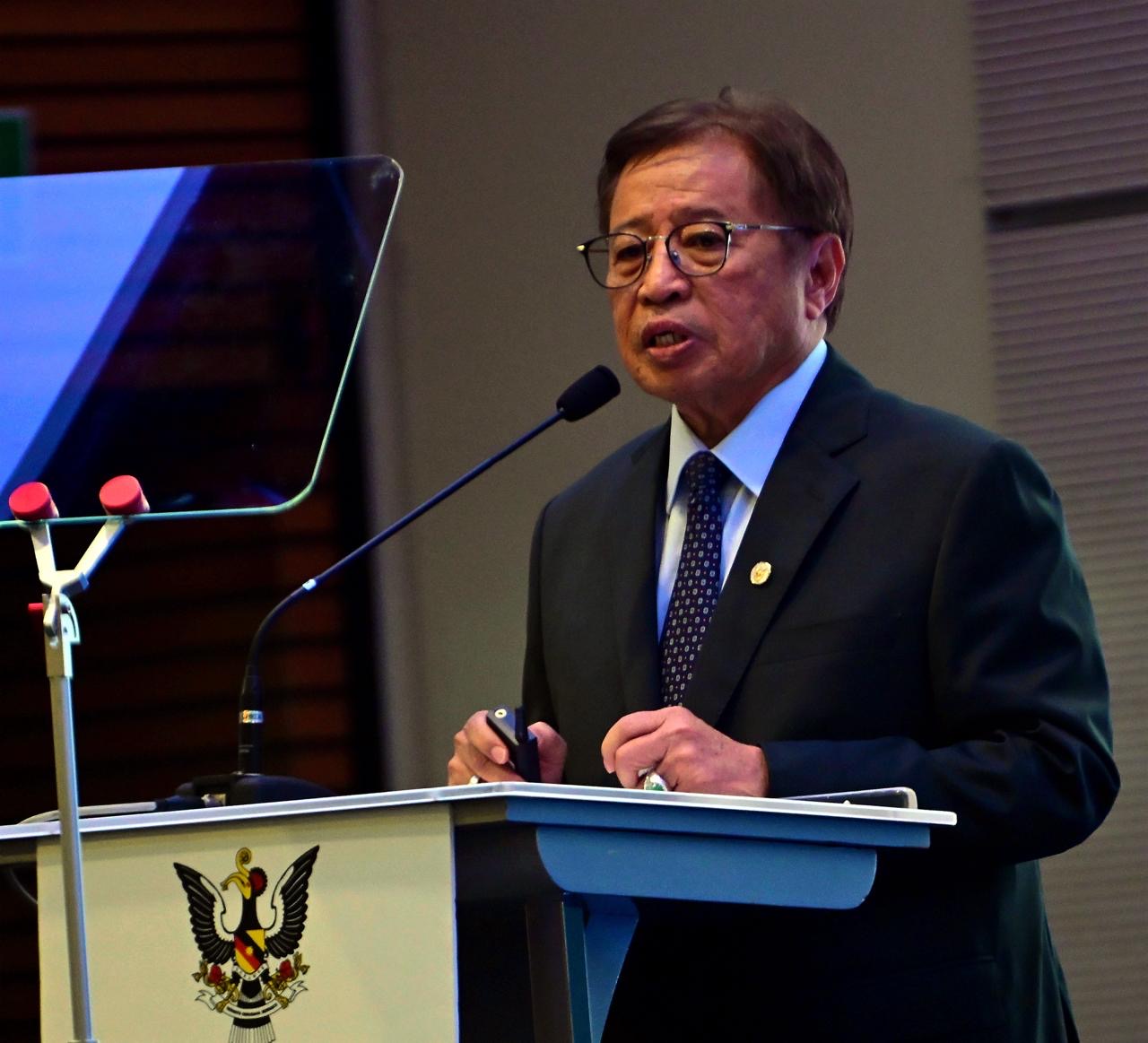
Premier Datuk Patinggi Tan Sri Abang Johari Tun Openg said the initiative goes beyond being a new industrial programme, describing it as a platform to accelerate industrial transformation, strengthen competitiveness, and position Sarawak at the forefront of the next phase of industrial growth.
He pointed out that the next phase of industrial growth will not be defined by individual facilities alone, but it will be shaped by integrated ecosystems that connect energy, industry, technology, infrastructure and talent.
“That is the purpose of Bintulu TIC – bringing together industry, government, financiers and technology partners under a common framework for industrial transformation. We believe Sarawak can be among the first movers in this new industrial era with Bintulu helping to define the future of competitive and low-carbon industrial development in Asia,” he said.
He said this during the launching ceremony for ‘Sarawak Transitioning Industrial Cluster (TIC): Malaysia First Cluster Under the World Economic Forum – Bintulu A Gateway to ASEAN’s Next Energy & Industrial Frontier’ at BCCK today (June 11).
Abang Johari said Bintulu was chosen because it represents the convergence of Sarawak’s industrial strengths and future ambitions.
Together with Samalaju, he said, the area forms one of Southeast Asia’s most strategic energy and industrial corridors.
“For decades, Bintulu has been at the centre of Sarawak’s industrialisation journey. It is home to one of the world’s largest LNG complexes and has long served as a gateway connecting Sarawak’s resources, industries and exports to global markets.
“Over time, that foundation expanded beyond oil and gas. Through the Sarawak Corridor of Renewable Energy (SCORE), we invested in the infrastructure, energy capacity and industrial ecosystem needed to attract new industries and diversify our economy,” he said.
Abang Johari pointed out that the development of Samalaju was a key part of that strategy, and today Samalaju hosts major energy-intensive industries, including aluminium, ferroalloys, petrochemical and advanced manufacturing.
Powered by Sarawak’s renewable energy resources, he said Samalaju has evolved into one of Southeast Asia’s most significant industrial growth centres.
“Together, Bintulu and Samalaju represent decades of investment, industrial capability and infrastructure development. Through SCORE alone, Sarawak has attracted approximately USD20 billion in investments, creating one of the region’s most significant industrial corridors.
“Bintulu’s low-carbon transformation is rooted in strong policies which also enable technology deployment and strategic partnerships. Few regions in Southeast Asia possess this combination of strategic location, energy resources, industrial scale and growth potential.
“In many ways, Bintulu represents the success of Asia’s industrialisation story but it can also represent its future,” he added.