Beyond its ancient streets, tea fields, and silk traditions, Hangzhou’s rich heritage reminds us that not every journey is about rushing ahead. For the writer, it is one that taught her to pause, breathe, and appreciate the moment.
A walk through serenity and history
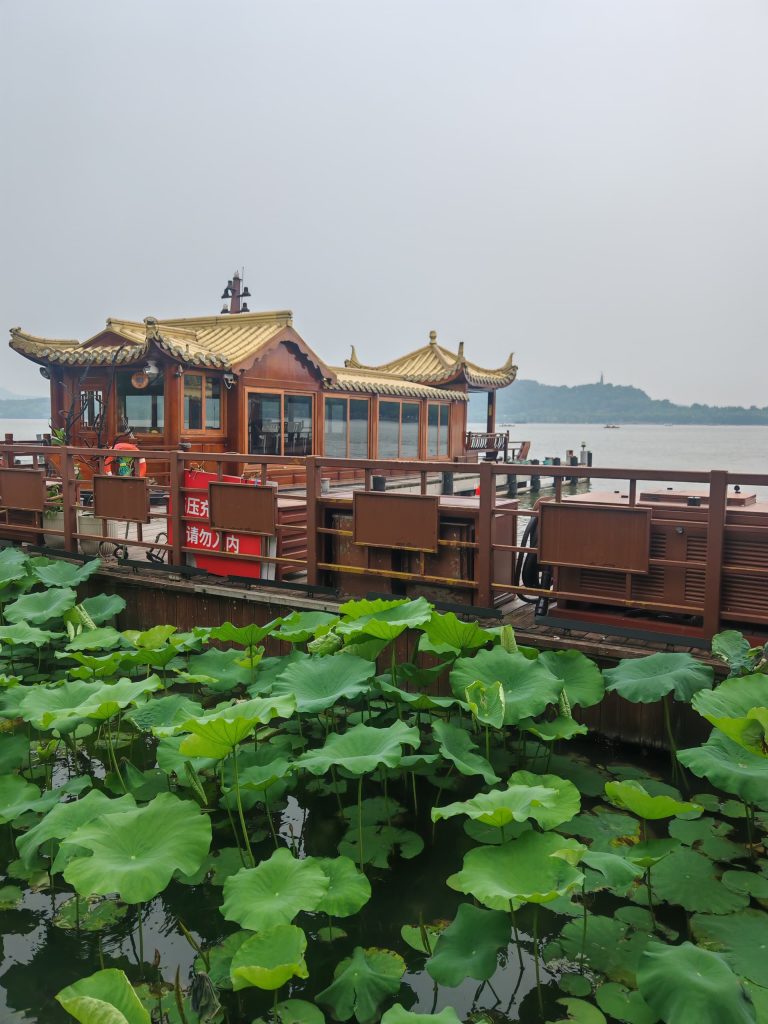
THE breeze in the late spring of Hangzhou in Zhejiang province is cool and calming. Accompanied by the misty weather amidst the lush greenery, the city exudes a gentle invitation, a demeanour that calms the soul.
And one evening, just by the riverbank of West Lake Park, a man casually lay on the bench for an hour or so – just listening to the slow gush of the water, and enjoying the wind ruffling through his hair.
Hangzhou is indeed different from the metropolitan cities that I’ve visited in China, though I have yet to see many more cities. But the slow pace and greenery of the city reminded me so much of Sarawak. From the scenery to the history of the place, Hangzhou’s ancient stories run deep within the canals, the architecture, and the trees.
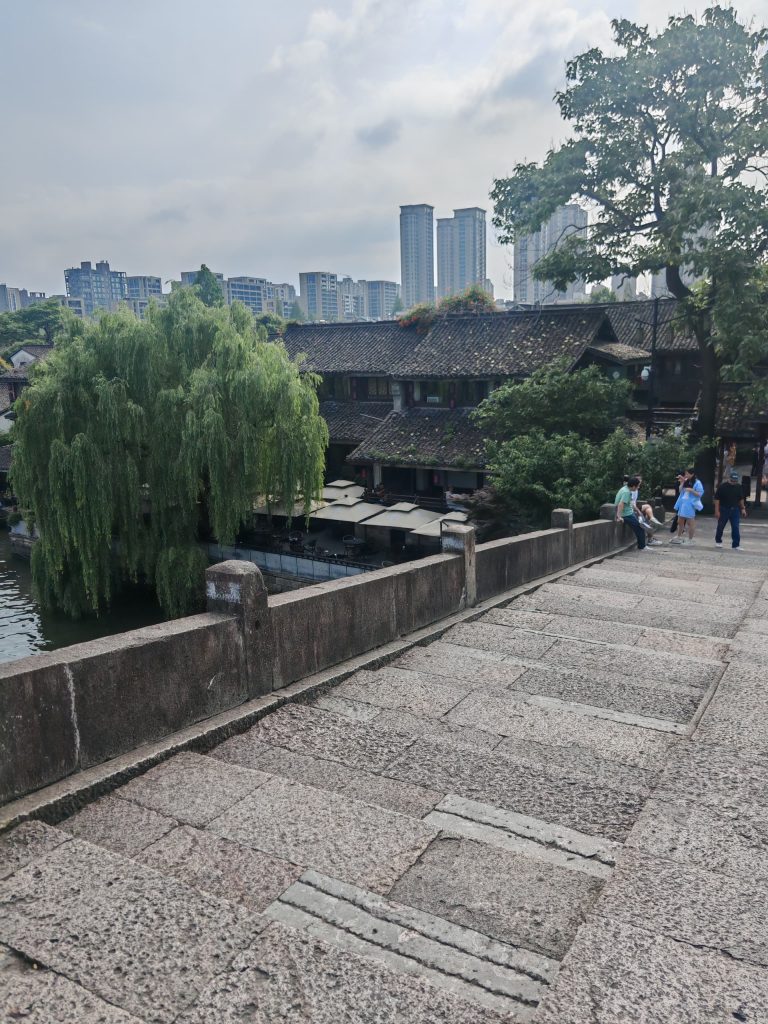
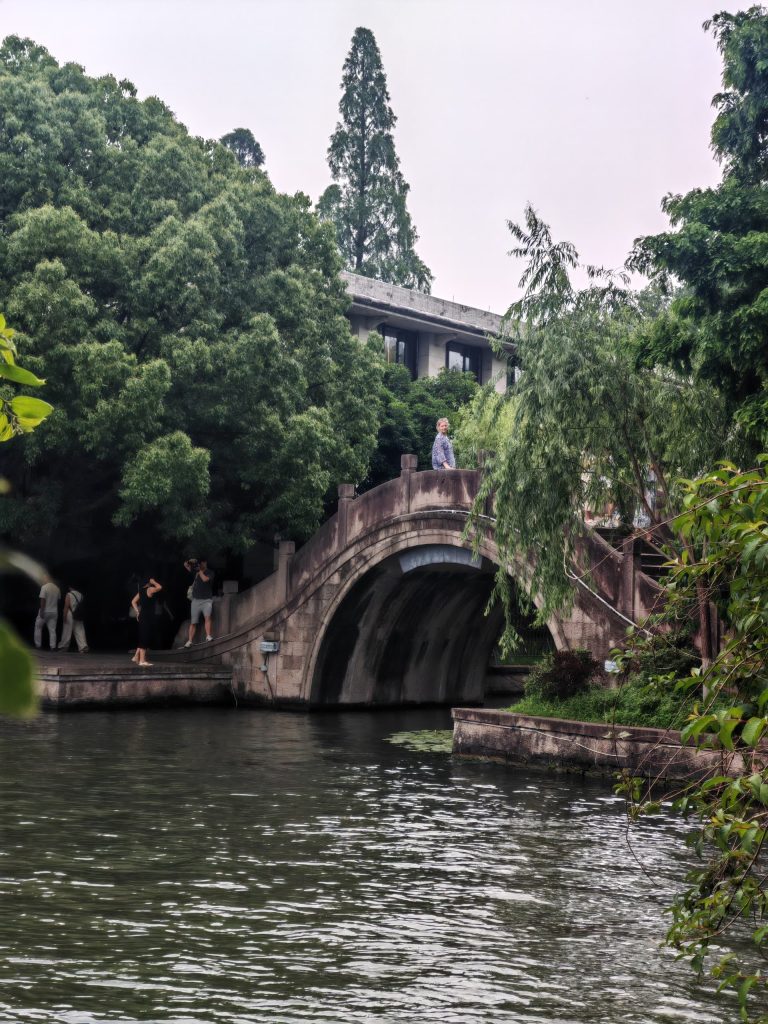
Maintaining as much as it could, the city, whose history spans over 5,000 years, evolved from a Neolithic settlement into the ancient capital of the Southern Song Dynasty. Of the many historical vantage points that Hangzhou holds, one of the prominent ones is the Gongchen Bridge.
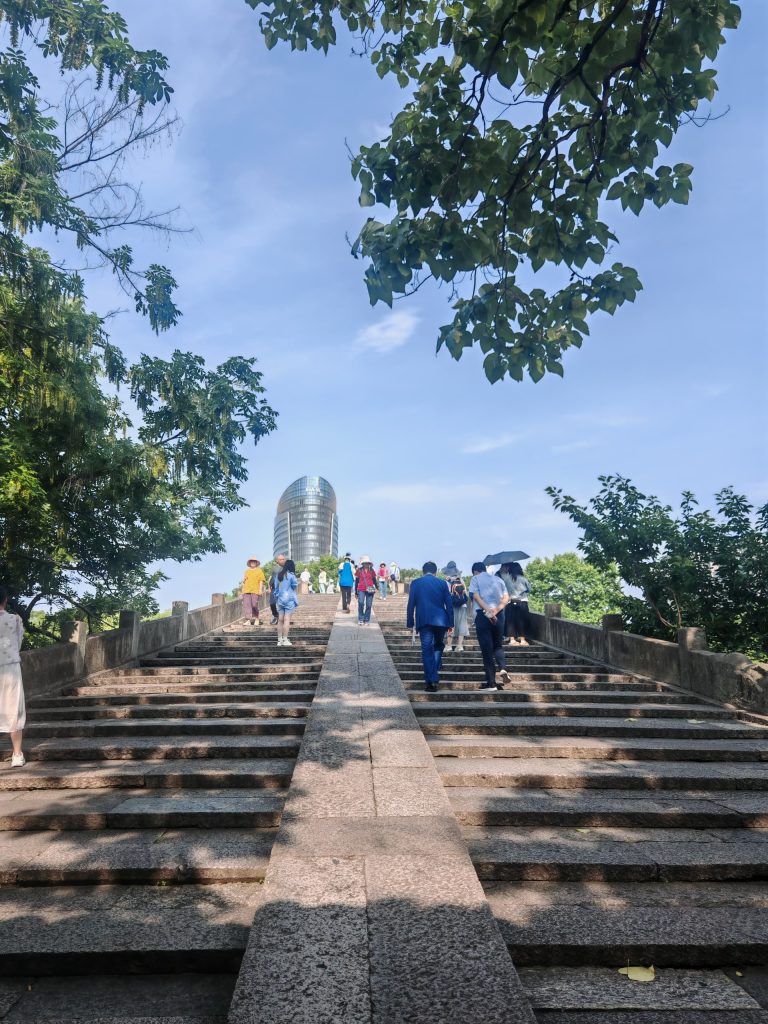
Set in Gongshu District of Hangzhou, the bridge is the starting point of the southern section of the Beijing-Hangzhou Grand Canal. In ancient times, it was an important transportation hub in China, having shipped military provisions, rice, raw materials, and commercial goods.
Today, it remains part of the longest artificial waterway in the world, stretching roughly 2,700 kilometres and holding the status of a UNESCO World Heritage Site. Standing atop the bridge, one could see the waters stretching beyond the horizon, imagining what could be after it was built during the Ming Dynasty.
Rich in heritage
Much of Hangzhou today remains, with tea, porcelain, and silk still highly celebrated as part of its arts and culture. Matched with its picturesque settings, it is no wonder the city is dubbed “heaven on earth” for its beauty and charm.
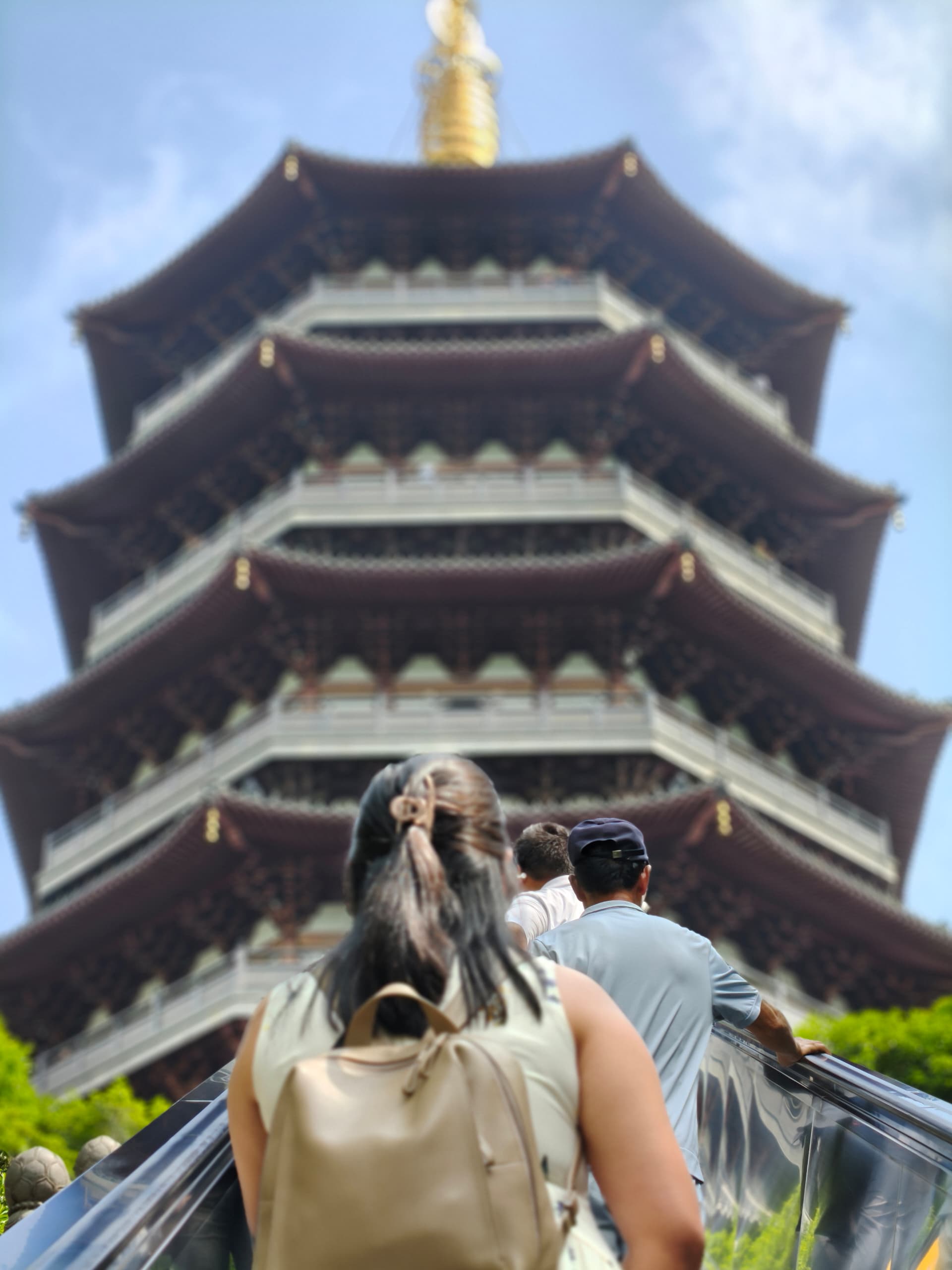
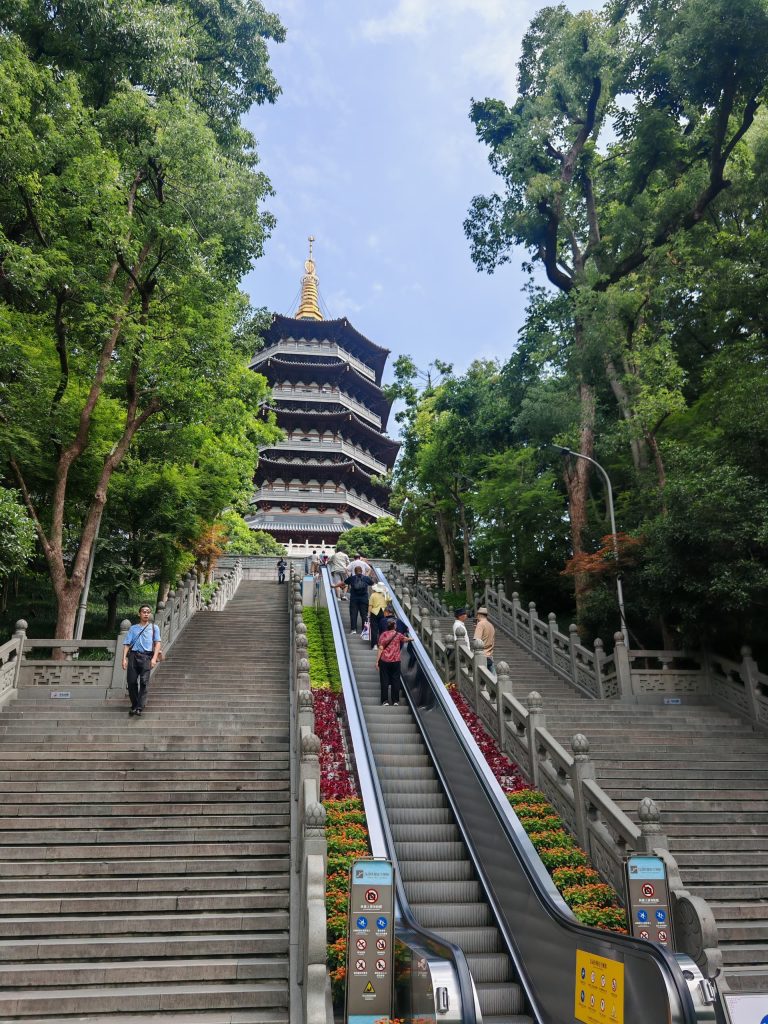
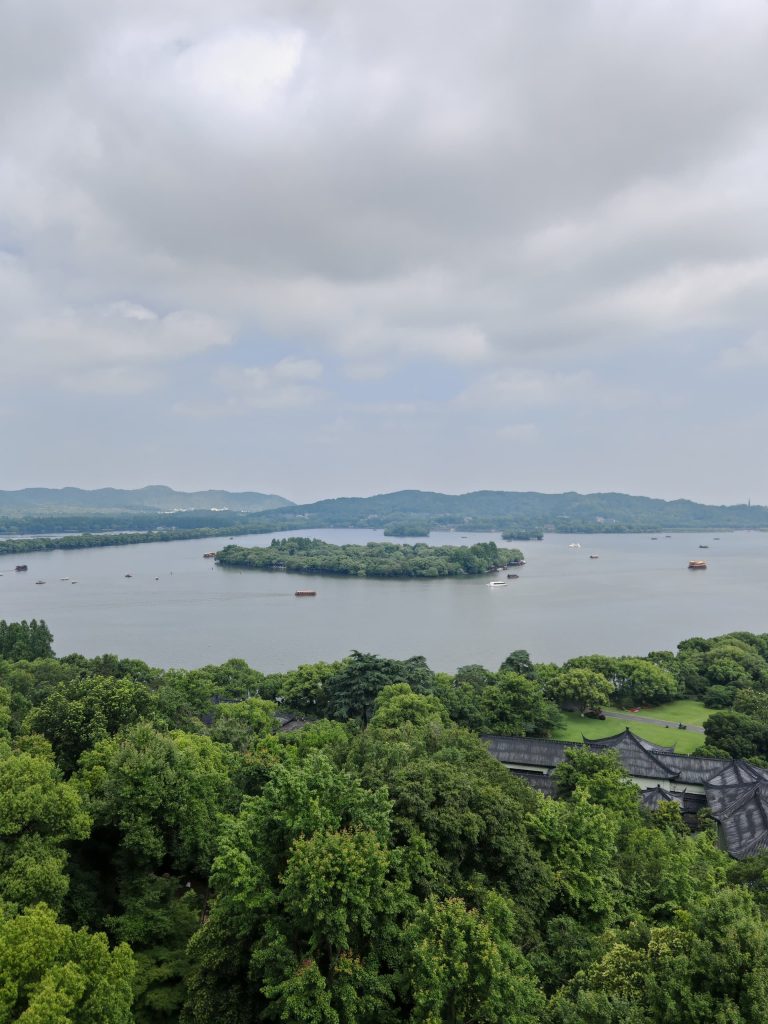
Of the many “beauties” we visited, we stepped into the majestic five-storey Leifeng Pagoda, a historical architecture that forms the backdrop of West Lake. Though the original pagoda collapsed in 1924, it was reconstructed in 2002, with its remains kept and preserved within.
At the top of the pagoda, the view of the city was a spectacle. West Lake, and the city’s temples and streets were visible, like a Chinese painting in real life. It is a beautiful merge of nature and architecture — a charm that is Hangzhou.
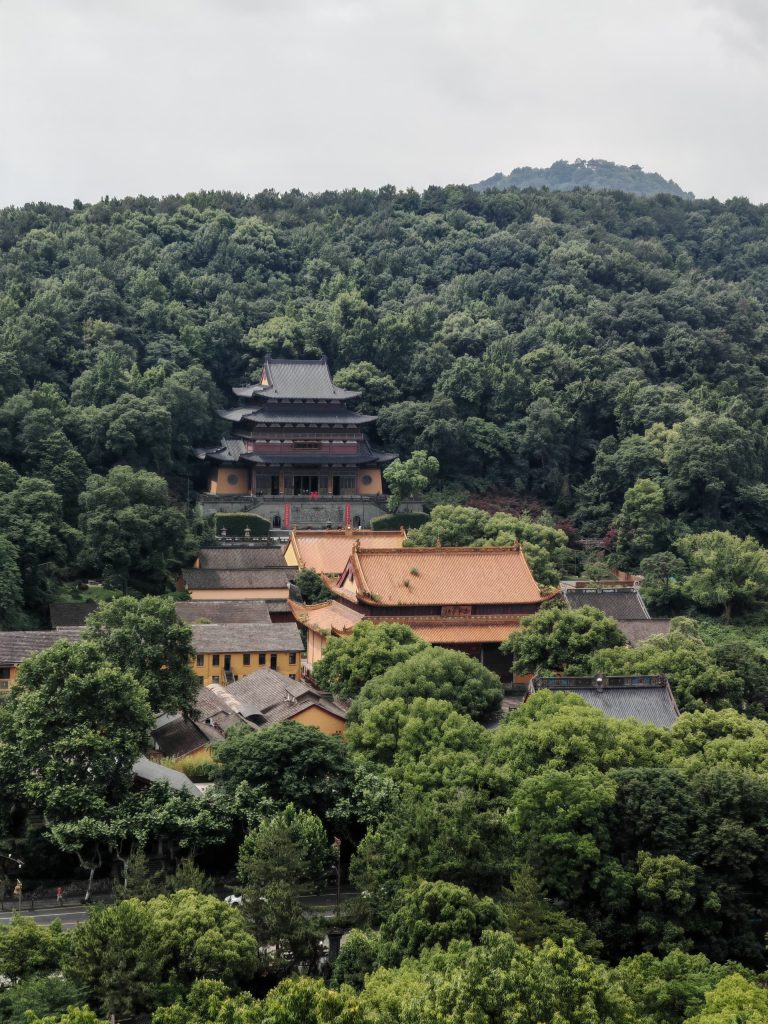
With tea farms spread across the city, its famous Longjing (Dragon Well) tea is highly sought after. The freshness of the green tea leaves when brewed provides a nutty, roasted chestnut flavour profile combined with a refreshing aftertaste.
One could even pluck their own tea leaves at several plantations there. A slow and relaxing time of plucking them, and later enjoying the tea brewed, is a reminder that we do not always have to chase after and rush through everything. Sometimes, just taking things one step at a time is good too.
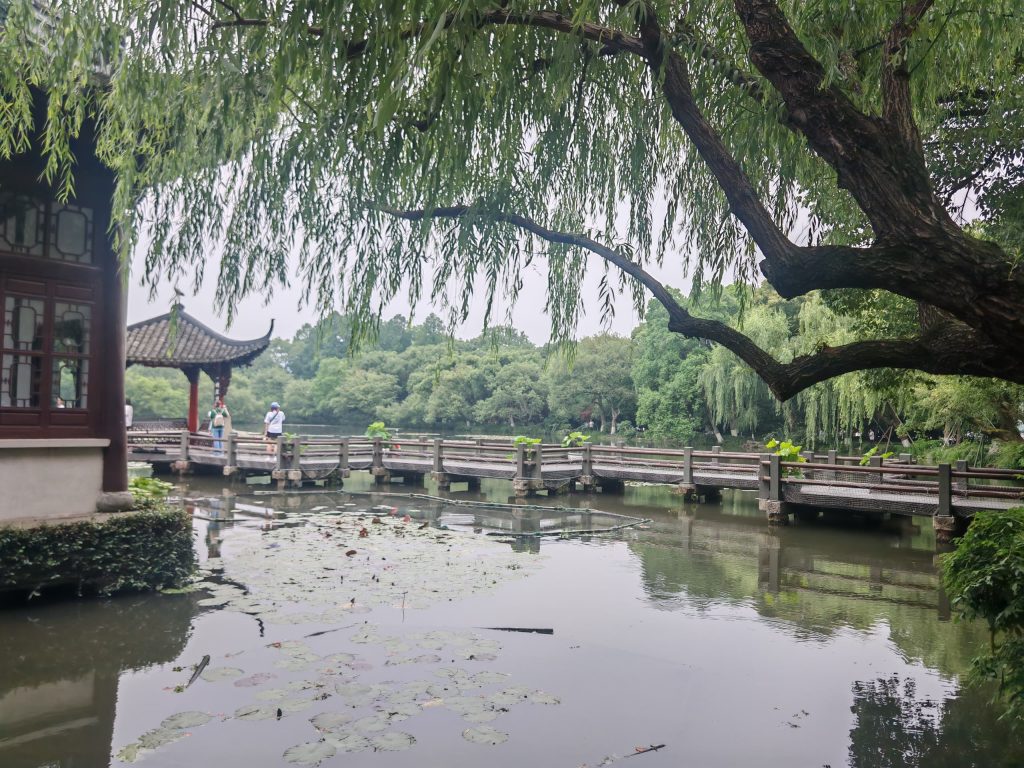
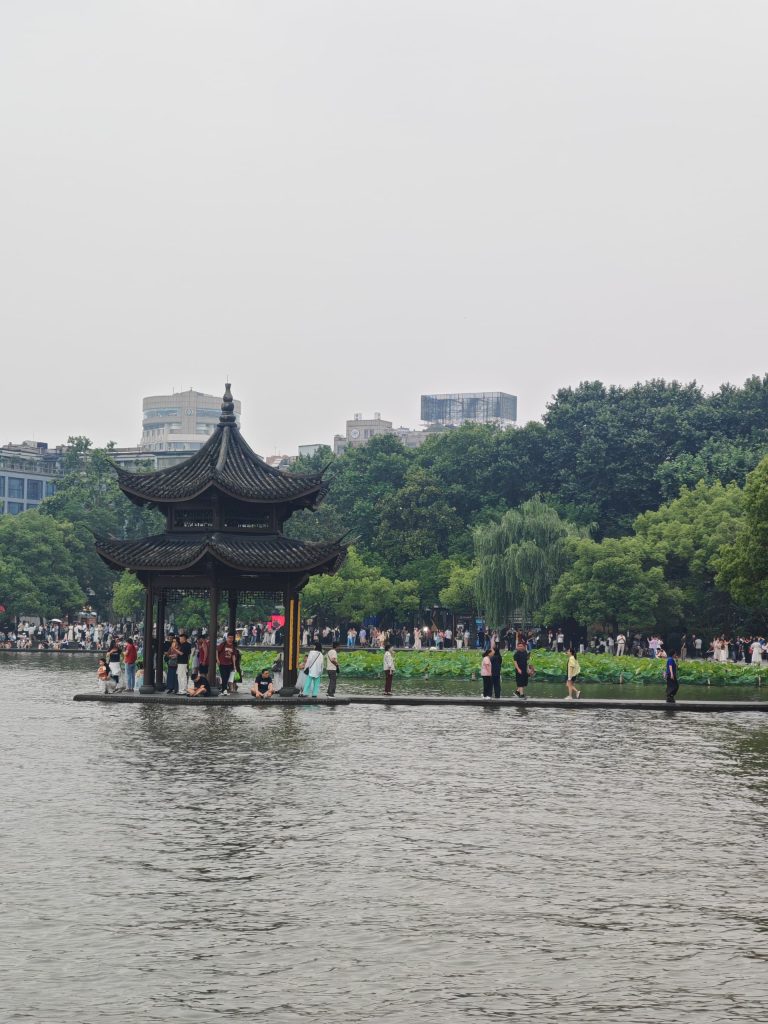
And that is what I mostly felt in the city. We don’t always have to have everything in one go. Just like a stroll in West Lake, enjoying the sounds of chatter, and the dance acts by the elderly, mingling carefree.
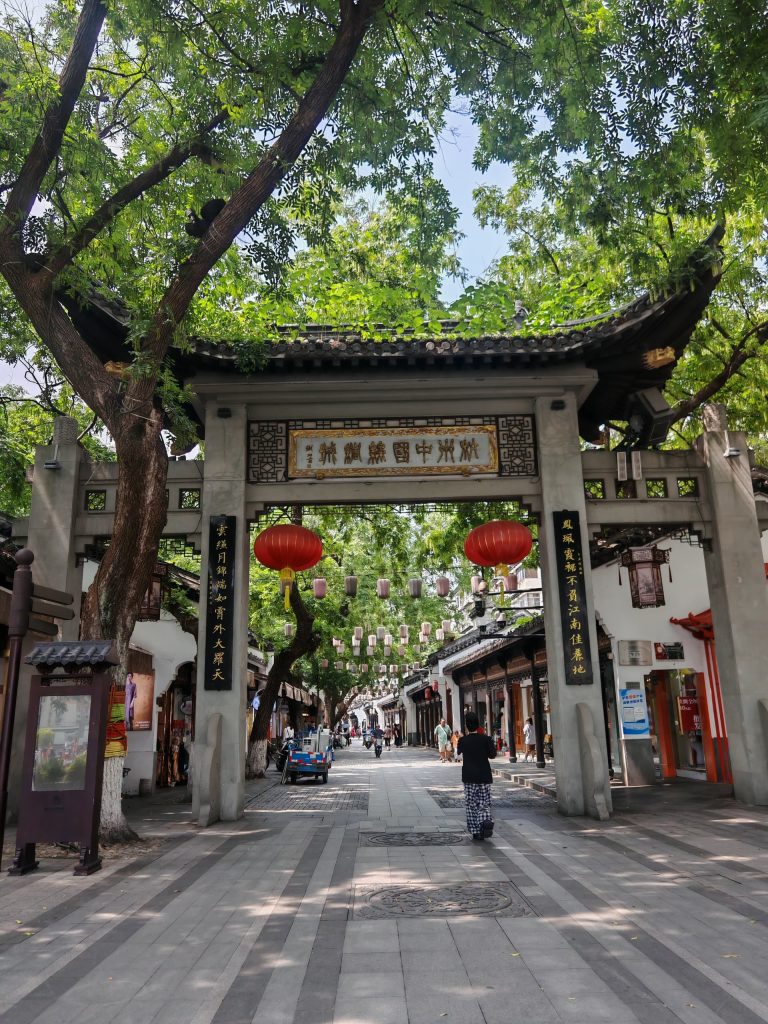
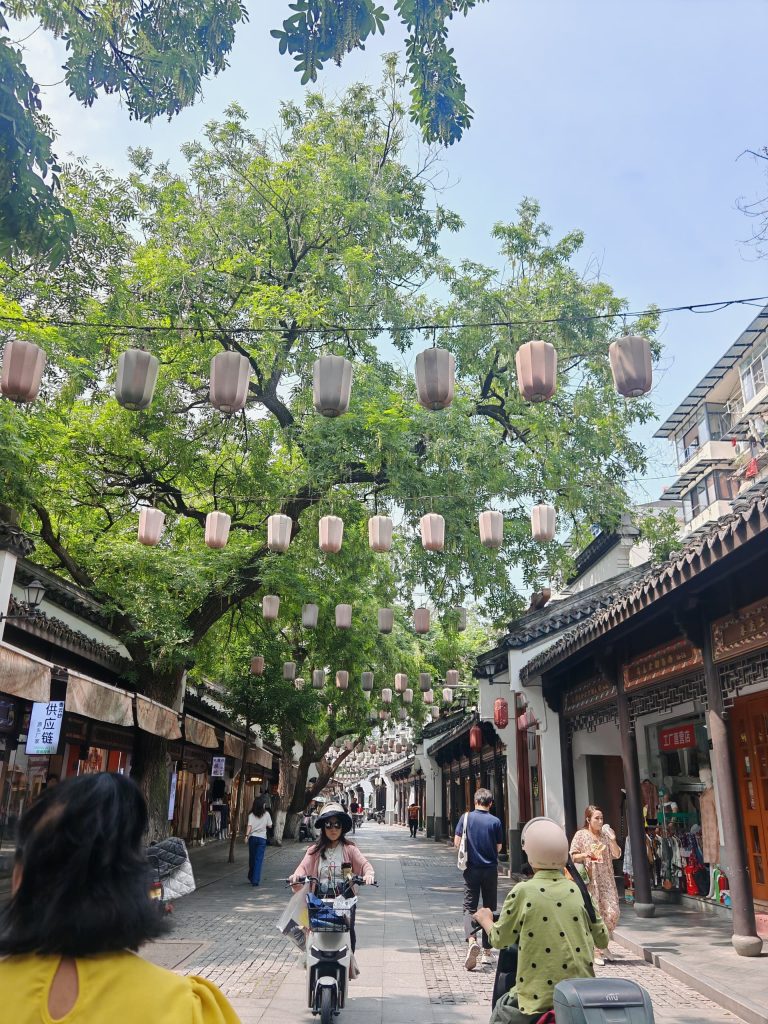
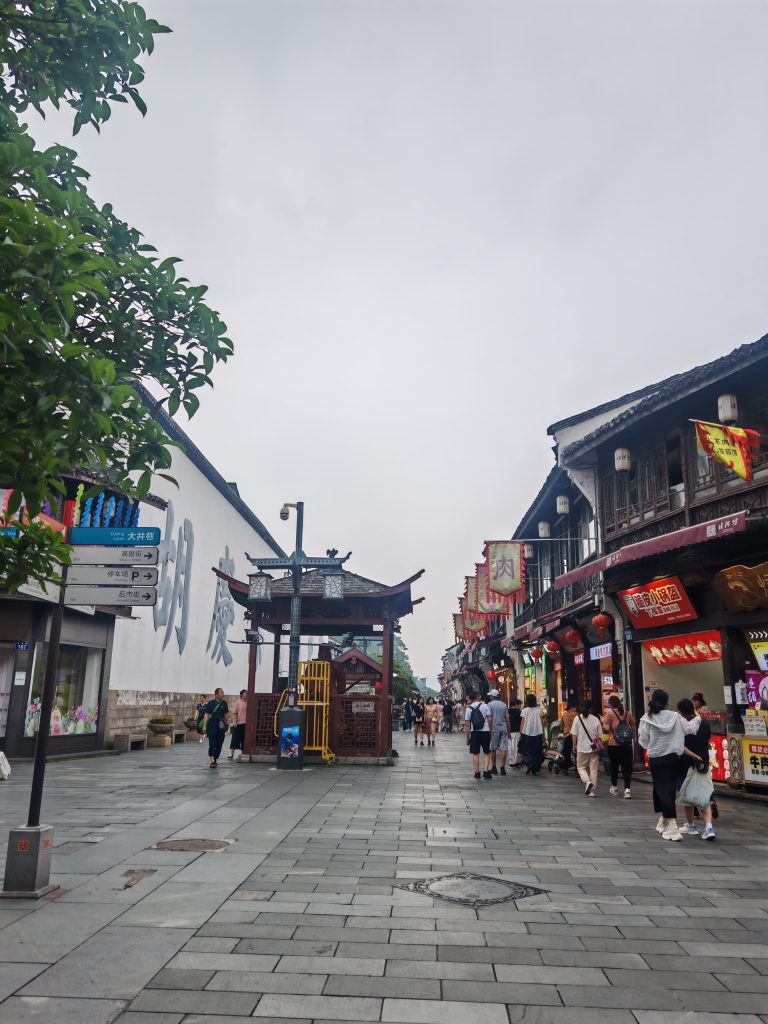
At Hefang Street, it was the same. The pedestrian street has a bustling nature, with locals offering the traditions and customs of the city. There, it felt like a well-kept historical picture where the buildings are preserved from the Song Dynasty and the Ming-Qing Dynasties. With traditional teahouses, street performers, and local markets, there is plenty to see.
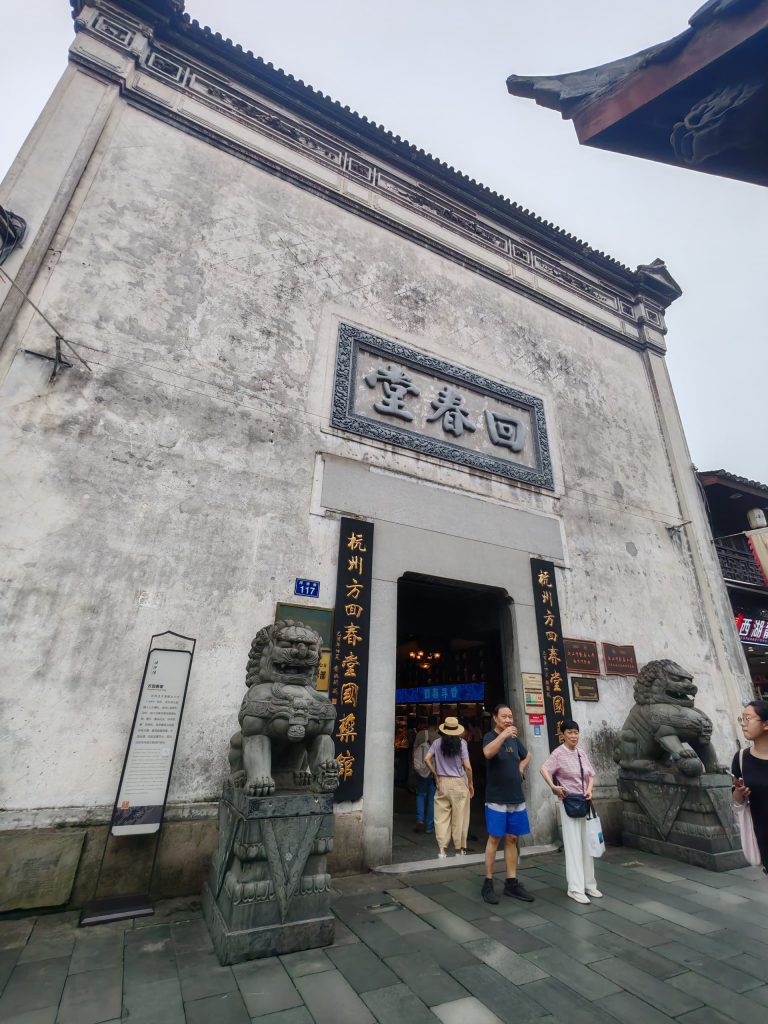
Across the many shops, there are several silk sellers and Longjing tea sellers, and you would be spoilt for choice. But in between these shops stands Hu Qing Yu Tang, a traditional Chinese medicine (TCM) pharmacy and museum.
The complex spans 3,800 square metres and is a well-preserved traditional Jiangnan-style architecture. Inside, it functions as a working pharmacy, offering TCM medication and a public museum displaying an array of herbs and ancient medicine.
The pharmacy also offers us hot brewed concoctions said to be able to cool down the body after a long walk. Meanwhile, the displays in the museum teach the purpose of each plant used in TCM. From the highly sought-after ginseng herb to traditional medicinal fungi — tiger milk mushroom — Hu Qing Yu Tang deepens our knowledge and insight into TCM.
Not far from Hefang Street is the Hangzhou China Silk Town — a stretch of street that sells everything silk. Though each shop may repeat the ones before and prices may vary, it is still interesting to see the rows of silk fabric displayed.
Soft, flowy and silky – the prices range from as cheap as 79 RMB to a five-digit price tag. Though some of the silk there may be mixed with polyester, the colours of each are refined and the choices are aplenty. My only regret is that I didn’t spoil myself by buying more.
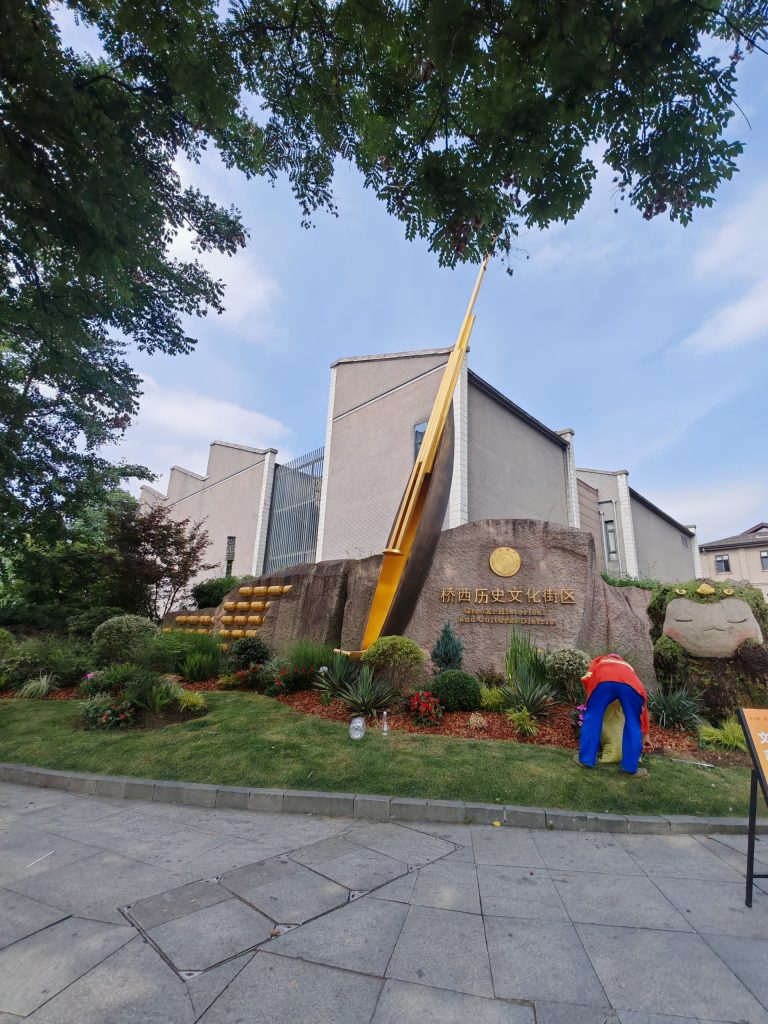
And because Hangzhou’s specialty lies in its silk, visiting the Dujinsheng Silk and Brocade Museum introduced us to the traditions behind the fabric — from the showroom and raw material preparation workshop to the silk production workshop. It was an eye-opening experience that offered a deeper appreciation of the city’s rich silk heritage.
Heaven on earth
Returning home, I would still miss the calming breeze that hit my skin – the coldness that brushed through. With the smell of nature and the sight of well-preserved architecture, the city is indeed deeply rooted in its culture and heritage. What stood out prominently for me was the balance between the old and the new, a sense of tranquillity while quietly telling stories of centuries ago.
Perhaps that is why Hangzhou leaves a lasting impression. As the mist settles over West Lake, in its quiet corners, ancient streets and gentle rhythms, it reminds us that sometimes the most memorable journeys are not those that rush ahead, but those that invite us to pause and linger a little longer.
Like the man resting by West Lake, listening to the gentle movement of the water, Hangzhou reminds me that there is beauty in simply being present.