KUALA LUMPUR: Medals may fade, but fighting spirit is the legacy that matters most.
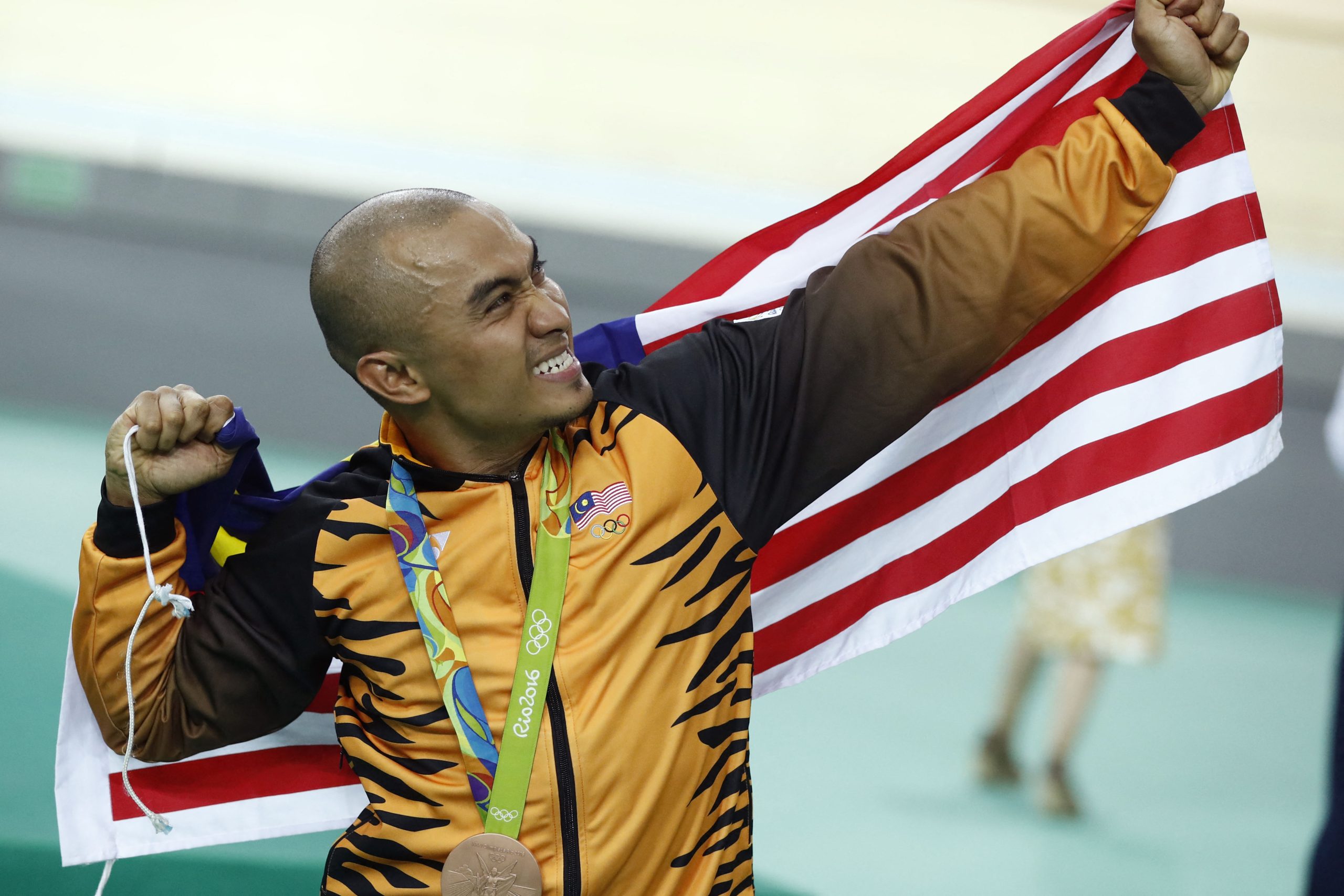
National track cyclist and CIMB Brand Ambassador Datuk Azizulhasni Awang said titles, podiums and Olympic medals may be temporary, but the resolve behind his journey is what he hopes Malaysians will remember him by.
His career has taken him from a modest childhood to the world stage, but he said the meaning of that journey lies in more than the races he has won.
It is also about what he had to overcome.
“I have been through a lot of setbacks and obstacles in my career.
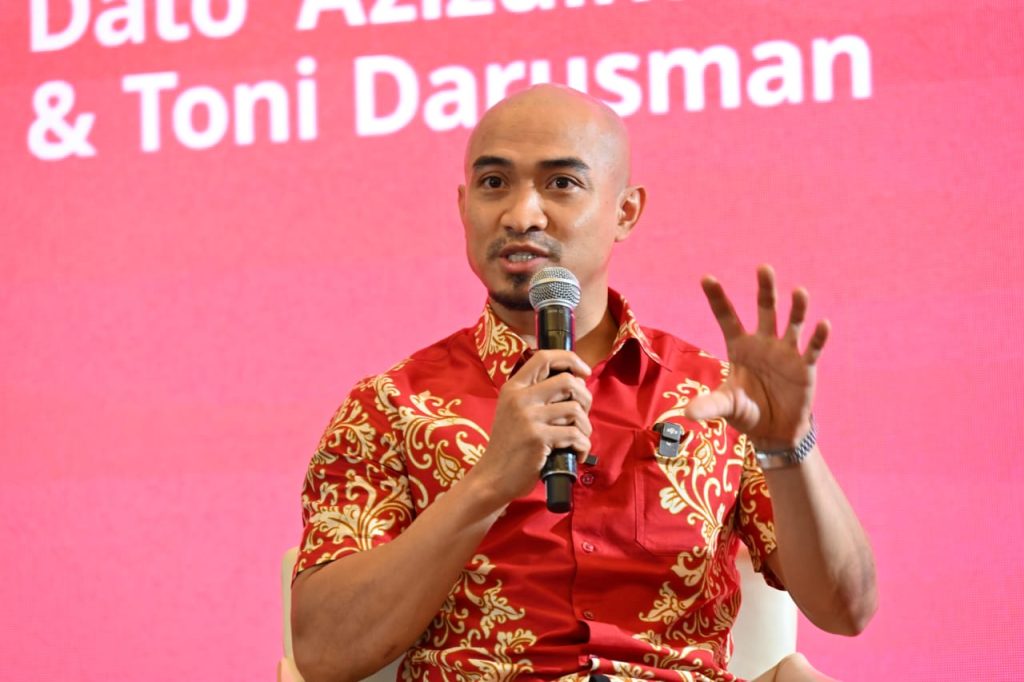
“Injuries, crashes and personal matters as well. Many things. But I never, never gave up,” he said during the Fireside Chat with Datuk Azizulhasni Awang and Toni Darusman programme at Menara CIMB here.
The attitude was formed long before the velodrome, the world rankings and the pressure of major competitions.
A dream begins on two wheels
He described himself as a kampung boy from Dungun, Terengganu, an active child who loved the outdoors and took part in many sports at school.
Cycling entered his life when he followed his elder brother to join a local mountain bike club.
The interest came first. The equipment came much later.
“We couldn’t afford to buy a proper mountain bike actually. So I just used the bike that I rode to school, just a normal bike,” he said.
Other riders came with proper suspension and tyres, while Azizulhasni turned up with a school bicycle, ordinary shoes and, at times, slippers.
The difference was obvious, but it did not stop him from returning.
“I’m lucky because I found something that I love. I know this is something that I want to do,” he said.
At that point, the dream was still simple.
Azizulhasni said at that age he was not thinking about becoming a world champion or an Olympian.
“At a very young age, I already said to myself, I want to become a national cyclist one day.
“Just a national cyclist. Not world-class, not Olympic or anything, but just a national athlete,” he said.
To get closer to that dream, he learned to work with what he had.
He shared that he worked with his uncle at a shop to earn extra money, saved his Raya money and studied hard after his mother promised him a reward for good examination results.
Those early efforts became part of the way he approached sport.
“I don’t find excuses. Instead, I find a way to make my dream come true,” he said.
The World Cup crash that defined him
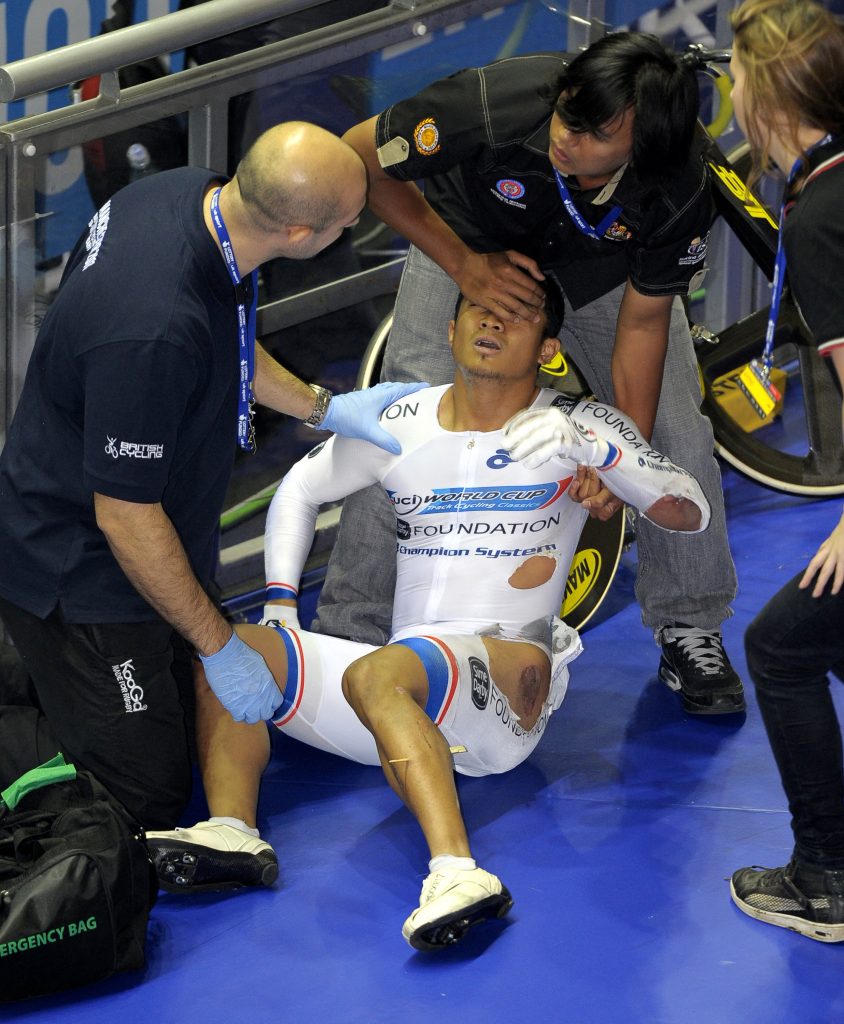
Azizulhasni is treated by a medic after crashing and suffering a leg wound in the Mens Keirin Final during the second day of the fourth round of the 2011 UCI Track Cycling World Cup Classics at the Manchester Velodrome in Manchester, north-west England, on February 19, 2011. Photo by Andrew YATES / AFP
Years later, that same mindset was tested in one of the most painful moments of his career.
In Manchester in 2011, Azizulhasni was competing in the final World Cup before the World Championships.
He was then world number one and needed to finish at least in the top four to retain that ranking.
Before the race began, the target was already fixed.
“I want to maintain and remain world number one. That’s it in my mind. That is the goal,” he said.
The race took place on a 250-metre wooden velodrome track where riders competed at high speed.
He said track cycling leaves little room for error because the bicycles do not have brakes.
“For track cycling, we don’t have brakes.
“So it’s either you try to move away and avoid a crash, or you crash together,” he said.
Near the end of the race, a Spanish rider crashed in front of the field.
The fall triggered a pile-up, bringing down several riders, including Azizulhasni.
He remembered the noise, the screams and the chaos around him, but once his coach reached him, his response was immediate.
“My coach came to me and I said to him that I want to finish the race. He brought me out. I rode my bike and finished the race,” he said.
Only after crossing the line did he realise how badly he had been hurt.
A 20cm wooden splinter had pierced through his calf.
Despite the injury, he still finished third.
He recalled that he was unable to attend the podium ceremony because he had to be rushed to hospital, but the result was enough to keep him as world number one.
For him, Manchester became more than a dramatic racing incident.
It became proof of what he wanted to show as a Malaysian athlete.
“I showed and proved to the world that Malaysians do not give up. Whatever happens, crash or splinter, they still continue and finish the race,” he said.
The fight was not limited to crashes or injuries.
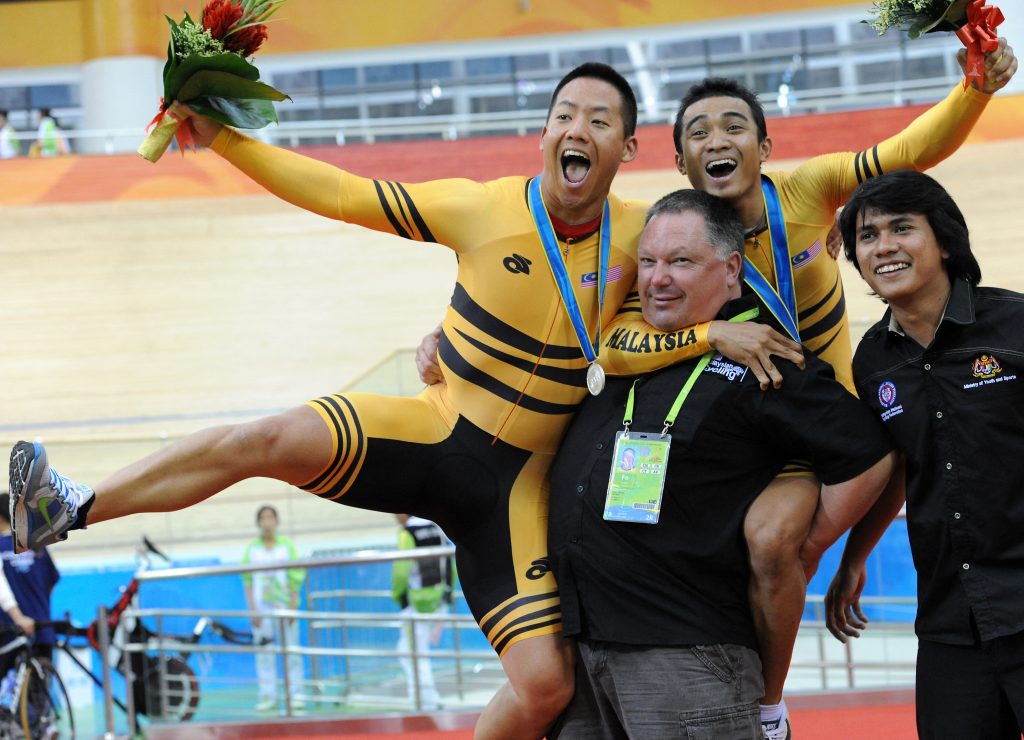
Azizulhasni (second right) of Malaysia celebrates with fellow national Olympian Josiah NG (left) and their Australian coach John Beasley after winning the top podiums for the men’s keirin cycling final at the 16th Asian Games in Guangzhou on November 17, 2010.
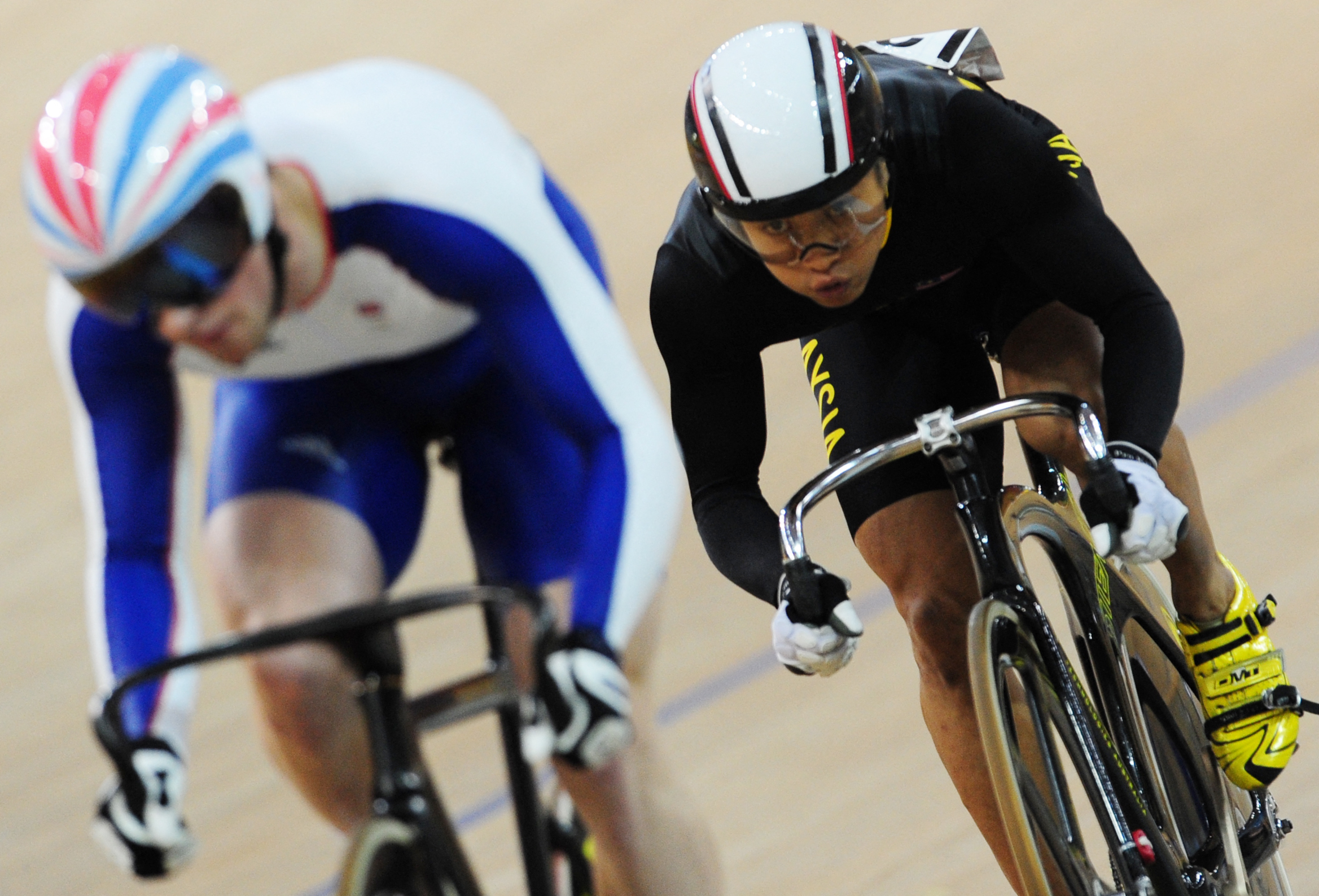
He said he has also had to compete against physical odds in track sprint, where many of his opponents are taller, heavier and more muscular.
Many weigh between 80kg and 90kg or more, while he stands at about 166cm and weighs around 70kg.
Instead of seeing that gap as a reason to step back, he treated it as a challenge to solve.
“I’m competing with the giants, the Europeans, but it doesn’t stop me. I know that I have a lot of weaknesses, but they are not excuses,” he said.
“When you want it, you will find a way to win and achieve success.”
More than medals
As his career developed, the meaning of success also changed.
In the early years, he said his focus was personal.
When he first entered sports school, he had a list of goals he wanted to achieve, from the SEA Games to the Olympics.
At that stage, sport was about crossing one target after another.
But over time, he began to see that his victories could carry meaning for others.
Young athletes, children and parents would approach him after competitions and tell him they were inspired by his achievements.
Some parents told him they wanted their children to follow a similar path.
“Those moments are more meaningful than the gold medal itself. And it totally changed my perspective,” he said.
From then on, each race became about more than chasing another title.
It became a chance to show people that difficult beginnings, physical limitations or painful setbacks do not have to decide the ending.
Kita Bagi Jadi
The same message sits behind the ‘Kita Bagi Jadi’ spirit, which he said speaks not only to athletes, but to anyone facing personal challenges.
“It’s about us going through life’s challenges, to keep fighting and keep chasing the dream,” he said.
That belief became even more personal after the Paris Olympics.
Azizulhasni said he was semi-retired after Paris and described the period that followed as one of the lowest points of his life and career.
He remembered feeling empty after the race and needing someone to talk to.
“It was the lowest point in my life, not just personally, but also in my career,” he said.
Nevertheless, he said CIMB stood firmly behind him during that time.
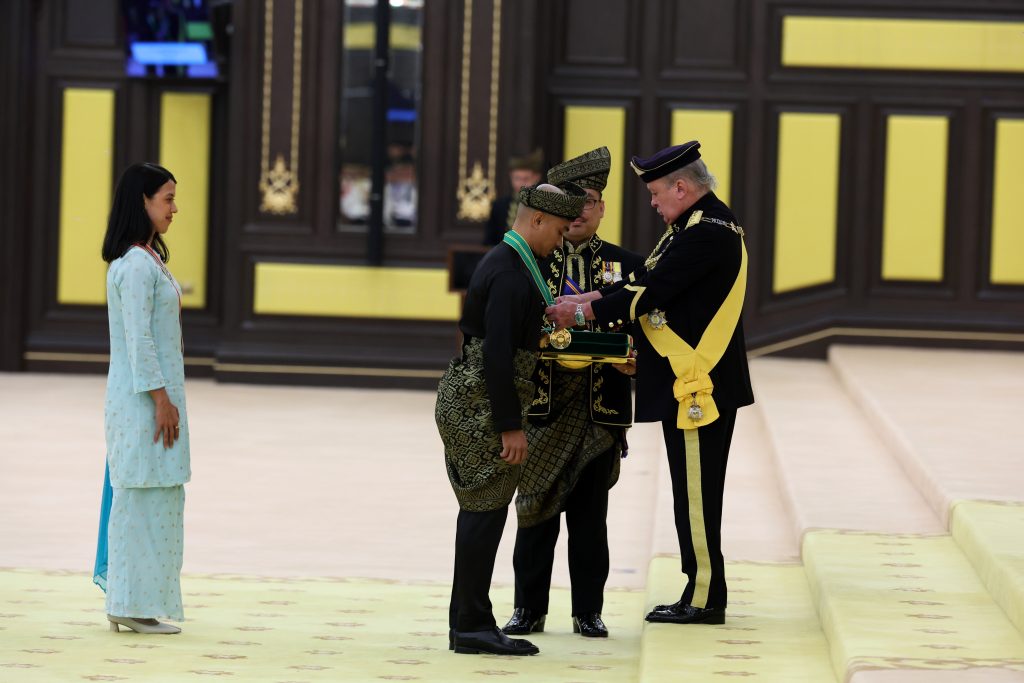
The Pocket Rocketman (left) became only the third Malaysian athlete to receive the Darjah Bakti award from His Majesty Sultan Ibrahim, King of Malaysia, after sporting legends Datuk Lee Chong Wei and Datuk Nicol David. Photo: BERNAMA
For a high-performance athlete, support is important because the demands of sport are immense, from training and equipment to travel and preparation.
But the partnership, he said, went beyond financial backing.
“CIMB did not just support me financially, but also in many other ways.
“For example, how to develop myself. I learned a lot throughout the 10 years,” he said.
Through CIMB programmes, he was also involved in outreach initiatives, including efforts with B40 families.
Those experiences helped him see sport as something that can give hope beyond the competition arena.
“For me, it taught me that sport is not just about achieving a gold medal.
“It’s not just about winning and losing, but it’s also about giving hope and helping others,” he said.
That is why he values loyalty most when the outcome is painful, not when the result is celebrated.
Azizulhasni said support is easy to find when an athlete is winning.
The real test comes when the athlete is trying to recover from defeat, uncertainty or disappointment.
“To support when you are winning or when you succeed, everyone can do that.
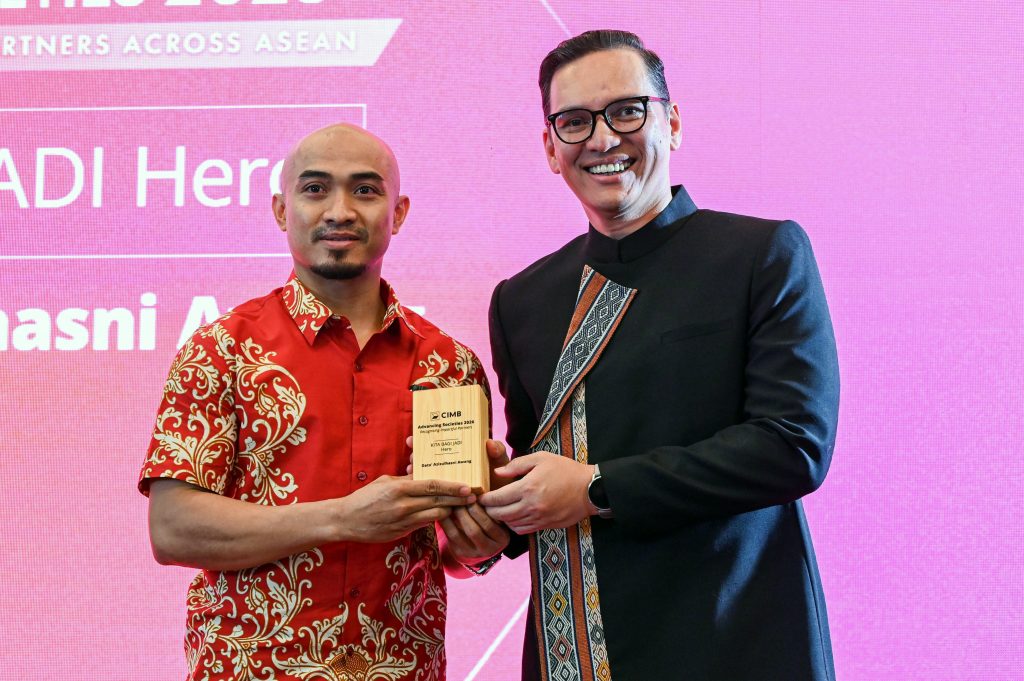
Azizulhasni (left) receives the CIMB Advancing Societies Recognition Award from CIMB Group Chief Brand and Marketing Officer Toni Darusman (right) during the launch of the Moving You Forward Campaign. Photo: BERNAMA
“But to support someone when they are losing or at their lowest point, only a special bunch can do that,” he said.
As he looks at what his career should stand for, he said he does not want people to remember only the medals, titles or Olympic results.
Those achievements are part of the journey, but not the whole story.
For him, the deeper message is that a kampung boy with a school bicycle can keep finding a way, even when the road becomes heavier than expected.
“I want people to remember my fighting spirit. The spirit of never giving up,” he said.