By Soon Li Wei
KUALA LUMPUR: Malaysia’s ambition to become Southeast Asia’s leading data centre hub is gaining momentum, with global technology giants such as Google, Microsoft, Amazon Web Services (AWS) and Oracle committing billions of ringgit in investments as demand for artificial intelligence (AI), cloud computing and digital services continues to surge.
At the same time, the country has pledged to achieve net-zero greenhouse gas emissions by 2050 and increase the share of renewable energy (RE) in its electricity generation mix to 70 per cent under the National Energy Transition Roadmap (NETR).
For now, those two ambitions appear to be pulling in opposite directions.
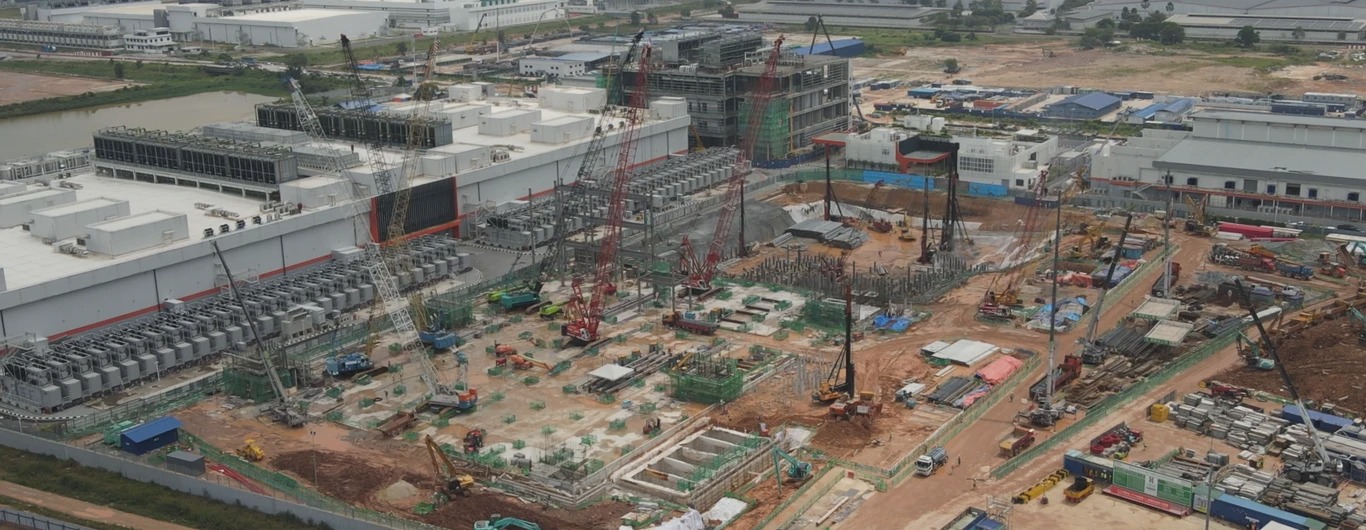
According to Baxtel, a data centre research platform, Malaysia has 125 operational data centres as of this year, with 36 located in Cyberjaya, 29 in Johor Bahru and 25 in Kuala Lumpur.
Smaller clusters are found in Shah Alam, Bayan Baru and Kuching.
Global real estate consulting company, JLL Malaysia’s second-quarter 2026 report projected that Malaysia’s data centre capacity will more than double to 2,055 megawatts (MW) by year-end, positioning Johor as one of the fastest-growing data centre markets in the Asia-Pacific (APAC) region.
The rapid expansion has raised concerns over whether the country’s power system can keep pace with soaring electricity demand without compromising long-term decarbonisation goals.
Prime Minister Datuk Seri Anwar Ibrahim acknowledged the challenge during Tenaga Nasional Bhd’s (TNB) Energy Transition Conference on June 4, while highlighting AI’s potential to accelerate the energy transition.
He said AI could improve grid efficiency, enhance renewable energy forecasting and optimise industrial energy consumption.
However, he cautioned that the growth of AI and data centres must not outpace the sustainability ambitions they are expected to support.
Accelerating the energy transition
While data centres are increasingly viewed as critical infrastructure for the digital economy, they are also among the world’s most energy-intensive facilities, requiring vast amounts of electricity to power servers, cooling systems and round-the-clock operations.
According to Ember’s 2025 report, ‘From AI to Emissions: Aligning ASEAN’s Digital Growth with Energy Transition Goals’, electricity demand from data centres could account for up to 30 per cent of Malaysia’s total power consumption in the coming years.
Emissions linked to the sector are also projected to rise significantly across the region if renewable energy deployment fails to keep pace.
The concern comes as governments across ASEAN race to expand renewable energy capacity through large-scale solar projects, battery storage systems and regional initiatives such as the ASEAN Power Grid, which aims to facilitate cross-border electricity trade and unlock renewable energy resources from countries including Vietnam, Thailand and Cambodia.
For Malaysia, the debate is no longer whether to welcome data centre investments, but whether the country’s energy transition can advance quickly enough to support the sector’s rapid growth while remaining on track to meet its climate commitments.
Ajita Mishra, Head of Market Development at climate technology non-profit TransitionZero, said the rapid expansion of data centres across Southeast Asia, including Malaysia, could pose a challenge to the region’s climate ambitions if renewable energy deployment fails to keep pace with rising electricity demand.
However, she stressed that data centres themselves should not be viewed as the problem, but rather how the additional demand is supplied.
“If data centre demand is met mainly through additional fossil fuel generation, it could increase emissions, place pressure on power grids and make it more difficult for countries to achieve their clean energy and climate goals,” she said in an email interview.
She added that growing electricity demand could also create competition for renewable energy resources if clean power development lags behind the pace of digital infrastructure expansion.
“Data centres can serve as anchor customers for renewable energy, energy storage and grid upgrades. They can help create demand for cleaner electricity if the right planning, procurement and grid frameworks are in place,” she said.
According to Mishra, the key issue is not whether data centre growth should occur, but whether it is integrated into the region’s broader clean energy planning agenda.
Gas as a transition fuel?
A joint report released in May 2025 by Bain & Company, Google, Temasek and industry partners projected that Malaysia may need between six and eight gigawatts (GW) of additional gas-fired power generation capacity by 2030 to support rising electricity demand from data centres.
The report estimated that data centres’ share of national electricity consumption could triple to 21 per cent by 2027 from seven per cent in 2022 as global technology companies continue expanding their digital infrastructure in the country.
Behind AI applications, cloud services and digital platforms used by millions of consumers are thousands of server racks operating around the clock.
These facilities require substantial amounts of electricity not only to power computing equipment but also to run cooling systems that prevent servers from overheating.
Increasingly, that demand is expected to be met by gas-fired power plants.
The projection raises a key question: Can Malaysia remain on track to achieve net-zero emissions by 2050 if a significant share of the additional electricity demand is supplied by natural gas, which remains a fossil fuel?
Some industry players argue that natural gas will continue to play a critical role in supporting both economic growth and the energy transition.
Mitsubishi Power’s Executive Vice-President for Global Sales and Marketing, Daichi Nakajima, said Southeast Asia’s electricity demand has traditionally been driven by industrialisation, urbanisation and economic development, but data centres have emerged as a major new growth driver.
Speaking on the sidelines of the TNB Energy Transition Conference 2026, he noted that Malaysia is expected to account for 44 per cent of Southeast Asia’s data centre power capacity currently under construction or in development, with demand projected to reach 7.7 GW by 2050.
Nakajima acknowledged the challenge of balancing energy security, economic growth and climate commitments, but argued that natural gas should be viewed as a transition fuel rather than an obstacle to decarbonisation.
“For the last 20 years, gas-fired power has provided a stable electricity supply in Malaysia. Natural gas will continue to serve this purpose because it is widely available, flexible and practical for supporting the country’s growing electricity needs,” he said.
He added that existing gas turbines can be upgraded to co-fire lower-carbon fuels such as hydrogen, while advanced gas turbine combined-cycle technology can reduce carbon emissions by up to 65 per cent compared with conventional coal-fired generation.
Nakajima said future integration of carbon capture systems and hydrogen co-firing technologies could further accelerate decarbonisation efforts, while flexible gas generation would continue to play an important role in supporting the integration of intermittent renewable energy sources such as solar and wind as ASEAN countries expand their renewable energy capacity.
Debate over natural gas
However, scientists offer a different perspective.
Professor of Process Design and Integration at the University of Nottingham Malaysia, Professor Dr Ir Dominic Foo, said natural gas may emit less carbon than coal but remains a fossil fuel and should not be regarded as a zero-emission solution.
He warned that if a significant share of Malaysia’s growing data centre industry continues to rely on natural gas, the sector could be accumulating a substantial carbon footprint that is not yet being systematically measured or reported.
Foo, who is also founding director of the Centre for Green Technologies (CEGT), said the issue extends beyond emissions and could affect Malaysia’s credibility as a sustainable digital investment destination.
“As multinational corporations, institutional investors and international regulators place greater emphasis on carbon reporting and supply chain transparency, sustainability claims will face increasing scrutiny if the underlying electricity supply remains heavily dependent on fossil fuels.
“There is a risk that the sector’s actual carbon exposure may not be fully visible in current sustainability reporting, whether at the facility level or across the industry as a whole,” he told BERNAMA in an email interview.
Call for greater carbon accountability
Foo stressed that establishing a comprehensive carbon accounting framework should be a priority before policymakers determine the future pace of data centre expansion.
He said tools such as Carbon Emission Pinch Analysis could help assess whether existing renewable energy targets remain sufficient in light of rising electricity demand from data centres and their implications for Malaysia’s pathway towards net-zero emissions.
“Without a clear picture of the emissions generated by the sector, it becomes difficult to assess the true carbon cost of relying on natural gas, evaluate competing demands on the energy system, or make informed decisions about future growth,” he said.
Foo also cautioned against relying solely on renewable energy certificates (RECs) when assessing the sustainability credentials of data centres.
“Fossil fuels are still expected to account for between 88 and 92 per cent of Malaysia’s electricity generation mix through 2029, despite continued growth in solar capacity.
“If data centre operators claim sustainability credentials based solely on RECs without considering the actual emissions intensity of the grid they draw from, the picture may be incomplete.
“Malaysia’s net-zero commitments remain achievable, but high-growth sectors such as data centres must be subjected to the same level of emissions measurement, reporting and accountability that is increasingly being applied across the wider economy,” he said.
Rapid fossil fuel phase-out
Environmental group, RimbaWatch, has also raised concerns over the carbon implications of Malaysia’s rapidly expanding data centre industry.
Its director, Adam Farhan, said the group’s primary concern was the country’s continued reliance on fossil fuels to power energy-intensive industries.
“The reason for this is the high fossil fuel intensity of Malaysia’s grid, which remains overwhelmingly dependent on fossil fuels.
“While the government plans to retire coal-fired power plants by 2044, it also intends to expand gas-fired generation capacity by 50 per cent to meet rising demand from energy-intensive facilities such as data centres.
“Malaysia must urgently commit to a just and rapid fossil fuel phase-out, particularly when planning new infrastructure,” he said.
Among the measures proposed by RimbaWatch are a dedicated carbon budget for the data centre sector, approval only for new facilities powered entirely by renewable energy, transparent public consultations for proposed projects, and a comprehensive water-use strategy to address climate and resource risks.
Malaysia’s net-zero target remains within reach, but experts agree that balancing digital growth with energy transition goals will require careful planning, stronger carbon accountability and faster deployment of renewable energy in the years ahead. – BERNAMA