IN the late 1950s and early 1960s, whenever we stumbled upon an old coin bearing the face of King George, we would burst into delighted laughter and cry out, “Hello, King George!”
We – pupils of St John’s Primary School in Kampung Ta-ee, Serian, about 40 miles from Kuching – stretched the words as grandly as we could, trying our best to imitate the polished British accents we had heard from our teachers and missionaries. To our young ears, it sounded wonderfully sophisticated, and we were never tired of saying it.
We had come to call the language we spoke in school the “Queen’s English”. Speaking made us feel connected to a world far beyond our muddy footpaths, rivers, and paddy farms. So whenever one of those old coins surfaced, it became an occasion for celebration.
The shout of “Hello, King George!” was never meant as mockery. It was affectionate, playful, and full of childish wonder. Those coins seemed to belong to another age that was already fading even as we were growing up within its shadow.
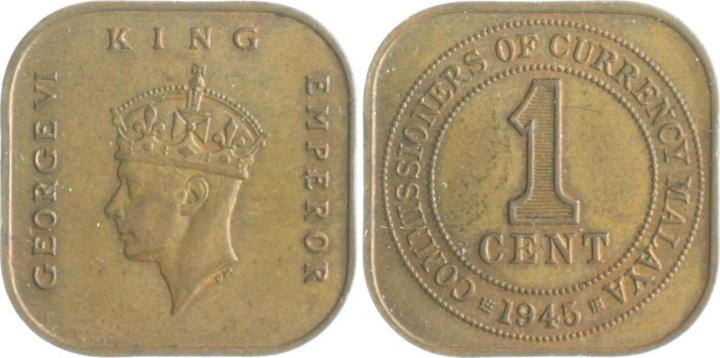
The coins bore the image of King George VI, whose currency circulated in Sarawak from 1946 until 1953, the very year I was born. Sarawak was then a British Crown Colony, having come under British administration after the devastation of the Second World War.
Even after 1961, when the Malayan dollar became the official currency, traces of the old system lingered quietly in rural areas like ours.
In many ways, the old coins survived because they still felt trustworthy. They had weight, familiarity, and memory attached to them.
As children, we thought nothing of it. To us, finding a King George coin was like discovering a tiny relic from a mysterious kingdom.
I cannot remember the exact year, though it must have been sometime in the very early 1960s, when tragedy struck our family. Yet even now, after so many decades, I can still recall the terror of that night.
I awoke to shouting and confusion. Outside, the darkness pulsed with a frightening orange glow. My grandmother’s house was on fire.
The flames rose fiercely into the night sky, crackling and roaring with a hunger that terrified me. Sparks drifted upwards like swarms of angry fireflies. I remember standing frozen among the adults, too young to understand the true scale of disaster unfolding before us.
At that age, fire was both terrifying and mesmerising. I had never seen a house burn before. The heat, the smoke, the frantic movements of the villagers carrying buckets of water – everything seemed unreal, like a scene from some strange dream.
My grandmother and my younger aunt, who lived with her, escaped safely, though shaken and distressed. In the days that followed, I assumed they would come to stay with us. Instead, my older uncle took them into his home while the village began organising efforts to rebuild the house.
The rebuilding was carried out in the spirit of gotong-royong, the communal cooperation that formed the backbone of village life. The village headman coordinated the work, while church elders and neighbours offered labour, timber, food, and whatever else they could spare. Nobody expected payment. Helping one another was simply what people did.
The following day, after the fire had died completely and the smoke had thinned into a faint bitter smell hanging over the village, several of us children wandered over to the ruins. My cousins and I climbed carefully around the charred remains, stepping over blackened beams and collapsed walls.
The house looked smaller somehow, as though the fire had shrunk it.
We poked at the ashes with sticks, half fearful and half curious. There was sadness, certainly, but there was also the strange excitement children often feel when confronted with ruins and hidden things. Burnt objects lay everywhere – twisted metal, cracked bowls, fragments of wood reduced to charcoal.
Then one of my cousins suddenly shouted.
From beneath a layer of ash, he had uncovered a coin.
It was unlike the newer coins we were beginning to see more often. This one was square-shaped, darkened by smoke, but still carrying the unmistakable image of King George. We gathered around immediately, staring at it as though it were buried treasure.
The coin passed from hand to hand. We rubbed away the soot with our fingers and marvelled at how it had survived the fire. There was something strangely comforting about that small piece of metal enduring while everything around it had been destroyed.
An elderly shopkeeper who lived near our house examined it and confirmed proudly that it was indeed a King George coin. Perhaps amused by our excitement, he offered us two generous handfuls of salty factory-made biscuits in exchange for it.
Factory biscuits were rare luxuries in those days. Most of our food came from home kitchens, farms, rivers, or forests. Biscuits bought from shops carried an air of novelty and modernity. We accepted the offer immediately.
The coin disappeared into the shopkeeper’s possession, while we sat nearby happily munching our biscuits, our fingers greasy with salt and crumbs.
But the discovery had awakened something in us.
We returned eagerly to the burnt ruins and continued searching through the ashes. Soon enough, more coins appeared – some blackened, some bent slightly by the heat, but still recognisable. Every new discovery sent another wave of excitement through us.
By the end of our little treasure hunt, we had gathered enough old coins to make up one dollar altogether. Divided among the five of us, each child received two cents.
Two cents may sound laughably small today, but at the time it felt like a fortune. A few coins could buy sweets, biscuits, or other tiny pleasures that brightened a child’s world. We carried our newfound wealth proudly, already planning how to spend it.
Only much later did I realise that those coins represented something larger than childish excitement. They were fragments of a disappearing world – pieces of history buried beneath the ashes of an old village house.
As the years passed, the King George coins slowly vanished from daily life. The Malayan dollar became familiar, and eventually the old currency faded into memory.
With it disappeared our cheerful cry of “Hello, King George!”
After all, shouting “Hello, Malaysian dollar!” lacked charm. It sounded awkward and strangely official, stripped of the magic that the old coins had carried for us. Besides, we ourselves were changing.
Childhood was slipping away.
By then, our attention had begun turning towards music, films, and the wider world beyond the village. The voices of Elvis Presley, Cliff Richard, The Beatles, and P. Ramlee drifted into our lives through radios and cinema halls. Their songs carried dreams of romance, adventure, youth, and modernity. Slowly, the old coins and the games surrounding them retreated into the background.
Still, for some years, I kept one King George one-cent coin in my pocket.
I cannot explain exactly why I kept it. Perhaps it comforted me. Perhaps I simply liked the feel of it between my fingers. Sometimes, while sitting quietly or walking alone, I would rub its worn edges thoughtfully and wonder about its journey.
How many hands had held it before mine?
Had it travelled by ship from distant lands? Had British soldiers once carried it? Had traders used it in crowded river markets long before I was born?
To me, the coin felt connected to a world much larger and older than our small village. It was mysterious in a way I could not fully explain.
Then one day, as happens with so many treasured things, I lost it.
Perhaps it slipped unnoticed through a hole in my pocket. Perhaps I dropped it while running or climbing. I searched for it briefly but never found it again.
For a long time afterwards, I felt its absence sharply.
Years later, as an adult, I occasionally tried to determine the exact value of those old King George coins in relation to the Malayan currency that replaced them. My attempts usually ended in confusion. Exchange rates, colonial monetary systems, inflation, and historical records proved more complicated than I expected.
Still, I persisted from time to time, driven less by financial curiosity than by sentiment. I wanted somehow to measure the worth of those vanished years.
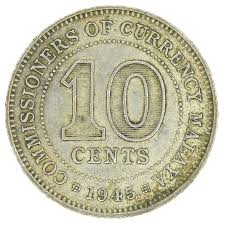
Eventually, I learned that the King George VI coin circulated within the same general monetary framework as the Straits dollar and later aligned closely with the Malayan currency system. In simple terms, the one-cent coin retained roughly the same nominal value during the transition.
The discovery felt oddly comforting.
Yet the true value of those coins could never really be calculated through economics alone. Inflation may explain numbers, but it cannot measure memory.
Back then, even one cent still possessed real purchasing power. A single coin could buy five or even ten cream crackers – plain biscuits, certainly, but to us they tasted luxurious. Small treats carried enormous meaning in those simpler days, when money was scarce and desires were modest.
Sometimes I think those old King George coins carried something modern life struggles to preserve. They carried stories.
Most of all, they carried the feeling of a slower world – imperfect, poor in many ways, yet rich in closeness and shared experience.
And now and then, when an old memory returns unexpectedly, I can still hear our young voices rising through the village air:
“Hello, King George!”
The views expressed here are those of the writer and do not necessarily represent the views of Sarawak Tribune. The writer can be reached at hayhenlin@gmail.com.