
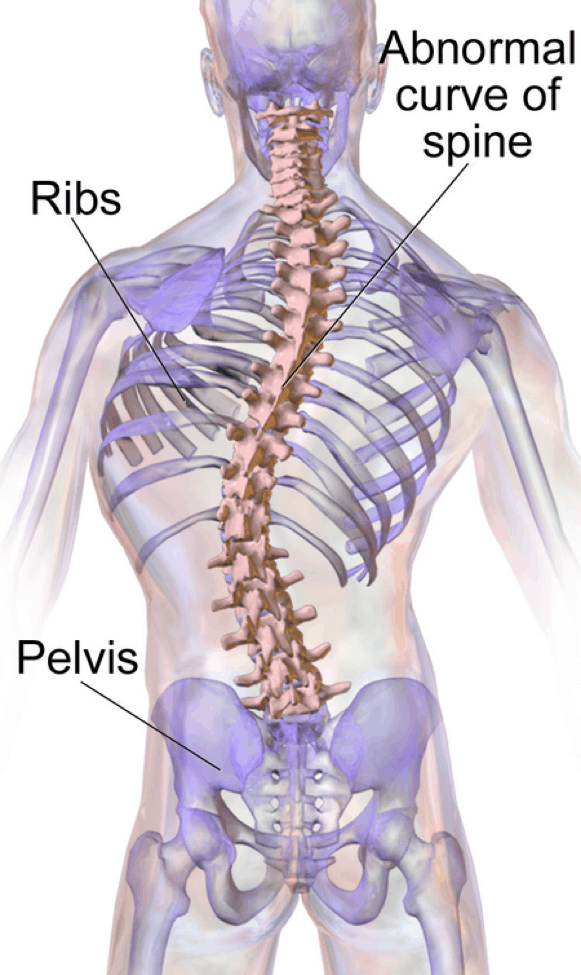
MY cousin has scoliosis.
I’ve watched him wince getting out of a car, seen the particular way he holds his lower back when he’s been sitting too long.
A few months ago, he started wearing the Aulora pants, and within days he told me something felt different – not fixed, not straightened, but different.
Easier to move. Less guarded in how he carried himself.
I’m not a doctor, and I won’t pretend to know what was happening in his body during those days. What I know is what I saw: a man who looked less burdened than before.
Full disclosure: I’m a registered BE International member, mainly to collect points for products my family already uses – Shiruto is something my mother and grandmother keep in the house.
I’m not writing this to sell anything; the research and the claims the company makes are what pulled me in as a columnist, not the reverse.
What the sceptics say
They’d tell you a compression garment doesn’t straighten a spine, and they’d be right – bone structure doesn’t shift in days, from any intervention.
They’d tell you frequency claims like “528Hz repairs DNA” trace back to numerology, not biology, and they’d be right about that too – I looked, and the evidence isn’t there.
They’d tell you halotherapy’s broader claims – treating depression, arthritis, general detox – have no peer-reviewed backing, per the American Lung Association’s own review.
The sceptic’s case, where it sticks to the actual data, is mostly correct. I’m not going to pretend otherwise to make a better story.
What BE wants to prove
The company’s position rests on real research threads, not invented ones.
Kodenshi is genuine fibre technology – ceramic particles that measurably absorb and re-emit far-infrared energy, sitting on decades of legitimate heat-therapy research.
Shiruto’s IP-PA1 has a real lineage through a Japanese body studying macrophage activation, backed by that country’s trade ministry.
That narrative is kind of cool to me.
It’s like the fuller story beyond the Yakult drink. In fact you can even find Shiruta on its packaging.
Which again causes more need to look deeper.
What BE wants to prove is that these mechanisms, at scale, produce the outcomes in their testimonials.
What the human trial data actually shows, for the finished products specifically, is thinner than the marketing suggests – promising direction, not yet arrival.
What we need to remember about our own power
This is where both the sceptic and the salesperson usually stop looking, and where the most interesting evidence actually lives.
2025 alone produced serious research into the open-label placebo effect – people told honestly, explicitly, “this has no active ingredient”, who still improved, sometimes measurably down to their own brain chemistry.
One study found a week of meditation combined with an honest placebo ritual produced real increases in the body’s own natural painkillers.
Knowing a treatment is inert doesn’t stop it from working. That capability sits inside all of us, mostly untapped, because we’ve been trained to look for healing in the object rather than the attention we bring to it.
Sound and salt fit the same pattern from a different angle. Rhythmic sound genuinely lowers cortisol and shifts the nervous system toward calm, measurably, within minutes – not because of a magic frequency, but because of rhythm and the ritual of lying still and paying attention.
Salt caves have a real origin story – 19th-century Polish miners with fewer respiratory problems than their peers – and some evidence for easing mucus and inflammation.
What they reliably do, beyond that, is give you forty-five quiet minutes to breathe slowly and notice your own body.
In every case named here – fibre, sachet, sound, salt – there’s a real mechanism doing something, to a real but modest degree.
And in every case, the missing multiplier is the same: belief, attention, and the ritual of finally paying your body some mind.
So, here’s where I actually land, holding all three views at once rather than picking a side.
The marketer needs you to believe the object is 100 per cent responsible, because that justifies the price.
The cynic needs you to believe it’s 100 per cent placebo, so they can feel they’ve seen through something.
Both are selling closed answers to an open question, because closed answers are easier to hold than the harder truth: mind and body were never as separate as either camp needs them to be.
Our own traditions understood this before neuroscience caught up.
Wu wei never claimed the outside world heals you – only that the right conditions, met with real attention, let something in you do what it was always capable of.
Tawakkul asks you to do your part before trusting the process, not to hand your body to an object and wait.
Our own indigenous communities across Sarawak practiced something similar long before “wellness” was a category – healing as plant, ritual, rest, and community, tested patiently against reality, never oversold as more certain than it was.
Go try the pants, the sachet, the salt room, the frequency, if something in you wants to.
There’s no shame in that, and no guarantee either. But remember there are always alternatives to healing beyond what’s on a shelf – sleep, movement, water, time, attention freely given.
Know honestly which part is the object, and which part is you.
The second one was never for sale, and it may be the most powerful technology in the room.
The views expressed here are those of the writer and do not necessarily represent the views of Sarawak Tribune.